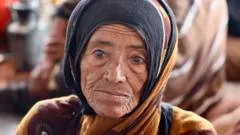
A sudden surge in Houthi advances along Yemen's coast has displaced over 120,000 people, sending thousands of refugees to Djibouti's Markazi camp. This rapid movement of people creates an urgent humanitarian situation for the host nation. Local authorities are struggling to provide enough food, water, and medical supplies to meet the rising demand. As the conflict intensifies, the influx of displaced families threatens to overwhelm existing infrastructure. International aid agencies are now calling for immediate intervention to prevent a total collapse of the camp's services.
Why are Yemenis fleeing across the Red Sea now?
The sudden surge in displacement is driven by a rapid Houthi military advance along Yemen's Red Sea coast toward the Bab al-Mandab strait. This maritime chokepoint, where the southern Red Sea meets the Gulf of Aden, has become the primary theater for intensified combat. As Houthi forces move toward this strategic corridor, Saudi-backed forces have responded with hundreds of airstrikes across the flat, coastal plain to halt the progression.
The humanitarian consequence of this tactical shift is immediate and severe. In just the last few days, more than 3,000 refugees have arrived at the Markazi camp in Obock, Djibouti. These arrivals consist of entire families who have crossed the narrow strait by boat, often carrying only the clothes on their backs or small bundles of essential possessions. Some families have managed to bring small items, such as a "jeraak"—a tall metal shisha pipe—while others, like Ibrahim Issa, have brought livestock, such as goats, to help sustain themselves amidst the discarded canisters and empty bottles of the camp.
For many, the decision to flee was not a choice but a necessity to escape the terror of aerial bombardment. The UN estimates that in all, more than 120,000 Yemenis have been displaced by this sudden surge in fighting along the coast.
The psychological toll of aerial warfare
Refugees at the Markazi camp report that the sound of aircraft is the primary driver of panic. Ibrahim Issa, a 50-year-old fisherman from the coastal town of Dhubab, described the terror experienced by his children when the planes arrive. "How could I just sit there when my kids are screaming and shaking in terror?" he asks. For families on the front lines, the constant threat of airstrikes makes remaining in Yemen untenable, regardless of which side is conducting the strikes.
Qassim Abraham Abssy, another fisherman at the camp whose identity card lists his age as 100, echoed this sentiment. He noted that the Houthis are perceived to be everywhere—in the mountains and on the roads—causing planes to bomb everywhere. "The sounds of the planes, boom! That's what made us flee, for the sake of our children," he said, noting that the uncertainty of which side is attacking adds to the heartache.
What is the impact of the Houthi advance on regional stability?
The Houthi movement's recent "lightning dash" toward the Bab al-Mandab strait introduces a dangerous new dimension to the regional conflict. By targeting this narrow maritime chokepoint, the Houthis threaten the flow of global trade and energy, specifically the potential for choking off Saudi Arabian oil exports through the strait. This strategic positioning has forced a massive military response from the Saudi-led coalition, which supports the internationally recognized UN-recognized government.
The escalation is not limited to Yemeni territory. The Houthis have launched hundreds of drones and missiles targeting cities and vital infrastructure in southwestern Saudi Arabia. This cross-border aggression has led to the issuance of the first air raid alerts for Riyadh in recent periods, signaling a significant shift in the intensity of the conflict. The breakdown of the 2022 UN-brokered truce has allowed these high-intensity exchanges of missiles and drones to become the new norm.
How is Djibouti managing the influx of Yemeni refugees?
Djibouti, located directly across from the Yemeni coast, has become a critical sanctuary for those escaping the violence, despite the nation's stated intention to remain neutral in the civil war. The Markazi camp in northern Djibouti is currently managed through a joint administration between the Djiboutian government and the United Nations. While the country remains one of the most militarized in Africa—hosting significant bases for both the United States, at Camp Lemonnier, and China—it has opened its borders to the humanitarian crisis.
The conditions within the camp are increasingly strained as more families arrive. Refugees often live on tarpaulins spread over sandy floors in open-sided warehouses or in tents supplied by the UNHCR. In the blazing 37C heat, the influx of thousands of people in a short window places immense pressure on the resources available to the camp's administrators and NGOs.
Long-term residents of the camp, such as Mohammed Abdullarim, a 63-year-old former tour guide who has been in Djibouti since 2015, have expressed deep sorrow for the new arrivals. Having fled his home in Aden when fighting first flared up between the Houthis and the government of the now-ousted President Abdrabbuh Mansour Hadi, Mohammed has witnessed the long-term suffering of his people. He expressed a desire for the voices of those in the tents to be heard by NGOs and the Djibouti government, while also expressing gratitude to the authorities for accepting them.
What are the long-term prospects for the displaced Yemenis?
The duration of the displacement remains entirely dependent on the cessation of hostilities in Yemen. For many refugees, the prospect of returning home is overshadowed by the lack of safety and the destruction of infrastructure. The conflict, which has been ongoing since 2014, has already caused tens of thousands of deaths and displaced millions across the country. The recent breakdown of the truce suggests that a return to stability may be distant.
For those currently in Djibouti, the priority has shifted from immediate survival to a desire for fundamental human rights and security. Families express that while they seek peace, their ultimate needs are safety, food, water, and education for their children. As Aisha Abdulkadir Mohammed, wife of Qassim Abssy, noted, they are willing to return only if peace returns, stating, "All we need is peace, even for our children's future, they get safety first, then food, water and an education."
FAQ: Yemen Crisis and Red Sea Conflict
Why is the Bab al-Mandab strait so important in this conflict?
The Bab al-Mandab strait is a critical maritime chokepoint connecting the Red Sea to the Gulf of Aden. Control over this area allows forces to influence global shipping lanes and potentially disrupt Saudi Arabian oil exports, making it a primary strategic objective for both Houthi and Saudi-backed forces.
How many people have been displaced by the recent fighting?
The United Nations estimates that more than 120,000 Yemenis have been displaced due to the sudden surge in fighting along the Red Sea coast. This includes more than 3,000 refugees who have arrived in Djibouti in just the last few days.
What is the status of the 2022 truce in Yemen?
The UN-brokered truce that was established in 2022 has broken down spectacularly in recent months. The two sides are currently engaged in active combat, frequently exchanging missiles, drones, and airstrikes, particularly along the coastal regions.
What are the living conditions for refugees in Djibouti?
Refugees in the Markazi camp often live in makeshift shelters, such as tents or open-sided warehouses with tarpaulin floors. They face challenges including extreme heat, reaching up to 37C, and a continuous need for basic necessities like food, water, and medical care provided by the UNHCR and NGOs.
Is Djibouti involved in the Yemeni war?
No, Djibouti has made it clear it has no intention of involving itself in the war between the Houthis and the Saudi-backed Yemeni government. However, due to its geographic proximity, it has become a primary destination for Yemeni refugees fleeing the violence.
Key takeaways
- Over 120,000 Yemenis have been displaced by recent coastal fighting.
- The Houthi advance targets the strategic Bab al-Mandab maritime chokepoint.
- More than 3,000 refugees have recently arrived in Djibouti's Markazi camp.
- The conflict has escalated to include drone and missile attacks on Saudi cities.
- The 2022 UN-brokered truce has effectively broken down.
Conclusion
The escalation of conflict between Houthi rebels and Saudi-backed forces has transformed the Yemeni Red Sea coast into a volatile battleground. As the struggle for control over the Bab al-Mandab strait intensifies, the humanitarian cost continues to mount, evidenced by the massive displacement of civilians. The arrival of thousands of refugees in Djibouti highlights a growing regional crisis that transcends the immediate military objectives. Without a sustainable political resolution or a renewed truce, the cycle of displacement and aerial warfare is likely to persist, leaving millions in a state of profound insecurity.