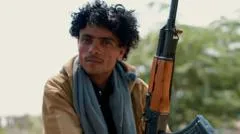
As Houthi forces seize strategic territory near Mokha, the battle for Taiz intensifies, driving mass displacement and threatening global shipping corridors. This surge in violence has left thousands of civilians trapped without access to basic necessities or safe passage. The strategic importance of this region cannot be overstated, as the fighting directly impacts the stability of the entire Red Sea area. Local humanitarian agencies are warning that without an immediate ceasefire, the scale of the suffering will surpass previous years of conflict, creating a permanent catastrophe for the local population.
How has the Houthi offensive changed the front lines in Taiz?
The Houthi movement has significantly shifted the tactical landscape by seizing the strategic port of Mokha, located 85km west of Taiz, on 10 September. This movement broke a ceasefire that had largely remained intact for four years, leading to a rapid escalation of combat in the surrounding mountainous regions. Currently, the fighting is most intense on the western approaches to Taiz, where both sides are battling for control of the high ground that overlooks the city's southern routes.
Taiz remains a critical junction in the conflict, positioned between Houthi-controlled northern territories and government-held areas in the south. While the internationally recognised government forces maintain control over the city centre, Houthi positions are firmly established to the north and east. The loss of territory in the west complicates the government's ability to eventually retake Mokha, as the Houthis now hold vantage points that command the approaches to the coast. The uncertainty of the front line is palpable; in the mountains south-west of the city, it is difficult to tell where the government control ends and no man's land begins.
Strategic importance of the Bab al-Mandab Strait
The Houthi seizure of territory overlooking the Bab al-Mandab Strait has direct implications for global commerce. As a vital shipping corridor linking Europe and Asia, any instability in this chokepoint triggers immediate market reactions. The group took control of a swathe of territory overlooking this crucial strait, which has contributed to a rise in oil prices as fears rose of further disruption to supplies from the region.
What are the military tactics being used in the current conflict?
The Houthis are increasingly relying on drone technology to conduct precision strikes and reconnaissance, a tactic that has become a hallmark of their recent operations. Observers near the front lines have reported that drone sightings—often accompanied by a distinct buzzing sound—are frequently followed by heavy artillery or mortar attacks. Within minutes of a drone passing overhead, the loud thuds of strikes can be heard, though the exact landing points are often unclear. This aerial capability, combined with traditional ground maneuvers, has forced government-aligned forces to maintain high-alert positions in difficult mountainous terrain.
The conflict is also characterized by a significant disparity in external support. The Houthis receive military advice, funding, and weaponry from Iran, though Tehran has officially denied providing direct weapons, stating its support is purely political. Conversely, a Saudi-led coalition provides military backing and air support to the Yemeni government. This includes hundreds of airstrikes conducted by the Saudi military against Houthi positions along the Red Sea coast, while the Houthis respond with missile and drone strikes against targets in south-western Saudi Arabia. The fractured nature of the government side is also evident; traveling from Aden to Taiz requires passing through approximately 30 checkpoints, each marking stretches of road controlled by different commanders.
What is the humanitarian impact on civilians in Taiz?
Civilians living near the Taiz front lines face constant exposure to shelling, gunfire, and the psychological terror of drone warfare. In the outskirts of the city, many homes sit abandoned as families flee the violence. Those who remain, such as Ali, a man living 1km from the front line, face impossible choices. Ali, who stayed to look after his goats, reported that two mortars landed on his property. He explained that while he is terrified, he cannot leave because his family would go hungry without their animals. Such residents live in an eerie quiet, where the usual sounds of motorbikes are replaced by the bleating of livestock and the sound of incoming and outgoing fire.
The medical infrastructure in Taiz is under extreme pressure due to the influx of casualties. At al-Thawra hospital, intensive care units are frequently at full capacity, treating a mix of combatants and civilians. The injuries sustained are often catastrophic; for instance, twelve-year-old Ghana Nabeel was left unconscious with permanent brain damage after shrapnel from a Houthi mortar struck her while she was herding goats. Doctors have noted that for many such victims, they will never be the same again.
The reality of displacement and loss
Displacement camps, such as al-Monig, are struggling to accommodate the continuous flow of refugees fleeing the Mokha and Taiz regions. Families often arrive at these camps with nothing, having walked long distances to escape active sniping and shelling. Maryam Saleh, who fled Mokha with her husband and five children, described walking barefoot with nothing but her children. She recounted how her nephew was killed by mortar shrapnel during their flight. The psychological toll is immense; many refugees describe seeing armed men on the mountains and feeling as though they were finished.
The conditions within the camps are dire. Individuals like Fatma Mohammed Saleh, a woman with a disability, describe having no shelter, no mattress, and no family. Fatma recounted the horror of crawling on her hands and knees for two days to escape the fighting, praying to God as bullets and shells landed all around her. She has not seen her family since she reached the camp.
How severe is the current displacement crisis in Yemen?
The displacement crisis has reached critical levels, with the UN refugee agency reporting that over 130,000 people have been newly displaced across Yemen in September alone. This recent surge is added to the existing catastrophe of 5.2 million people already displaced by the long-standing civil war. There is a significant risk that an additional 100,000 people will be forced from their homes in the coming months as fighting continues.
The most vulnerable populations, including the disabled and the elderly, face unique hardships in these camps. Many lack basic necessities such as shelter, mattresses, or even stable food supplies. The fractured nature of the government forces, evidenced by the numerous checkpoints controlled by different commanders along the route from Aden to Taiz, further complicates the delivery of aid and the movement of displaced persons seeking safety.
The use of child soldiers in the conflict
The recruitment of child soldiers remains a persistent and harrowing aspect of the Yemen civil war. While the Houthis signed a UN action plan in 2022 pledging to end the practice, reports of children appearing on the front lines continue. A government soldier noted the profound moral difficulty of the conflict, stating it is difficult to look at a Yemeni child and shoot at him, yet necessary when they are pointing guns at you. The BBC has also spoken to teenagers serving with government forces, highlighting the pervasive reach of the conflict into the lives of the youth.
Frequently asked questions
Why is the port of Mokha strategically important?
Mokha is a key Red Sea port that provides access to the Bab al-Mandab Strait. Control over this area allows forces to influence a vital maritime corridor used for global trade between Asia and Europe, impacting both regional security and international oil markets.
What caused the recent escalation in fighting?
The escalation was triggered by the Houthi seizure of Mokha on 10 September, which effectively ended a four-year period of relative ceasefire. This move forced a direct confrontation as government-backed forces attempted to defend the approaches to Taiz and maintain their coastal interests.
How are drones being used in the Yemen conflict?
The Houthis utilize drones for both reconnaissance and direct attacks. These unmanned aerial vehicles are often used to signal or precede mortar and artillery strikes, providing a tactical advantage in the mountainous terrain surrounding cities like Taiz.
What is the scale of the displacement in Yemen?
As of late September, over 130,000 people have been newly displaced. This adds to a pre-existing crisis involving 5.2 million displaced persons, creating a massive humanitarian requirement for shelter, food, and medical care across the country.
Who are the primary international actors involved?
The conflict involves several international players: Iran is accused of providing support to the Houthis, while a Saudi-led coalition provides military assistance and air strikes to the internationally recognised Yemeni government and the Presidential Leadership Council.
Key takeaways
- The Houthi seizure of Mokha on 10 September has unraveled a four-year ceasefire.
- Fighting near Taiz threatens control over the strategic Bab al-Mandab Strait.
- Over 130,000 people have been displaced in Yemen during September.
- Drone warfare and mortar shelling are driving high civilian casualty rates.
Conclusion
The intensification of Yemen civil war fighting represents a dangerous shift in the conflict's geography and intensity. By targeting the strategic Red Sea coast and the approaches to Taiz, the Houthis have not only challenged the territorial integrity of the government but have also introduced new risks to global maritime stability. The resulting humanitarian crisis, marked by mass displacement and severe medical shortages, underscores the urgent need for international attention. As both sides consolidate their forces for further offensives, the civilian population remains trapped between the front lines and the escalating volatility of the region.