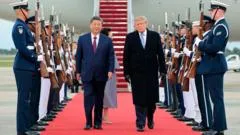
The Xi Jinping Trump summit in September 2026 provided a high-profile display of diplomatic pageantry, yet failed to resolve the fundamental structural tensions between the two superpowers. While the US extended the current trade truce, it was limited to a short window from November to January, falling short of Beijing's hope for a year-long reprieve. This brief extension leaves critical disputes regarding tariffs, rare earth supplies, and advanced semiconductor access on the immediate negotiating table. The summit covered sensitive issues including Taiwan's defense, AI safety protocols, and China's domestic economic pressures. This article examines the outcomes of the meeting, the strategic implications for US-China relations, and the underlying economic and technological competition.
What were the key outcomes of the trade negotiations?
The most significant economic development from the summit was the decision to extend the existing trade truce for only a few months, moving the deadline from November to January. This short-term extension falls significantly short of Beijing's strategic objective, which was to secure at least one year of stability to navigate the remainder of the Trump presidency.
By providing only a temporary pause, the United States has signaled that it expects more significant concessions from China before committing to long-term stability. This tactical move keeps the pressure on Beijing regarding several high-stakes issues that remain unresolved.
Ongoing trade and technology disputes
The expiration of the truce in January means that several critical friction points will immediately return to the forefront of bilateral negotiations. These include:
- Tariff structures: The potential return of tit-for-tat duties that have characterized the recent trade war.
- Rare earth supplies: China's dominance in the minerals essential for global high-tech manufacturing.
- Semiconductor access: The ongoing struggle over the supply of advanced US chips to Chinese firms.
The brevity of the truce suggests that Washington is using time as a lever, forcing China to prove its compliance with previous agreements before granting the economic predictability that Beijing's export-driven economy requires.
How did the summit address the Taiwan issue?
President Xi Jinping reiterated that United States arms sales to Taiwan represent a "red line" for the Chinese government. During the discussions, Xi emphasized the necessity of the US adhering to a position that opposes Taiwan independence, warning that mishandling the island's status could lead to a direct collision or conflict between the two nations.
The tension surrounding Taiwan is complicated by US domestic law, which mandates the provision of defensive capabilities to the self-governing island. However, the summit highlighted a recent shift in the negotiation dynamic regarding military aid.
The role of arms packages as negotiating chips
In May, President Trump delayed the approval of a $14 billion arms package for Taiwan, characterizing the package as a "very good negotiating chip" for discussions with Beijing. It is highly probable that Xi Jinping utilized this opening during the summit to argue that restraining military support for Taiwan would directly reduce the risk of regional escalation.
Despite these discussions, the political landscape in Washington remains complex. President Trump is currently facing bipartisan pressure to maintain and even strengthen US support for Taiwan, leaving the long-term impact of his "negotiating chip" strategy uncertain. As of the conclusion of the summit, Trump has yet to issue a formal public response to Xi's comments on the matter.
What was discussed regarding Artificial Intelligence?
The leaders engaged in discussions concerning Artificial Intelligence (AI), specifically focusing on the necessity of ensuring that AI remains under human control. While the dialogue touched on the importance of safety, the summit failed to produce any concrete bilateral agreements or a scheduled follow-up summit dedicated to AI governance.
The lack of a formal framework is notable given the growing international concern regarding the trajectory of AI development. The discussions occurred against a backdrop of significant warnings from the technology sector regarding the existential risks posed by unaligned AI systems.
The debate over AI safety and existential risk
The summit's focus on AI control follows intense scrutiny from industry leaders and researchers. For instance, Dario Amodei, CEO of Anthropic, has advocated for a deceleration of AI development to prioritize safety measures. This follows research suggesting a significant statistical probability—cited as greater than 10%—that AI could eventually pose an existential threat to humanity.
The two leaders appear to hold divergent views on the severity of these risks. While Xi Jinping emphasized the importance of human oversight, President Trump has dismissed the notion of AI-driven human extinction as a "hoax." This ideological gap complicates the possibility of a unified US-China approach to global AI regulation.
How is China's domestic economy impacting its diplomacy?
China's current economic instability is a primary driver of its diplomatic urgency. While the nation continues to achieve record levels of global exports, domestic consumption remains weak, creating a heavy reliance on overseas markets to sustain national growth.
Xi Jinping's primary diplomatic goal is to protect these vital export channels from the debilitating tariffs imposed by the United States. If trade relations deteriorate further, the impact on China's internal stability could be profound.
Internal economic pressures in China
Several key indicators suggest that the Chinese economy is facing structural headwinds that the leadership must manage:
- Property Market Slump: A significant decline in property prices is impacting wealth in a country where approximately 80% of citizens own their homes.
- Youth Unemployment: Joblessness among the younger demographic remains stubbornly high, threatening social stability.
- Consumer Hesitancy: Despite high production volumes, domestic consumers are increasingly cautious with spending.
Because trade is currently acting as a critical prop for China's GDP, the ability to secure favorable terms with the US is not merely a matter of geopolitical prestige, but a necessity for domestic economic survival.
What was the significance of the summit's optics?
Despite the lack of major policy breakthroughs, the summit was a significant victory for President Xi in terms of domestic perception and "panda diplomacy." The lavish reception, including a personal airport greeting and a formal state banquet, helped project an image of Xi Jinping as a leader on equal footing with the US President.
In China, the spectacle was widely celebrated on social media. Images and memes contrasting the two leaders—often portraying Xi as impassive and composed compared to a more reactive Trump—have helped cement his image of strength and stability at home.
Panda diplomacy and cultural engagement
The resumption of "panda diplomacy" served as a soft-power tool to smooth the edges of the high-stakes meeting. The announcement that the pandas Ping Ping and Fu Shuang would arrive in Atlanta in the coming days provided a moment of cultural connection amidst the geopolitical tension. While the leaders also engaged in traditional activities, such as visiting national archives and sharing tea, these gestures serve as a veneer of friendship that masks an underlying, fierce competition for global superpower status.
Frequently asked questions
How long was the trade truce extended?
The trade truce was extended for only a few months, moving the expiration date from November to January. This was a shorter period than Beijing had requested, as the Chinese leadership had hoped for at least a full year of stability to manage economic transitions.
What is the status of US arms sales to Taiwan?
The US remains legally obligated to provide Taiwan with defensive capabilities. While President Trump has previously used arms packages as "negotiating chips," the issue remains a major "red line" for China, with President Xi warning that excessive support could lead to conflict.
Did the leaders agree on AI regulation?
No concrete agreement was reached regarding AI regulation. While both leaders discussed the importance of AI being under human control, they did not establish any formal safeguards or schedule a dedicated summit to address the technological risks and governance of artificial intelligence.
Why is the Chinese economy a concern for Xi Jinping?
China is facing significant domestic economic challenges, including high youth unemployment and a slump in property prices. Because the economy relies heavily on exports to maintain growth, Xi needs to prevent US tariffs from disrupting these critical international trade flows.
What is the significance of the panda gift?
The arrival of the pandas Ping Ping and Fu Shuang in Atlanta represents the resumption of "panda diplomacy." This use of cultural symbols is intended to soften diplomatic tensions and provide a positive public narrative during a period of intense geopolitical competition.
Key takeaways
- The US-China trade truce was extended only until January, failing to meet Beijing's demand for a year-long pause.
- Taiwan remains a critical flashpoint, with China warning that US arms sales could trigger a direct conflict.
- No formal bilateral agreement was reached regarding the governance or safety protocols of Artificial Intelligence.
- China's domestic economic struggles, including property market declines, make securing export markets a top priority for Xi.
- The summit used high-level pageantry and panda diplomacy to project an image of parity between the two leaders.
Conclusion
The Xi Jinping Trump summit was characterized by a stark contrast between outward diplomatic warmth and underlying strategic friction. While the ceremonial aspects and the resumption of panda diplomacy provided a veneer of stability, the substantive issues—trade, technology, and Taiwan—remain largely unresolved. The brief extension of the trade truce suggests that the United States intends to maintain pressure on Beijing rather than offering long-term concessions. Ultimately, while the spectacle may assist Xi Jinping's domestic standing, the fundamental competition between the United States and China for superpower dominance continues to intensify beneath the surface of the diplomatic engagement.