Indian civil servants often find themselves at the center of public fascination when they perform routine duties with visible rigor. While thousands of officials maintain the country's vast administrative machinery, a select few achieve celebrity status by enforcing regulations that many citizens feel are routinely ignored. This phenomenon is driven by a systemic expectation of bureaucratic delays and corruption, making efficient governance appear exceptional rather than standard. This article examines the motivations behind this public adoration, the historical precedents of high-profile officials, and the significant professional risks faced by those who resist political pressure.
Why does routine enforcement trigger public hero worship?
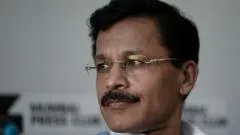
Routine administrative tasks are perceived as heroic when they directly address long-standing public grievances regarding safety, legality, or corruption. In the case of Tukaram Mundhe, the 51-year-old commissioner of Maharashtra's Food and Drug Administration, his enforcement drives have become a social media sensation. Since taking charge in May, Mundhe has led teams to inspect food businesses, uncovering hygiene failures such as pest infestations, the use of expired products, and poor sanitary conditions. He has also exposed discrepancies between hospital procurement costs for medical supplies and the actual prices charged to patients.
The enthusiastic response from the public is a reflection of a broader disillusionment with the administrative status quo. When Mundhe's inspection videos go viral, the comments often mirror a collective desire for similar accountability in other states. This reaction suggests that for many, the sight of an official actually applying existing laws is a rare and noteworthy event. As retired civil servant Kamal Kant Jaswal observes, what should be considered the standard baseline of governance has become an exception in the eyes of the citizenry.
The gap between law and daily experience
For many residents in India, interacting with the government is synonymous with navigating a labyrinth of inefficiency. Citizens frequently report that processes intended to be completed within a single day can stretch into months without a guaranteed resolution. This friction creates a vacuum of trust that is only filled when an official demonstrates a commitment to transparency and strict adherence to the rule of law.
Who are the notable Indian officials who shaped this perception?
The concept of the "no-nonsense" bureaucrat is rooted in several high-profile historical examples where officials gained national recognition for their uncompromising stances. These figures have become benchmarks for integrity within the Indian administrative framework.
- TN Seshan: A household name in the 1990s, Seshan served as the Chief Election Commissioner and was widely respected for his fearless enforcement of electoral rules.
- Kiran Bedi: As the first woman to join the Indian Police Service, she earned the nickname "Crane Bedi" in the early 1980s following reports that she supported the towing of an illegally parked vehicle belonging to Prime Minister Indira Gandhi.
- Ashok Khemka: He gained national prominence following his intervention in a highly controversial land transaction in 2012.
- Neeraj Jadaun: A police officer who received public praise for his actions during the 2020 religious violence in Delhi, where he confronted an angry mob.
While these names are etched into the public consciousness, it is important to note that they represent a tiny fraction of the workforce. Most civil servants operate in roles that involve minimal direct public contact or are simply less visible to the media, performing their duties without the benefit of viral recognition.
What are the risks faced by officials who resist pressure?
Acting independently often requires extraordinary courage because civil servants face significant professional and personal consequences when they deviate from the path of least resistance. The pressure to comply with political demands is a constant reality in the administrative landscape.
Pushpa Sundar, a former civil servant and development writer, highlights that officers frequently encounter political pressure and the threat of sudden transfers when they refuse to facilitate improper requests. Because officials have families, careers, and financial obligations to maintain, the decision to uphold the law against political interests is a high-stakes gamble. Sundar argues that for integrity to become sustainable, there must be stronger institutional support to protect those who refuse to participate in illegal or improper activities.
The cost of integrity: A historical perspective
The personal toll of resisting political influence is illustrated by the experience of Kamal Kant Jaswal. In 1974, while serving as the District Magistrate of Uttarkashi in undivided Uttar Pradesh, Jaswal had to reject multiple demands from a senior minister contesting a state legislature election. Although the minister won the election, Jaswal faced immediate repercussions, receiving his "marching orders" shortly after his refusal to comply with the rules. Despite the professional setback, his adherence to duty earned him significant respect from the local community, who gathered to see him off.
How does the tension between law and socio-economics manifest?
While the public may celebrate strict enforcement, these same actions often face criticism for being insensitive to the economic realities of vulnerable populations. This creates a complex debate regarding the morality of rigid rule application.
In Gurugram, district town planner RS Batth has faced backlash for his crackdown on illegal construction and encroachments. Critics argue that such enforcement can be selective and disproportionately impacts those with the least resources. This tension is particularly acute in urban environments where millions of migrants rely on unsanctioned living spaces or street vending as their only means of survival. As Jaswal points out, a street vendor's stall may be an unauthorized structure under the law, but it often represents a family's sole source of income. This conflict between the letter of the law and the necessity of survival ensures that even well-intentioned enforcement remains a polarizing issue.
How has social media altered the visibility of governance?
Social media has fundamentally changed the speed and scale at which an official's actions can impact their reputation. An enforcement drive that once would have remained localized can now become a national conversation within hours.
For officials like Tukaram Mundhe, social media has turned routine inspections into a widely watched spectacle. However, Mundhe maintains a pragmatic view of this digital fame. He has stated that his primary motivation is public health rather than the attention garnered by viral videos. He asserts that businesses that comply with existing regulations have nothing to fear, and that his role is simply to ensure those rules are followed. This distinction is vital: while the public sees a hero, the official sees a standard administrative duty being fulfilled.
Frequently asked questions
Why are some Indian civil servants called heroes?
They are called heroes because they perform routine duties, such as enforcing food safety or stopping illegal construction, with a level of transparency and rigor that is often perceived as rare. In a system frequently associated with delays and bribery, efficient and honest governance stands out as exceptional.
What are the professional risks for honest officials?
Officials who refuse to comply with political or improper demands often face significant professional retaliation. This can include sudden transfers to undesirable locations, career stagnation, or political pressure that threatens their long-term stability and financial security.
Does strict enforcement always benefit the public?
Not always. While enforcement ensures legality and safety, it can also cause significant hardship for vulnerable populations, such as street vendors or those living in unauthorized housing, who rely on these activities for their basic survival and livelihood.
How does social media affect civil servants?
Social media can transform a local administrative action into a national sensation almost overnight. This can provide officials with public support but also places them under intense scrutiny and can turn routine enforcement into a highly publicized spectacle.
Is corruption a major factor in why efficiency is celebrated?
Yes. Because many citizens have grown accustomed to bureaucratic hurdles, long waits, and the need to navigate corruption, any official who successfully cuts through red tape is viewed with high regard and enthusiasm.
Key takeaways
- Efficient governance is often treated as an exceptional event due to widespread experiences with bureaucratic delays and corruption.
- High-profile officials like TN Seshan and Kiran Bedi serve as historical benchmarks for uncompromising rule enforcement in India.
- Civil servants face significant risks, including political pressure and forced transfers, when they resist improper demands.
- Strict enforcement of laws can create tension between legal compliance and the economic survival of vulnerable citizens.
- Social media has accelerated the process by which administrative actions become national talking points.
Conclusion
The phenomenon of the "heroic" civil servant in India is a dual indicator of both individual integrity and systemic failure. While the public adoration of figures like Tukaram Mundhe highlights a genuine desire for accountability and safety, it also underscores a deep-seated frustration with the prevailing standards of governance. The tension between rigid legal enforcement and the socio-economic realities of the population remains a critical challenge. Ultimately, the fascination with these officials suggests that for the public, the most extraordinary thing an official can do is simply perform their job as intended.