The White House press pool is at the center of a significant constitutional confrontation following President Donald Trump's decision to restrict access for specific news organisations. After the administration disabled entry badges for CNN, Politico, and MS NOW, the five major US television networks—ABC, CBS, CNN, Fox News, and NBC—voted to boycott presidential pool duties. This move aims to protest the administration's attempt to restrict news outlets based on their reporting. The dispute, which includes active lawsuits and the launch of a government-run 'Trump TV' stream, threatens the traditional system of shared media resources and raises critical questions regarding First Amendment protections.
What is the White House press pool?
The White House press pool is a collaborative group of news organisations that share resources to provide consistent coverage of the President's movements. Because it is physically and logistically impossible for hundreds of individual media outlets to follow the President into every room, the pool system provides a streamlined solution. This system includes dedicated subgroups for television, print, radio, photography, and 'new media' outlets.
Under the traditional model, pool members rotate duties and, crucially, share their captured material—including photographs, video, and written descriptions—with all other media organisations. This ensures that even outlets not physically present at a specific event, such as a state dinner or a flight on Air Force One, can report on the President's activities accurately. The pool also serves as a standby mechanism, ensuring that media are ready to broadcast immediately should the President address the nation.
The logistical necessity of the pool
The concept of the press pool was conceived decades ago to manage the constraints of space and cost. In high-security or confined environments like the Oval Office, only a small number of journalists can be accommodated. By designating a specific 'pool' to represent the wider press corps, the White House maintains order while ensuring the public receives widespread coverage of executive actions.
Why did major US networks boycott presidential events?
Major US television networks decided to pull out of White House pool duties in response to the administration's targeting of specific journalists. The boycott was triggered after President Trump announced a ban on CNN, Politico, and MS NOW, accusing them of spreading "fake news" and "fictions and lies." This was followed by the disabling of entry badges for reporters from these organisations.
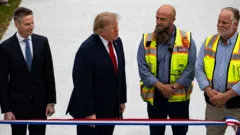
In a joint statement, the five primary TV networks—ABC, CBS, CNN, Fox News, and NBC—asserted that the public has a vital interest in receiving independent and accurate information. They argued that no administration should have the power to restrict a news organisation simply because it objects to that organisation's reporting. This collective action has already resulted in visible gaps in coverage, such as the recent unveiling of a White House helipad, where the lack of pool cameras and microphones left much of the media unable to provide clear visual or audio reports.
How does the media ban impact First Amendment rights?
The dispute has moved into the legal arena, with CNN, Politico, and MS NOW filing a lawsuit to defend the principle that the government should not dictate what the press reports. The central legal question involves the First Amendment of the US Constitution, which forbids the government from "abridging" the freedom of the press. Courts have historically interpreted this to mean that the government cannot discriminate against media outlets based on the content of their coverage.
The plaintiffs argue that revoking credentials without notice or due process, specifically because of an objection to their reporting, constitutes a direct threat to press freedom and the public's right to independent journalism. The administration, however, has defended its actions on Truth Social, with President Trump labelling the excluded outlets as "crooked and corrupt" and claiming they violate national security by using unknown sources. The administration has indicated it will appeal any legal challenges.
What is the difference between the press pool and Trump TV?
The White House has launched 'Trump TV,' a 24/7 YouTube stream, as an alternative to traditional media coverage. While the traditional press pool relies on a rotating group of journalists who are obligated to share their findings with the broader media, Trump TV is a direct-to-consumer platform managed by the administration. Currently, the channel primarily features replays of previous speeches and rallies.
This shift represents a move toward unilateral communication. Unlike the press pool, which operates under the management of the White House Correspondents' Association, the administration-led stream does not involve independent journalistic oversight or the requirement to share material with competitors. During recent trips, such as the President's travel to New York, the traditional media slot remained vacant, with conservative outlet Real America's Voice being listed as "secondary" crew—though notably, such outlets are not bound by the same sharing obligations as the traditional pool.
Comparing media access models
The following table illustrates the functional differences between the traditional pool and the new administration-led approach:
| Feature | Traditional Press Pool | Trump TV / Unilateral Access |
|---|---|---|
| Resource Sharing | Mandatory sharing of all material | No obligation to share with others |
| Management | White House Correspondents' Assoc. | White House Administration |
| Primary Goal | Broad, independent coverage | Direct administration messaging |
| Access Basis | Rotating membership | Administration discretion |
Have there been previous instances of media restrictions?
While the current dispute is significant, attempts to limit media access have occurred in various forms under different administrations. In February, the current administration moved to take control of the press pool, which had been managed by the White House Correspondents' Association for over a century. During that same month, the administration barred Associated Press (AP) reporters from certain areas, including the Oval Office, due to the outlet's use of the term "Gulf of America" instead of "Gulf of Mexico." The AP has filed a lawsuit regarding this matter.
Historically, restrictions have been more localized. For example, in 2009, the Obama administration attempted to exclude Fox News from a specific press pool interview. However, that attempt was unsuccessful after the other four networks in the pool pushed back, resulting in Fox News being granted access. The current situation differs because it involves a broad ban on entire organisations and a fundamental shift in how the pool is managed and utilised.
Frequently asked questions
What is the main purpose of the White House press pool?
The press pool allows a small, rotating group of journalists to represent the entire media corps. This ensures the President can be covered in restricted spaces without needing hundreds of individual reporters present, while still allowing all outlets to access the shared footage and notes.
Why are CNN and Politico being excluded?
President Trump has accused these outlets of spreading "fake news" and "fictions and lies" regarding his administration. The administration subsequently disabled their entry badges, leading to legal action by the organisations to defend their right to report without government interference.
Will the UN General Assembly coverage be affected?
The President's speech at the UN General Assembly will likely proceed without the pool boycott because it is carried by outlets that are not part of the pool. However, his movements to and from various New York events may experience a media blackout.
What is 'Trump TV'?
Trump TV is a 24/7 YouTube stream launched by the White House to provide a direct channel for the administration's biggest moments. It currently functions primarily as a repository for replays of the President's speeches and rallies.
Is the press pool managed by the White House?
Traditionally, the press pool has been managed by the White House Correspondents' Association. However, the current administration has moved to take more direct control over the pool's operations, a move that has been a point of contention.
Key takeaways
- The White House press pool is a system of shared media resources designed for efficiency and space management.
- Major US networks are boycotting pool duties to protest the administration's ban on specific news outlets.
- CNN, Politico, and MS NOW have filed a lawsuit to challenge the administration's restriction of their credentials.
- The administration has launched Trump TV on YouTube as an alternative to traditional media coverage.
Conclusion
The current standoff between the Trump administration and the media represents a fundamental challenge to the established norms of presidential communication. By bypassing the traditional press pool in favour of direct-to-consumer platforms like Trump TV, the administration is reshaping how the public receives information. Meanwhile, the legal battles surrounding the First Amendment will likely determine whether the government can continue to use credentialing as a tool to manage critical reporting. The outcome of these lawsuits and the continued effectiveness of the media boycott will define the relationship between the White House and the press for years to come.