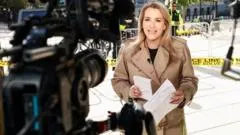
White House press access has become the center of a legal confrontation following allegations that the administration ignored a judicial mandate. Three major media organizations are now seeking an emergency court hearing to address what they describe as repeated violations of a recent ruling. This development follows a standoff between President Donald Trump and several news outlets regarding reporter entry and credentialing. This article examines the legal ruling, the specific incidents reported by journalists, and the broader implications for media coverage.
Legal challenges regarding White House press access
The legal battle over White House press access intensified on Thursday as media organizations accused the administration of ignoring a direct judicial order. Judge Timothy Kelly issued a ruling in the early hours of the day, stating that the ban imposed by President Donald Trump on specific outlets should be temporarily lifted. The judge's decision was based on the assessment that the restrictions likely violated the constitutional due process rights of the journalists involved.
Despite this ruling, the implementation of the order remains highly contested. While the court intended to restore access, reports from the ground suggest a chaotic and inconsistent application of the decision. The administration has transitioned its justification for the restrictions, moving from initial claims of "fake news" to citing national security concerns as the primary reason for limiting certain media personnel.
Specific incidents of denied entry and confiscated credentials
On Thursday morning, several journalists reported significant hurdles when attempting to enter the White House, despite the recent court intervention. The enforcement of access appeared inconsistent, with some staff members being admitted while others were blocked or penalized.
CNN and Politico reports
CNN reported that several of its journalists were prevented from entering the premises. Among those specifically named was senior White House reporter Betsy Klein. Interestingly, the outlet noted that while some reporters were denied, at least one producer was successfully granted access.
Politico documented a similar pattern of exclusion. One of the outlet's reporters was reportedly denied entry to the White House, and in a more severe escalation, the individual had his press credentials confiscated by officials.
MS NOW and credentialing issues
MS NOW also provided accounts of being barred from the White House. The outlet reported that White House reporter Laura Barrón-López and a producer were denied entry and had their passes taken away. However, the situation remained inconsistent, as another producer from the same organization was permitted to enter the facility.
Impact on high-profile diplomatic coverage
The ongoing standoff regarding White House press access has direct consequences for the transparency of major diplomatic events. The timing of these restrictions coincided with a significant international visit, as President Trump prepared to welcome Chinese President Xi Jinping for a state dinner.
The inability of certain media outlets to secure reliable access threatens the depth of television and digital coverage during such high-stakes meetings. It remains unclear if the confusion on Thursday morning resulted from an administrative lag as the White House attempted to comply with Judge Kelly's order, or if it was a deliberate continuation of the restriction policy. As the legal battle moves toward an emergency hearing, the administration's legal team may pursue further action to contest the judge's findings.
Frequently Asked Questions
Why did Judge Timothy Kelly rule against the press ban?
Judge Timothy Kelly ruled that the ban on certain media outlets should be temporarily lifted because the restrictions likely violated the constitutional due process rights of the reporters. The ruling aimed to ensure that the administration's actions did not infringe upon the legal protections afforded to the press.
What reasons has the White House given for restricting access?
The White House has provided shifting justifications for the restrictions. President Donald Trump initially characterized the media outlets as "fake news," but the administration later cited national security concerns as the official reasoning for limiting the access of specific journalists to the White House premises.
How has the media responded to the White House actions?
Media outlets including CNN, Politico, and MS NOW have responded by requesting an emergency court hearing. They accuse the administration of repeatedly violating the court order intended to restore their access and have reported instances of journalists being denied entry and having credentials confiscated.