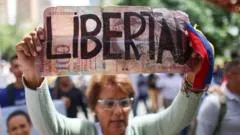
Venezuela political prisoners release has intensified following high-level diplomatic engagement between interim leader Delcy Rodriguez and US President Donald Trump. Human rights organizations, including Foro Penal, reported the release of dozens of detainees from various centers on Saturday morning. This movement follows Rodriguez's meeting with Trump at the UN General Assembly, a period marked by significant shifts in Venezuelan leadership after the seizure of Nicolás Maduro. While the interim administration frames these releases as gestures of reconciliation, opposition figures argue that the fundamental demand for free elections remains unaddressed.
Who has been released in the recent wave of prisoner releases?
A significant number of political prisoners were released from several Venezuelan detention centers on Saturday morning, according to human rights group Foro Penal. These releases include high-profile individuals who have been held for years under various charges related to political dissent.
Among the notable individuals freed is Wilder Vasquez, who had been serving a five-year sentence since 2018. His conviction was based on allegations that he was involved in a plot to assassinate former President Nicolás Maduro. The release of Vasquez marks a significant moment for those who have been detained under the previous administration's strict security protocols.
Other specific releases confirmed by Foro Penal include:
- Miguel Castillo Cedeño: An individual who had been in arbitrary detention since June 2019.
- Frank Cabañas: A man who had been imprisoned for nine years following links to the death of a police officer; notably, he was the only suspect in that case remaining in custody.
Despite these releases, human rights advocates point out that the scale of freedom remains limited. Foro Penal has noted that the previous scheme for releasing prisoners was halted before even half of the nation's political prisoners had been freed.
How did the meeting between Delcy Rodriguez and Donald Trump influence these events?
The timing of the prisoner releases closely follows a meeting between interim President Delcy Rodriguez and US President Donald Trump during the UN General Assembly on Tuesday. While the Venezuelan government has not officially confirmed a direct link between the diplomatic talks and the releases, the political correlation is striking.
Delcy Rodriguez has attempted to position her interim administration as a more permissive entity regarding political dissent, particularly as she seeks to build rapport with Washington. This strategy appears to be part of a broader effort to secure international legitimacy following the seizure of Nicolás Maduro earlier this year.
The role of US diplomatic pressure
The US administration's support for Rodriguez is viewed by many analysts as a pragmatic choice aimed at ensuring short-term stability. Following the arrest of Maduro on drug charges in January, the US opted to back Rodriguez—Maduro's former vice-president—rather than the prominent opposition leader María Corina Machado. This decision has been characterized by observers as a preference for a known quantity in the interim government over the uncertainty of a direct opposition takeover.
However, this preference has not gone unchallenged. Critics suggest that by backing Rodriguez, the US is engaging in a form of selective oversight that may not fully address the democratic deficits within the country.
What is the current status of the prisoner release scheme in Venezuela?
The prisoner release scheme, once a central component of the interim government's reconciliation efforts, has faced significant fluctuations in momentum. While the administration initially released hundreds of inmates, the process slowed considerably in April.
At that time, Rodriguez indicated that the reconciliation scheme was "coming to an end." This deceleration drew sharp criticism from both opposition leaders and human rights organizations. They argued that the government was using the release of prisoners as a tactical tool to curry favor with international actors rather than as a sincere commitment to human rights reform.
The government's official stance remains one of denial regarding the existence of political prisoners. Instead, the administration characterizes these releases as voluntary "gestures of goodwill" intended to foster national reconciliation. This narrative stands in stark contrast to the reports from Foro Penal and other monitors who maintain that the detention of dissidents has been a systematic tool used to silence critics for years.
Why are opposition leaders calling for immediate elections?
Opposition figures are expressing deep dissatisfaction with the current political trajectory, viewing the recent diplomatic successes as a distraction from the core issue: the need for free and fair elections. The meeting between Rodriguez and Trump has been described by some critics as a snub to the opposition's long-standing demands.
Pedro Mario Burelli, a former state oil executive and opposition commentator, offered a scathing critique of the meeting. He described the interaction between the two leaders as a meeting between a "shameless puppet" and an "unscrupulous and undignified puppet-master," suggesting that the fundamental power structures in Venezuela remain unchanged despite US involvement.
The demand for elections is rooted in the disputed results of the 2024 electoral cycle. In those elections, Maduro was declared the winner, a result widely rejected by the international community and the opposition. According to opposition tallies, their candidate—who ran after María Corina Machado was barred from participating—had actually secured approximately 70% of the vote.
The uncertainty of the electoral timeline
While Delcy Rodriguez used her recent speech at the UN General Assembly to reiterate that elections will eventually take place in Venezuela, she notably avoided providing a specific timeframe. This lack of clarity has fueled frustration among those who believe the interim government is delaying the democratic process to consolidate its own position.
The tension remains high as the country navigates the vacuum left by Maduro's legal troubles and the interim government's attempt to balance domestic control with international recognition.
FAQ: Venezuela political prisoners release
Why were the prisoners released now?
While the Venezuelan government has not officially stated a reason, the releases occurred shortly after interim President Delcy Rodriguez met with US President Donald Trump. Human rights groups suggest the timing may be linked to diplomatic efforts to improve relations with the United States.
How many political prisoners remain in Venezuela?
The exact number is difficult to verify because the government denies that dissidents are being held. However, Foro Penal has indicated that less than half of the nation's political prisoners have been released under the recent reconciliation schemes.
Who is Delcy Rodriguez?
Delcy Rodriguez is the interim President of Venezuela. Formerly the vice-president under Nicolás Maduro, she has taken leadership following his seizure earlier this year and is currently seeking international recognition, particularly from the United States.
What happened to Nicolás Maduro?
Nicolás Maduro was seized earlier this year and subsequently put on trial on drug charges. His removal from power has created the current interim administration led by Rodriguez, though his supporters and allies remain influential within the country.
What was the outcome of the 2024 elections?
The 2024 elections resulted in Maduro being declared the winner, but these results were widely disputed as rigged. Opposition figures claimed their candidate won with 70% of the vote, leading to a prolonged political crisis.
Key takeaways
- Dozens of political prisoners were released in Venezuela following high-level talks between Delcy Rodriguez and Donald Trump.
- Foro Penal confirmed the release of notable detainees, including Wilder Vasquez and Miguel Castillo Cedeño.
- The interim government frames releases as reconciliation, while critics view them as tactical diplomatic concessions.
- The US has backed the interim administration of Rodriguez to maintain stability following Maduro's arrest.
- Opposition leaders continue to demand specific dates for free and fair national elections.
The path toward democratic stability
The release of political prisoners represents a significant, albeit incomplete, shift in the Venezuelan political landscape. While these actions provide a temporary reprieve for many detainees and signal a potential opening for diplomatic dialogue with the United States, they do not resolve the underlying crisis of legitimacy. The interim government's reliance on selective concessions to satisfy international observers, while simultaneously delaying a clear electoral roadmap, maintains a state of high tension. For true stability to return, the gap between diplomatic gestures and substantive democratic reform must be bridged, a task that remains uncertain in the face of deeply entrenched political divisions.