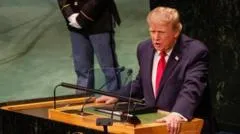
US and Iran talks took place at the United Nations in New York on September 22, 2026, marking the first direct engagement since the June ceasefire collapsed. The meeting, mediated by Qatar, involved US envoy Steve Witkoff and Iranian Foreign Minister Abbas Araghchi. These discussions occurred alongside President Donald Trump's warning that he could "annihilate" the Islamic Republic if the conflict remains unresolved. The talks follow significant regional instability, including the blockade of the Strait of Hormuz and air strikes in February. This article examines the diplomatic efforts, the impact on global energy markets, and the geopolitical tensions driving the current confrontation.
What is the current status of the US and Iran talks?
The most recent round of US and Iran talks at the United Nations in New York has concluded without a formal breakthrough, though officials described the process as potentially constructive. Mediated by Qatar, the discussions brought together US envoy Steve Witkoff and Iran's Foreign Minister Abbas Araghchi. This represents the first significant diplomatic movement between the two nations since the breakdown of the ceasefire in June.
According to US envoy Steve Witkoff, the discussions were completed in a manner that officials hope will prove "constructive and promising." While Witkoff provided a positive signal via a thumbs-up to reporters leaving the UN, the specific details of any concessions or agreements remain undisclosed. The Qatari mediators, who shuttled between the two delegations throughout the day, are expected to continue their efforts to bridge the gap between Washington and Tehran.
On the Iranian side, Foreign Ministry spokesman Esmail Baghaei confirmed through state broadcaster IRNA that the negotiations were contingent upon specific conditions. Tehran is demanding an immediate end to all fronts of the current war and a cessation of what it describes as "acts of aggression" by the United States. As of now, neither side has signaled a willingness to move away from their core demands, leaving the diplomatic path forward uncertain.
How has the conflict impacted global energy security?
The ongoing conflict has caused severe volatility in energy markets due to the strategic importance of the Strait of Hormuz. Before the recent hostilities and the subsequent closure of the strait, approximately 20% of the world's oil and liquefied natural gas passed through this critical maritime chokepoint. The disruption of this flow has led to wild fluctuations in global energy prices, heightening economic concerns worldwide.
The maritime tension is characterized by intermittent skirmishes and tactical blockades. Iran has targeted vessels it claims attempted to transit the Strait of Hormuz without authorization, while the US has responded with strikes on Iranian sites within the strait and on tankers off the Iranian coast. Additionally, a US-led blockade of Iranian ports has significantly hampered the Iranian domestic economy.
The role of regional actors in energy disruption
The instability is not limited to the immediate US-Iran friction. The Houthis in Yemen, who are allied with Iran, have recently intensified their attacks on oil shipping originating from Saudi Arabia. This escalation has further complicated the security landscape of the Gulf, creating a multi-front challenge for international shipping and energy stability.
Why did President Trump issue an "annihilation" threat?
President Donald Trump used his address at the UN General Assembly to frame the conflict through a lens of "peace through strength," utilizing ultimatums rather than traditional compromise. During his speech, he presented a stark choice regarding the future of the Islamic Republic, asking whether a deal would be made to allow Iran to rebuild or if he would "annihilate" the country to prevent it from causing further destruction.
Trump's rhetoric serves a dual purpose: it reinforces his foreign policy of coercive diplomacy and addresses a domestic political audience. As the US approaches the Congressional elections in November, the President's speech focused heavily on his domestic accomplishments in areas such as immigration, the economy, and border security. By justifying the war as a necessary measure to prevent Tehran from acquiring nuclear weapons, he aligns his military stance with his political platform.
This approach contrasts sharply with the tone set by UN Secretary-General António Guterres. While Trump emphasized strength and decisive action, Guterres warned that global divisions are deepening and stressed the fundamental interdependence of the world's populations. The President's strategy relies on the threat of overwhelming force to compel negotiations, a tactic he suggests will yield results following the November elections.
What are the primary drivers of the current escalation?
The current cycle of violence stems from a series of retaliatory strikes that began in February 2026. Following air strikes launched by the US and Israel on February 28, Iran responded by targeting Israel and US military bases located in the Gulf, as well as involving US allies in the Arab Gulf. This escalation has transitioned from localized strikes to a broader regional confrontation involving multiple state and non-state actors.
Key drivers of the continued tension include:
- The Nuclear Issue: The US maintains that the ongoing conflict is essential to prevent Iran from obtaining nuclear capabilities.
- The Lebanese Front: Iran continues to demand an end to Israeli military operations against the Hezbollah group in Lebanon.
- Economic Warfare: The US has implemented a blockade of Iranian ports and threatened sanctions against any nation that continues to trade with Tehran, aiming to force a diplomatic surrender through economic exhaustion.
Despite these pressures, the Iranian government has shown no indication of changing its course, maintaining that the conflict will only end when US and Israeli aggression ceases across all fronts.
Frequently asked questions
What was the role of Qatar in the UN talks?
Qatar acted as the primary mediator during the September 2026 talks in New York. Qatari officials facilitated communication by shuttling between the US envoy, Steve Witkoff, and the Iranian delegation, including Foreign Minister Abbas Araghchi, to relay conditions and attempt to find common ground.
How does the Strait of Hormuz affect oil prices?
The Strait of Hormuz is a vital artery for global energy, carrying about 20% of the world's oil and liquefied natural gas. The recent closure and military activity in the strait have caused significant fluctuations in global prices due to the sudden threat to the supply of these essential commodities.
What is "coercive diplomacy" in this context?
Coercive diplomacy refers to the US strategy of using the threat of overwhelming military force and economic sanctions to pressure Iran into negotiating. President Trump has utilized this method by combining high-level talks with ultimatums and threats of "annihilation" to achieve American strategic goals.
Why is the November election significant for this conflict?
The US Congressional elections in November create domestic political pressure on President Trump to resolve the conflict. Trump has suggested that a formal deal with Iran is more likely to materialize following the conclusion of these elections, linking foreign policy outcomes to the domestic political cycle.
What are Iran's main demands for a ceasefire?
Iran's primary demands include an immediate end to the war on all fronts, specifically targeting US and Israeli military actions. This includes the cessation of strikes against Hezbollah in Lebanon and the removal of US military pressure and blockades affecting the Iranian economy.
Key takeaways
- US and Iran held their first mediated talks at the UN since June 2026.
- Qatar served as the mediator between US envoy Witkoff and Iran's Araghchi.
- The Strait of Hormuz handles 20% of global oil and LNG supplies.
- President Trump used the UN platform to threaten the "annihilation" of Iran.
- The conflict involves multiple fronts, including Hezbollah in Lebanon and Houthi attacks.