Alexander De Croo, head of the UN Development Programme, states that Ukraine confronts its most difficult winter since Russia's full-scale invasion began in 2022. The assessment rests on ongoing strikes against energy facilities and the limited time available for repairs before temperatures fall. The UN agency is supporting reconstruction of damaged power systems and the installation of decentralised plants less exposed to attack.
What specific risks does the UN identify for Ukraine this winter?
According to Alexander De Croo, head of the UN Development Programme, Ukraine enters the season from a very weak base after repeated strikes on energy transmission lines and related facilities. Winter temperatures can reach minus 20 degrees Celsius. Loss of power would affect heating, water supply and sewage systems, conditions the official described as approaching a humanitarian catastrophe. The UN assessment treats these outcomes as possible rather than certain and links them directly to the pace of repairs before cold weather arrives. De Croo told the BBC that this winter is going to be the toughest one since the war and that the UN is very, very worried about what this winter could become. He said the concerns are driven by Russia's very systematic targeting of civilian and energy infrastructure. This is petrol stations, shopping malls, business centres, but especially energy infrastructure, energy transmission lines, and so on. There is absolutely no justification for that, he said. In a worst-case scenario people would struggle to access energy to run heating and water and sewage systems would stop working. With the temperatures that you would get here that would lead to circumstances which would be really close to humanitarian catastrophe, De Croo said. If power supplies and critical infrastructure were severely damaged it could lead to quite some human suffering, he added. The UN official noted that the country started from a very weak base going into this winter, with the risk heightened by the narrow window for completing repairs under ongoing threats.
Which infrastructure has been damaged and how extensive are the effects?
De Croo described systematic targeting of civilian and energy sites including petrol stations, shopping malls, business centres, transmission lines and power plants. Ukrainian authorities reported a drone strike on a shopping mall in Pavlohrad that killed five people and wounded 67. Separate strikes on malls in Zaporizhzhia and Sumy killed two and injured 28. Russia reported a seaborne drone attack on Sochi that wounded 28 people and caused three deaths. Both governments continue to deny deliberate attacks on civilian infrastructure. De Croo accused Russia of systematically targeting the country's energy infrastructure while speaking in Ukraine. The UN's third most senior official said there was now a race against the clock to repair the power network before winter sets in and temperatures plummet. The pattern includes attacks on businesses, warehouses, factories and petrol stations in addition to energy facilities, with Ukraine responding through strikes on Russian gas, oil and distribution sites.
How are repair efforts organised and what obstacles remain?
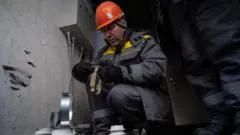
The UN Development Programme is assisting reconstruction of damaged energy components and the creation of smaller, decentralised generation sites that are harder to disable in a single strike. Work proceeds under repeated air-raid alerts, and crews know the sites remain potential targets. De Croo characterised the task as almost impossible under constant threat yet essential to reduce the scale of potential winter hardship. The UN Development Programme is helping to rebuild parts of Ukraine's energy system that were damaged last winter. It is also establishing more sustainable and decentralised energy plants, which are less vulnerable to attack. Completing the difficult and dangerous work is almost an impossible task, De Croo said. They are reconstructing these sites under constant, constant air alarms. And they know that they are working at a site which is a target. So you try to reconstruct, but part of your day you can't work because it's just too dangerous, he said. The effort focuses on restoring capacity before temperatures drop, though the source leaves open how much of the network can be secured in time.
What recent military developments affect civilian infrastructure?
Both sides have increased long-range strikes in recent months. Ukraine has conducted drone attacks on Russian oil, gas and distribution facilities. Russia has introduced jet-powered drones that are faster and more difficult for Ukrainian defences to intercept, with many strikes focused on energy and business sites. The renewed intensity followed diplomatic contacts involving US envoys in Moscow and Kyiv. Russia and Ukraine have been intensifying aerial attacks in recent months. Five people were killed and 67 others were wounded in a daytime Russian drone strike on a shopping mall in Pavlohrad on Thursday. Earlier in the week two other shopping malls were targeted by Russian air strikes, killing two people and injuring 28 people in the attacks on the cities of Zaporizhzhia and Sumy. Russia reported a Ukrainian seaborne drone attack on the resort city of Sochi overnight on Wednesday, in which 28 people were wounded, as well as three more deaths blamed on Ukrainian attacks. Two people were also killed earlier this week when Russian drones hit a border crossing between Ukraine and Moldova. A full-scale war has been raging between Russia and Ukraine since Putin launched an invasion more than four and a half years ago.
Frequently asked questions
What did the UN official say about the coming winter?
Alexander De Croo told the BBC that this winter will be the toughest since the full-scale invasion and that the UN is very worried about outcomes if energy systems fail.
Has either side admitted targeting civilians?
No. Both Russia and Ukraine maintain that they do not deliberately strike civilian infrastructure, while each accuses the other of doing so.
What temperatures are expected in Ukraine?
Winter temperatures can drop to minus 20 degrees Celsius, increasing dependence on reliable heating and water systems.
What is the UN doing to prepare?
The UN Development Programme is helping rebuild damaged energy facilities and install decentralised plants that are less vulnerable to single-point attacks.
Are civilian deaths reported in recent strikes?
Yes. Ukrainian officials reported five deaths and 67 injuries in a strike on a Pavlohrad shopping mall, with additional casualties recorded in Zaporizhzhia, Sumy and at a Ukraine-Moldova border crossing.
Key takeaways
- UN Development Programme head states Ukraine faces its toughest winter since 2022.
- Repeated strikes on energy infrastructure raise risk of heating and water system failures.
- Repair work continues under air-raid alerts at sites that remain potential targets.
- Decentralised generation plants are being added to reduce single-point vulnerability.
- Both governments deny deliberate civilian targeting while reporting casualties from strikes.
Outlook for winter preparations
The UN continues to support targeted repairs and decentralised energy projects while warning that the window for completion is narrow. Success depends on the security conditions under which crews can operate and on the intensity of further strikes on remaining infrastructure. The assessment leaves open the possibility that some level of hardship will occur even with current mitigation efforts.