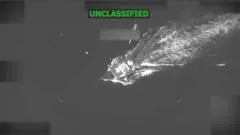
US strikes on drug boats in the Caribbean and Pacific have been identified by the United Nations as potential crimes against humanity. A report by Special Rapporteur Ben Saul states that at least 68 strikes conducted since September 2025 have resulted in more than 220 deaths. These operations, part of the US military's 'Operation Southern Spear,' occurred outside US territorial waters and allegedly violate international humanitarian and maritime laws. This article examines the UN findings, the legal arguments regarding self-defence, and the geopolitical shifts in Latin America following recent military actions.
What are the findings of the UN report on US military strikes?
The United Nations has concluded that recent US military operations against vessels suspected of narco-trafficking may constitute crimes against humanity. According to a report released by Special Rapporteur Ben Saul on Monday, September 22, 2026, there have been at least 68 US airstrikes in the Caribbean and Pacific regions since September 2025. These strikes, conducted outside of US territorial waters, have resulted in the deaths of more than 220 individuals.
Saul's briefing note, released by the UN Human Rights Council, characterizes these actions as serial extrajudicial killings. The report argues that these attacks violate the fundamental right to life and fail to meet the requirements of international humanitarian law, the law of the sea, and various narcotics suppression and counter-terrorism conventions. The Rapporteur stated there are reasonable grounds to believe the reported 68 attacks, which killed 223 people, constitute the crime of murder under customary international law.
The scale of the casualties
The human cost of the strikes is a central pillar of the UN's investigation. While the US military maintains that its targets are legitimate threats, the scale of the fatalities—exceeding 220 people—has prompted intense international scrutiny. The UN's focus is not merely on the number of deaths, but on the legal justification for such lethal force in international waters.
How does the US justify Operation Southern Spear?
The United States military justifies its actions through the lens of national security and counter-terrorism. Operation Southern Spear, launched in early September 2025, is described by US officials as a necessary measure to secure the hemisphere from the narcotics trade. Defence Secretary Pete Hegseth has stated that the operation aims to remove "narco-terrorists from our hemisphere" and protect the American population from the deadly effects of drug trafficking.
The US military, specifically Southcom, which commands forces in the region, maintains that its strikes are targeted and intelligence-led. In a recent statement regarding a strike in the Caribbean that killed four people, Southcom asserted that confirmed intelligence revealed the vessel's active involvement in narco-trafficking. The military categorized the deceased as "narco-terrorists," a designation intended to align the operations with counter-terrorism frameworks.
The issue of evidentiary standards
A significant point of contention remains the lack of definitive, publicly available evidence. While Southcom has released video footage—often described as grainy—to support its claims, US officials have not provided conclusive proof that every targeted vessel was actively engaged in illegal trafficking. This evidentiary gap is what the UN report highlights when questioning the legality of the killings.
Why do these strikes challenge international law?
The primary legal challenge rests on the distinction between criminal activity and an armed attack. Special Rapporteur Ben Saul argues that even if the targets are members of designated terrorist organizations, their actions do not constitute an armed attack against the United States. Under international law, the right to self-defence is typically triggered by an armed attack; the UN report suggests that narcotics trafficking, while criminal, does not satisfy this threshold.
Furthermore, the location of the strikes is a critical factor. Because the operations take place in the Caribbean and Pacific outside of US territorial waters, the US must adhere to the international law of the sea and specific narcotics suppression conventions. The UN report contends that the strikes bypass these legal frameworks, resulting in unjustified killings that cannot be defended under national or personal self-defence protocols.
The legal definition of 'Narco-Terrorism'
The US use of the term "narco-terrorist" appears to be a strategic attempt to bridge the gap between criminal law and the right to self-defence. By categorizing traffickers as terrorists, the US seeks to apply the more permissive rules of engagement associated with armed conflict. However, the UN report argues this classification does not grant a legal pass to conduct extrajudicial killings in international waters.
How has the political landscape in Latin America changed?
The geopolitical response to Operation Southern Spear has shifted significantly due to recent political upheavals in South America. Initially, the strikes drew fierce criticism from several Latin American leaders who viewed the operations as a violation of regional sovereignty. However, the leadership of key nations has changed, altering the intensity of the diplomatic opposition.
The Venezuelan government, previously a vocal critic under Nicolás Maduro, saw a dramatic shift when Maduro himself was seized by US forces during a high-profile raid in Caracas earlier this year. Similarly, in Colombia, the opposition to the strikes has waned. The left-wing president Gustavo Petro, who had been an outspoken critic of the US military's presence and actions, stepped down in August 2026. His departure followed the election of a Trump-backed candidate in June, marking a shift toward a more US-aligned administration in Bogotá.
Impact of leadership transitions
These transitions have effectively neutralized some of the most potent political opposition to the US operations in the region. While the UN report provides a legal critique, the lack of unified political resistance from Latin American governments has allowed Operation Southern Spear to continue with less diplomatic friction than it faced at its inception.
Frequently asked questions
What is Operation Southern Spear?
Operation Southern Spear is a US military operation launched in early September 2025. Its stated goal is to combat narco-trafficking in the Caribbean and Pacific regions by targeting vessels and individuals the US classifies as "narco-terrorists" to secure the hemisphere from drug trafficking.
Why does the UN call these strikes crimes against humanity?
The UN, through Special Rapporteur Ben Saul, argues the strikes constitute crimes against humanity because they involve serial extrajudicial killings. The report claims the 68 attacks, which killed 223 people, lack legal justification under international humanitarian law or the right to self-defence.
What is the US military's defense for these killings?
The US military, specifically Southcom, asserts that the strikes are based on confirmed intelligence regarding active involvement in narco-trafficking. They categorize the targets as narco-terrorists, justifying the use of force as a necessary measure for national security and counter-terrorism.
Has the US responded to the UN report?
As of the report's release, the White House and the US State Department have been contacted for comment by BBC News. The US government has not yet issued a formal rebuttal to the specific allegations of crimes against humanity made by the UN Special Rapporteur.
How has Latin American opposition to the strikes changed?
Opposition has weakened due to political changes. The seizure of Venezuelan leader Nicolás Maduro and the replacement of Colombia's Gustavo Petro with a Trump-backed candidate have reduced the level of formal diplomatic resistance from these key regional powers.
Key takeaways
- The UN report alleges that 68 US strikes in the Caribbean and Pacific may constitute crimes against humanity.
- At least 223 people have been killed in these US military operations since September 2025.
- Special Rapporteur Ben Saul argues the strikes violate international law as they lack a trigger for self-defence.
- Operation Southern Spear is officially described by the US as a mission to remove narco-terrorists.
- Political shifts in Venezuela and Colombia have significantly altered the regional response to these strikes.
The future of international maritime enforcement
The tension between the US military's counter-narcotics objectives and the UN's human rights findings highlights a growing conflict in international law. As the US continues Operation Southern Spear, the legal status of "narco-terrorism" and the limits of self-defence in international waters will remain subjects of intense debate. The outcome of this scrutiny will likely shape how nations conduct maritime security operations and how the international community defines the boundaries of extrajudicial force in the fight against transnational crime.