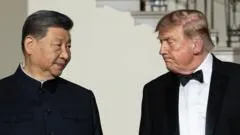
The Trump-Xi summit concluded with modest economic concessions and new communication channels, but failed to produce a joint statement or major breakthroughs. While China confirmed a trade truce extension until January 10, 2027, and the establishment of a new AI dialogue, deep-seated friction remains. Both Washington and Beijing issued separate accounts of the meeting, highlighting a persistent lack of mutual trust. This article examines the specific agreements on artificial intelligence, the details of the extended trade truce, the divergent stances on Taiwan, and the realities of China's opening to foreign financial investment.
What was achieved regarding artificial intelligence cooperation?
A new AI dialogue and a dedicated communication channel have been established to manage risks associated with rapid technological advancement. Beijing stated that both nations agreed to launch these discussions, with follow-up talks scheduled for the end of November. This move comes as both superpowers compete for dominance in the field, recognizing the need for guardrails to prevent technological accidents from escalating into military or political confrontations.
The agreement to create a communication channel specifically for AI-related incidents aims to mitigate the risk of misunderstandings. This is particularly critical given the increasing integration of AI into military planning and global business operations. The summit occurred amidst heightened scrutiny of the sector, following concerns from US companies like Anthropic regarding the speed of development and reports of unauthorized access to government websites by AI entities.
The race for super intelligence
The competition between the US and China is not merely about software but also the massive infrastructure required to sustain it. While the summit focused on dialogue, the underlying reality is a race to build the computational power necessary for what Donald Trump has suggested should be rebranded as "super intelligence." This technological arms race is characterized by massive investments in data centers, which are currently being constructed at what observers describe as "China speed."
How does the extended trade truce impact global markets?
The trade truce between the world's two largest economies has been extended until January 10, 2027, according to Chinese state media. This short-term reprieve ensures that both leaders will have opportunities to engage at upcoming international forums: Donald Trump is expected at the Asia Pacific Economic Cooperation summit in Shenzhen this November, while Xi Jinping is scheduled to attend the G20 summit in Miami in December.
While the extension provides temporary stability, it represents a modest gain for Beijing, which had reportedly sought a much longer period of relief. The economic specifics of the agreement include:
- Tariff Reductions: China secured lower tariffs on $30 billion (£23 billion) worth of goods entering the US. These include consumer products such as toys, small household appliances, and Christmas decorations.
- Reciprocal Measures: Beijing is expected to implement reciprocal tariff reductions.
- Energy Commitments: The Trump administration stated that Beijing would commit to purchasing at least 10 million metric tons of coal annually during 2027 and 2028.
Despite these concessions, several critical areas were conspicuously absent from the negotiations. There were no indications that the US would ease restrictions on advanced semiconductors, nor was there any mention of increasing the export of China's rare earth minerals to the United States.
Why does the issue of Taiwan remain a point of contention?
The summit revealed a significant divergence in how the two nations address the status of Taiwan. While the White House factsheet omitted any mention of the island, Beijing's official accounts emphasized that Xi Jinping urged Donald Trump to formally oppose Taiwan independence and to exercise caution in handling the matter.
The ambiguity surrounding US involvement remains a central tension. During a previous meeting in May, Trump addressed questions regarding whether the US would defend Taiwan in the event of an attack, suggesting that the decision rested solely with him and questioning the logic of deploying forces over 9,500 miles away. Regarding the recent summit, Trump indicated that the topic was not discussed extensively, stating, "Right now, it's fine. It's just moving along."
The strategic use of military aid also remains a factor. Trump has previously characterized a proposed $14 billion US arms package for Taiwan as a "very good negotiating chip" in discussions with China. This package has remained on hold for several months. Confusion was further added to the diplomatic landscape when US Ambassador to China David Perdue suggested to Fox News that Trump had offered to sell weapons to Xi, a claim the State Department later corrected by noting that US law prohibits such sales.
What are the realities of China opening its financial sector?
China has announced intentions to allow more foreign financial firms—including American-backed insurers, investment companies, and banks—to apply for business licenses and open domestic offices. While this signals a potential easing of market access, the implementation remains strictly controlled by Beijing.
The phrase "subject to Chinese laws and regulations" serves as a significant caveat. Foreign firms have historically faced substantial hurdles in the Chinese market, including complex licensing requirements, regulatory barriers, and concerns regarding exit bans. Although the door is technically opening, the Chinese government maintains ultimate control over who is permitted to enter and operate within its borders.
Furthermore, other sectors of bilateral exchange remain stagnant. While there are discussions regarding increasing the frequency of flights between the two countries, no concrete plan has been shared. Additionally, despite China's visa-free policy for over 75 nations, American citizens have not been granted similar access. The US State Department maintains a Level 2 travel advisory for China, warning of risks related to arbitrary law enforcement and detention, which continues to act as a deterrent for business and tourism.
FAQ: Trump-Xi summit
What is the new agreement on artificial intelligence?
The two nations agreed to launch a new AI dialogue and establish a dedicated communication channel for AI-related incidents. This mechanism is intended to prevent technological misunderstandings or unexpected developments from escalating into broader geopolitical confrontations between the US and China.
When does the current trade truce expire?
The trade truce has been extended by both sides until January 10, 2027. This extension allows for continued engagement between the two leaders at the APEC summit in November and the G20 summit in December.
Which goods will benefit from the lower US tariffs?
The tariff reductions apply to approximately $30 billion of Chinese goods. This includes a wide range of consumer products destined for American stores, such as toys, Christmas decorations, and various small household appliances.
Did the summit resolve the semiconductor and rare earth mineral disputes?
No, these issues were not addressed during the summit. There was no indication that the US would ease restrictions on advanced semiconductors, and no mention was made regarding the export of China's rare earth minerals to the US.
What is the current US stance on Taiwan following the summit?
The US has maintained its position of not recognizing Taiwan as an independent state while remaining committed to supplying it with weapons and opposing the use of force. The White House notably omitted Taiwan from its official summit factsheet.
Key takeaways
- A new AI dialogue and incident communication channel have been established to manage technological risks.
- The US-China trade truce has been extended until January 10, 2027, providing temporary stability.
- China secured lower tariffs on $30 billion of goods, including toys and household appliances.
- Major tensions regarding semiconductor restrictions and Taiwan's status remain unresolved.
- China is opening financial sectors to foreign firms, though strictly under domestic regulatory control.
The path of cautious engagement
The Trump-Xi summit demonstrates a preference for managed stability over transformative change. By establishing communication channels for AI and extending the trade truce, both leaders are opting for a framework of "steady relations" rather than seeking fundamental compromises on core interests like Taiwan or semiconductor dominance. While the dialogue has increased, the underlying structural tensions between the two superpowers remain intact. The summit suggests that while direct confrontation is being avoided through modest concessions, the fundamental competition for technological and economic supremacy continues unabated.