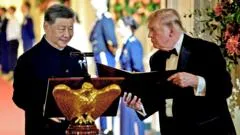
The Trump and Xi state dinner at the White House offered a high-stakes display of diplomatic pageantry, characterized by warm rhetoric between the two leaders. While President Donald Trump toasted a future of harmony and peace, the meeting failed to yield concrete progress on critical friction points like Taiwan, trade, and artificial intelligence. The event, attended by the world's most powerful tech CEOs, highlighted the tension between symbolic cooperation and the intensifying superpower rivalry. This article examines the diplomatic nuances of the visit, the unresolved geopolitical disputes, and the significant corporate presence at the White House.
What was the diplomatic tone of the Trump and Xi state dinner?
The diplomatic tone of the Trump and Xi state dinner was characterized by mutual pleasantries and symbolic gestures that stood in stark contrast to the underlying geopolitical tensions. President Trump offered high praise for President Xi Jinping during his first visit to the United States in over a decade, remarking that despite their "different systems," the two nations had "never gotten along better." In response, Xi Jinping described the current moment as a "historic juncture" in bilateral relations, suggesting that the ambitions of both leaders could potentially be "mutually reinforcing."
To reinforce this sense of hospitality, the White House orchestrated an event steeped in cultural symbolism. The dinner menu, designed by the office of First Lady Melania Trump, featured "American ingredients with subtle Chinese influence," such as sesame-crusted sea bass and braised bok choy. Even the table settings were intentional, utilizing red tablecloths to symbolize luck and good fortune in Chinese culture. Furthermore, the selection of Schramsberg Blanc De Noir wine served as a historical nod to President Nixon's 1972 "Toast to Peace" with Chinese Premier Zhou Enlai. However, these niceties did not translate into policy breakthroughs.
The limits of symbolic diplomacy
While the atmosphere was celebratory, the substantive discussions remained opaque. Xi Jinping emphasized the need for both nations to act as "responsible major countries" to meet the expectations of their citizens, yet the specific mechanisms for achieving this were not detailed. The contrast between the lavish setting and the lack of tangible agreements suggests that while the leaders can maintain a veneer of civility, the structural divides between Washington and Beijing remain largely untouched by state dinners.
How do Taiwan and military tensions impact the meeting?
The issue of Taiwan remains one of the most volatile points of contention, overshadowing the diplomatic warmth of the state dinner. Although the leaders exchanged pleasantries, Xi Jinping had previously urged President Trump to adopt the "correct position" regarding the self-governing island. This pressure comes at a time when a significant $14 billion arms package intended for Taiwan's defense has been paused by the Trump administration.
The pause on this military aid is a critical piece of leverage in the current US-China dynamic. Trump has previously described the arms package as a "very good negotiating chip" in his dealings with Beijing. This strategic hesitation follows warnings from Xi in May, who stated that mishandling the Taiwan issue could lead to a direct collision or conflict between the two superpowers. While Washington is legally obligated to ensure Taiwan can defend itself, the administration's current approach uses military aid as a tool for bilateral negotiation rather than a settled commitment.
Why is the AI race a central point of friction?
Artificial intelligence has emerged as a primary battlefield for technological supremacy, with both leaders recognizing the stakes of the global AI race. President Trump has been explicit about his view that China is the principal rival to the United States in the development and deployment of AI technologies. This competition for dominance in computing power, algorithms, and data is a core component of the broader struggle for superpower status.
During the dinner, Xi Jinping touched upon the subject by stating that AI must remain "under human control." This comment reflects a growing international concern regarding the ethical and safety implications of rapidly advancing autonomous systems. However, the meeting provided very little evidence that the two nations are moving toward a coordinated regulatory framework. Instead, the discourse suggests that the US and China are more focused on out-pacing one another than on establishing shared guardrails for the technology.
What role did the tech industry play in the event?
The presence of the world's most influential technology and finance leaders at the state dinner underscored the intersection of geopolitics and global commerce. The guest list included a concentrated gathering of CEOs from companies that define the modern digital and industrial landscape. This massive corporate presence highlighted that the outcome of US-China relations has immediate and profound implications for global markets and technological standards.
Notable attendees included:
- Technology Giants: Tim Cook (Apple), Jensen Huang (Nvidia), Sundar Pichai (Google), Jeff Bezos (Amazon), and Mark Zuckerberg (Meta).
- AI and Innovation: Sam Altman (OpenAI) and Elon Musk (who previously served in the Trump administration).
- Finance and Media: Jeff Yass (TikTok shareholder), along with executives from General Motors, Visa, and ExxonMobil.
The absence of Anthropic, one of the most valuable AI firms globally, was a notable omission from this gathering of tech titans. The inclusion of these individuals suggests that the state dinner was not merely a political event but a critical forum for the architects of the global economy, all of whom are watching the US-China relationship for signs of stability or disruption.
FAQ: Trump and Xi state dinner
What were the main topics discussed during the dinner?
While the leaders shared "in-depth exchanges," the specific details of their discussions were not made public. The primary areas of tension include trade, technological competition (particularly AI), and the status of Taiwan, though the dinner itself focused more on diplomatic pleasantries than concrete policy resolutions.
Why was the Taiwan arms package paused?
President Trump paused a $14 billion arms package for Taiwan as a strategic move. He has characterized the package as a "negotiating chip" to use in discussions with Beijing, following warnings from President Xi regarding the potential for conflict over the island.
Which tech CEOs attended the state dinner?
The event featured a massive gathering of tech leaders, including Tim Cook of Apple, Jensen Huang of Nvidia, Sundar Pichai of Google, Jeff Bezos of Amazon, Sam Altman of OpenAI, and Elon Musk. Their presence highlighted the economic importance of US-China relations.
What was the significance of the menu and wine?
The menu and wine were designed to show cultural respect and historical continuity. The use of red tablecloths symbolized luck in China, while the Schramsberg Blanc De Noir wine referenced President Nixon's historic 1972 "Toast to Peace" with China.
What is China's main grievance regarding the US?
China views US actions as an attempt to contain its rise as a global superpower. Beijing specifically seeks to limit US interference in its domestic affairs, particularly concerning trade, technological advancement, and the sovereignty of Taiwan.
Key takeaways
- The state dinner featured warm rhetoric but failed to produce significant progress on core geopolitical disputes.
- Tensions over Taiwan remain high, with a $14 billion arms package currently being used as a negotiating tool.
- The AI race is a central pillar of the competition, with both nations vying for technological dominance.
- A massive cohort of global tech CEOs attended, highlighting the economic stakes of the bilateral relationship.
The path forward for US-China relations
The state dinner between President Trump and President Xi Jinping demonstrated the complex duality of modern geopolitics: the ability to maintain high-level diplomatic decorum while simultaneously engaging in intense systemic competition. While the symbolic gestures—the red tablecloths, the curated menu, and the shared toasts—provided a momentary sense of stability, they did little to resolve the fundamental disagreements regarding trade, technological supremacy, and territorial sovereignty. As both nations continue to navigate the "historic juncture" mentioned by Xi, the true measure of their relationship will not be found in the elegance of White House dinners, but in the practical outcomes of their negotiations over AI, trade, and the security of Taiwan.