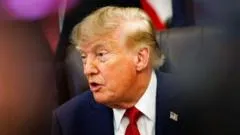
President Donald Trump has signed the Lindsey O Graham Sanctioning Russia and Iran Act of 2026 into law, aiming to dismantle the economic foundations of Russia and Iran. The new legislation empowers the US executive branch to impose massive tariffs of up to 100% on the five largest purchasers of Russian oil and gas, directly impacting major importers like China and India. Additionally, the bill extends sanctions to Iran's energy and weapons sectors while specifically targeting Russia's 'shadow fleet.' This article examines the act's provisions, analyzes recent economic data regarding Russian energy exports, and reflects on the political legacy of the late Senator Lindsey Graham.
What are the primary provisions of the new sanctions bill?
The Lindsey O Graham Sanctioning Russia and Iran Act of 2026 provides the US President with broad executive powers to disrupt the revenue streams of the Russian and Iranian states. Central to the legislation is the ability to levy tariffs as high as 100% against the top five global purchasers of Russian energy products. This mechanism is designed to make the purchase of Russian oil and gas economically unviable for major trading partners.
Beyond energy, the 48-page document expands the scope of US economic warfare to include Iran's weapons and energy sectors. The act also targets the specific infrastructure used to bypass existing international restrictions, namely the Russian 'shadow fleet' of tankers. This fleet is a critical component of Russia's ability to continue exporting oil despite previous sanctions regimes.
Targeting individual leaders and financial networks
The legislation does not limit itself to commodities and shipping. It includes direct sanctions against Russian President Vladimir Putin and other high-ranking officials within the Russian government. Furthermore, the act targets the financial architecture supporting the Russian state by sanctioning various banks and financial institutions. By attacking both the physical movement of goods and the financial systems that facilitate their sale, the bill aims to create a multi-layered economic blockade.
How will the sanctions impact major energy importers like China and India?
The economic impact of the bill will be most acutely felt by China and India, which have historically been the primary destinations for Russian energy exports. According to data from the Centre for Research on Energy and Clean Air (CREA), China accounted for 50% of Russian crude exports between December 2022 and August 2026. India followed as the second-largest purchaser, representing 37% of the export volume during that same period.
With the threat of 100% tariffs, these nations face a significant strategic dilemma. The bill is specifically calibrated to punish the largest buyers, making the cost of maintaining current energy trade patterns potentially prohibitive. While Turkey and the European Union also accounted for 5% each of Russian energy exports during the period cited by CREA, the bill provides specific relief for certain actors.
Exceptions for reducing dependency
To avoid destabilizing global markets or unfairly penalizing nations in transition, the act includes specific exemptions. Countries that currently import less than 15% of their natural gas from Russia are eligible for exceptions, provided they can demonstrate active efforts to reduce their reliance on Russian energy sources. This provision is intended to encourage a gradual decoupling from Russian energy without causing immediate energy security crises in those nations.
What is the political context behind the legislation?
The bill is named in honor of the late Senator Lindsey Graham, who was a prominent advocate for aggressive US intervention against Russian influence. Senator Graham, a Republican from South Carolina, was recognized as one of the most steadfast defenders of Ukraine in Washington. His advocacy for increased pressure on Moscow was a consistent theme throughout his tenure, particularly as the war in Ukraine progressed following the February 2022 invasion.
The passage of the bill comes at a time of significant internal debate within the Republican Party regarding the scale and nature of US involvement in foreign conflicts. While some members of the party expressed skepticism over aid levels and international commitments, the Lindsey O Graham Act represents a decisive shift toward more stringent economic measures. The legislation received public support from Ukrainian President Volodymyr Zelensky, who characterized the act as 'critically important' for the ongoing defense of his nation.
The legacy of Senator Lindsey Graham
Senator Graham's death on 11 July 2026, due to an aortic dissection caused by cardiovascular disease, marked the end of a significant career in US foreign policy. His death occurred shortly after a visit to Kyiv, a trip that underscored his commitment to the Ukrainian cause. President Trump noted at the time of his passing that Graham 'died doing the work he was born to do,' highlighting the Senator's role as a primary driver of hawkish foreign policy on Capitol Hill.
How does the act address the Russian 'shadow fleet'?
A critical component of the new law is the direct targeting of the 'shadow fleet,' a collection of tankers used by Russia to circumvent existing international sanctions. These vessels often operate with opaque ownership structures and lack standard insurance or regulatory oversight, allowing Russian oil to reach global markets despite previous restrictions. By explicitly naming and sanctioning these assets, the US aims to close a significant loophole in the global sanctions architecture.
Senator Richard Blumenthal, a Democrat from New York, described the legislation as 'scorching sanctions' intended to 'throttle Putin's war machine.' The focus on the shadow fleet suggests that the US government views the maritime logistics of Russian energy as a primary pillar of its military capabilities. By targeting the vessels themselves, the act seeks to increase the physical and financial risks for any entity involved in the transport of Russian crude.
Key takeaways
- The Lindsey O Graham Act allows for tariffs of up to 100% on the top five buyers of Russian oil and gas.
- China and India are the primary targets, accounting for 50% and 37% of Russian crude exports respectively between 2022 and 2026.
- The legislation extends sanctions to Iran's energy and weapons sectors and targets Russia's 'shadow fleet' of tankers.
- Exceptions are granted to countries importing less than 15% of their natural gas from Russia that are actively reducing dependency.
- The bill honors Senator Lindsey Graham, a staunch supporter of Ukraine who died in July 2026.
Frequently asked questions
Which countries are most affected by the new energy sanctions?
China and India are the most significantly affected nations. Data from CREA indicates that China purchased 50% of Russian crude exports and India purchased 37% between December 2022 and August 2026. The bill's 100% tariff provision specifically targets these top purchasers to curb Russian revenue.
What are the exceptions included in the Lindsey O Graham Act?
The act provides exceptions for nations that import less than 15% of their natural gas from Russia. To qualify for these exceptions, these countries must also demonstrate that they are actively working toward reducing their overall energy dependency on the Russian Federation.
Does the bill target individuals or just corporations?
The legislation targets both. It includes direct sanctions against Russian President Vladimir Putin and senior members of the Russian government. Additionally, it imposes sanctions on various Russian banks, financial institutions, and the 'shadow fleet' of tankers used to transport energy products.
Why was the bill named after Lindsey Graham?
The bill is named after the late Senator Lindsey Graham to honor his legacy as one of Ukraine's most consistent allies in the US Senate. Graham was a vocal advocate for punishing Russia for its invasion of Ukraine and pushed the US administration to implement more severe economic measures.
How does the bill impact Iran?
The bill extends the scope of US sanctions to include Iran's energy and weapons sectors. This move is intended to simultaneously target the economic and military capacities of both Russia and Iran through coordinated US economic pressure.
Conclusion
The signing of the Lindsey O Graham Sanctioning Russia and Iran Act of 2026 marks a significant escalation in the United States' use of economic statecraft. By targeting the primary purchasers of Russian energy—most notably China and India—and addressing the logistical challenges posed by the 'shadow fleet,' the US aims to fundamentally disrupt the financial flows supporting the Russian military. While the act introduces complexities for global energy markets and major trading partners, it represents a definitive legislative effort to implement the long-standing policy goals of the late Senator Graham and to intensify the economic isolation of both Russia and Iran.