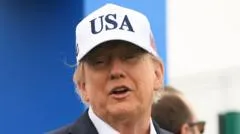
US President Donald Trump announced he will lift all tariffs on Irish whiskey at the end of his two-day visit to Ireland. The 15% tariff currently applied to whiskey from the Republic of Ireland will end, following discussions with Taoiseach Micheál Martin. The move removes an advantage previously held by Northern Ireland producers after earlier UK-wide tariff cuts. Trump also repeated his view that a united Ireland would be natural. This article examines the tariff change, its effects on distilleries and the political context of the visit.
What tariffs currently apply to Irish whiskey exports?
Whiskey produced in the Republic of Ireland faces a standard 15% tariff when entering the United States as an EU good. Whiskey made in Northern Ireland or elsewhere in the UK has faced no such tariff since an earlier policy change in May. All-island supply chains have complicated the picture. Some Northern Ireland brands bottle product from the Great Northern Distillery in Dundalk, County Louth. Those operations have been classified as EU rather than UK producers, so they continued to pay the tariff until now. The distinction arises because the Republic remains under EU trade rules while Northern Ireland distillers gained from the UK-wide removal. Newer facilities waiting for their own stocks to mature rely on contract bottling, which has kept some operations inside the tariff regime despite their location. This created an uneven competitive landscape across the island even after the May adjustment. Producers north of the border that source liquid from the Republic for bottling were still treated as EU entities, meaning the May UK tariff removal did not fully benefit every Northern Ireland brand. The Great Northern Distillery service dominates contract bottling for newer distilleries across the island while they age their own product. John Campbell, BBC News NI economics and business editor, explained that the earlier May change gave an advantage only to distilleries whose entire production stayed within UK rules, leaving others still paying the tariff due to the location of their liquid source.
How did Trump announce the tariff removal?
Trump made the announcement before presenting the winner's trophy at the Trump International Golf Resort in Doonbeg, County Clare. Irish Open champion Shane Lowry received the trophy. Trump said members of the public and industry figures had asked him to act. He stated that on behalf of the United States he would remove the tariffs on Irish whiskey. The ceremony concluded his visit before departure from Shannon Airport. He spoke after watching the final round and interacting with players and officials on site. The timing placed the decision at the close of meetings held the previous day in Dublin with the Taoiseach and the President of Ireland. Trump told the crowd that people had been asking him to address what they saw as an unfair situation for Irish whiskey exports. He explicitly referenced conversations with Micheál Martin and with golfer Shane Lowry during the visit.
What impact will the change have on distilleries?
Removal of the tariff ends the competitive difference that some Northern Ireland producers gained from the May UK-wide cut. Newer distilleries that rely on contract bottling at Dundalk will now operate on equal terms with Republic of Ireland competitors. John Campbell, BBC News NI economics editor, noted that the change levels the field across the island. Existing Northern Ireland brands that source mature stock from the Republic will see their costs fall into line with direct exports from the Republic. The adjustment affects producers who had been treated as EU entities because of where their liquid was distilled and bottled. Once the 15% duty is lifted, all-island brands can export without the previous cost penalty that had persisted for some operations north of the border. The earlier May change had created an advantage only for distilleries whose entire production stayed within UK rules, leaving others still paying the tariff. Assuming the tariffs are removed, this ends the advantage some Northern Ireland distillers held over competitors in the Republic because producers north of the border were covered by the UK-wide removal announced in May.
Why did Trump repeat his comments on a united Ireland?
Trump told reporters in Doonbeg that uniting Northern Ireland and the Republic would be one of the natural developments of all time. He described the remark as routine and said many people agreed. Taoiseach Micheál Martin said the comments did not surprise him and reflected Trump's long-held view. Martin added that some reactions overstated the significance. Trump also declined to comment on Scottish independence. He framed the observation as a personal opinion offered during casual exchanges rather than formal policy. The Taoiseach emphasised that the president consistently presents unity as a logical configuration for the island without claiming it as an immediate diplomatic initiative. Trump said he had always loved the people of Ireland and viewed the two parts of the island as naturally belonging together. He added that everybody says a poll on unity will not happen until a majority in Northern Ireland are likely to vote in favour, and then things happen.
How did protests and local reactions unfold during the visit?
More than 10,000 people marched in Dublin on Saturday against the visit. Smaller protests reached Doonbeg on Sunday, with around 100 demonstrators present. Three women were arrested for trespassing on the golf links. Local businessman Martin Kelly said the golf course employs around 300 people and supports the village economy. Seoirse Comerford, owner of a local bar, described the tournament as a major boost comparable to large Dublin employers. Methodist minister Rev Steven Foster joined the protest and criticised the welcome given to Trump. While demonstrators highlighted concerns over the president's record, business owners in Doonbeg stressed the direct employment and spending the resort brings to an area with limited other large-scale opportunities. Martin Kelly noted there is nothing else of that scale in the area and described the owners as fair employers. Comerford compared the golf course to major Dublin employers like Intel, saying it keeps the village alive. More than 10,000 people marched through Dublin on Saturday to show opposition, while buses brought additional protesters to Doonbeg on Sunday.
Frequently asked questions
Will the tariff removal apply immediately?
Trump stated the tariffs would be lifted at the end of his visit. No precise implementation date was given in the announcement.
Does the change affect whiskey from Northern Ireland only?
No. The announcement covers whiskey distilled in the Republic of Ireland, removing the 15% tariff that previously applied to those exports.
How many jobs does the Doonbeg golf course support?
Local sources cited in reporting state that more than 300 people are employed at the facility, making it a significant employer in west Clare.
Did Trump discuss the tariffs with Irish officials?
Yes. Trump said he raised the issue with Taoiseach Micheál Martin and with golfer Shane Lowry during the visit.
What was the scale of the Dublin protest?
More than 10,000 people took part in the march through Dublin on Saturday, according to organisers and police estimates reported at the time.
Key takeaways
- Trump announced the removal of the 15% US tariff on Irish whiskey distilled in the Republic.
- Northern Ireland producers lose a previous cost advantage created by the May UK-wide tariff cut.
- Trump repeated his opinion that a united Ireland represents a natural outcome.
- More than 10,000 people protested the visit in Dublin while local businesses in Doonbeg highlighted employment benefits.
- The announcement came at the end of a two-day trip that included meetings with Irish government leaders.
Outlook for whiskey trade and Irish politics
The tariff decision aligns costs for producers across the island and removes an anomaly created by separate UK and EU trade treatments. Trump's public comments on Irish unity drew limited official reaction in Dublin. The visit ended with the trophy presentation at Doonbeg and departure for Washington. Future tariff implementation details and any follow-up trade discussions remain to be confirmed by US authorities.