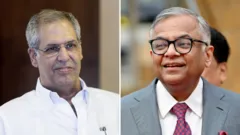
The Tata Sons boardroom revolt has escalated into a significant governance crisis, pitting the holding company's board against its largest shareholder, Tata Trusts. The conflict centers on the reappointment of Chairman N Chandrasekaran and the controversial push for a public listing of the conglomerate. While the board has backed Chandrasekaran for a five-year term, Tata Trusts has labeled the move illegal, citing violations of the company's articles of association. This article examines the legal challenges, the implications of a potential IPO, and the impact on India's corporate landscape.
Why is there a conflict between Tata Sons and Tata Trusts?
The tension stems from a fundamental disagreement regarding leadership continuity and the structural future of the conglomerate. The Tata Sons board recently moved to reappoint N Chandrasekaran as chairman, a decision that directly contradicts the stance of Tata Trusts, which holds a 66% ownership stake in the holding company. Tata Trusts has formally characterized this reappointment as "illegal" under the existing articles of association.
Legal experts suggest the dispute is not merely about personalities but about the adherence to established governance protocols. According to Mumbai-based corporate lawyer Nitin Potdar, the Nomination and Remuneration Committee (NRC) lacks the authority to unilaterally reappoint the chairman; their role is limited to making recommendations. Furthermore, the decision appears to bypass the company's governance code, which mandates that executives step down from active roles upon reaching the age of 65.
The immediate resolution remains uncertain. While the board has approved the extension, the decision faces a critical hurdle at the upcoming Annual General Meeting (AGM). Because Tata Trusts is expected to vote against the reappointment, the chairman's future remains precarious. The meeting must occur before December 31, though a specific date has yet to be finalized following a previous adjournment due to a lack of quorum.
The Role of the Nomination and Remuneration Committee
The NRC's involvement has become a focal point for legal scrutiny. Critics argue that by treating a recommendation as a final decision, the board has undermined the checks and balances intended to protect shareholder interests. This procedural lapse is viewed by some as a significant breach of corporate discipline within a group that prides itself on institutional integrity.
How does the RBI classification affect the Tata Sons listing?
The Reserve Bank of India (RBI) has played a decisive role in pushing Tata Sons toward a public market debut. In 2022, the central bank classified the holding company as an "upper layer non-banking financial company" (NBFC) due to its systemic importance and extensive investment activities. This classification carries specific regulatory obligations, including the requirement for a public listing.
Tata Sons has actively attempted to avoid this mandate. The group argued that it does not borrow directly from public markets and sought to settle its debts to exit the "upper layer" framework. However, after a two-year review period, the RBI rejected this application earlier this month. This rejection has effectively removed one of the primary legal avenues the group was using to remain private.
The legal battle is now moving toward the judiciary. While Tata Trusts maintains that it is exploring all options other than a listing, the RBI has proactively approached the courts to ensure it is heard in any legal proceedings related to the group's status. This preemptive move by the regulator suggests that the transition to a listed entity may be a matter of regulatory necessity rather than corporate choice.
What are the arguments for and against a Tata Sons IPO?
The debate over an Initial Public Offering (IPO) has divided corporate experts into two distinct camps: those prioritizing transparency and those protecting the group's unique philanthropic structure.
Arguments for a listing:
Supporters, including Nirmalya Kumar, former head of strategy at Tata Sons, argue that a listing is becoming "increasingly inevitable." They contend that a group of such systemic importance to the Indian economy deserves the scrutiny and accountability that comes with being a public entity. InGovern, an investment advisory firm, notes that the collective market capitalization of listed Tata companies exceeds $260 billion, affecting millions of stakeholders. They argue that a transparent capital structure is essential for a group making massive global bets in sectors like semiconductors, AI, and aerospace.
Arguments against a listing:
Opponents, including veteran director NA Soonawala, warn that the timing is suboptimal. They point to the heavy financial commitments required for ventures like Air India and various long-gestation projects. A public prospectus would require full disclosure of these losses and borrowings, which might deter sophisticated investors. More importantly, there is a profound concern regarding the group's social mission. Because Tata Trusts uses dividends to fund hospitals and universities, critics fear that public shareholders—focused on quarterly returns—might demand dividend cuts to favor reinvestment, ultimately harming the group's charitable functions.
The Risk to Patient Capital
A central concern for traditionalists is the loss of "patient capital." Many argue that the current private structure allows the Tatas to fund long-term, high-risk projects that may not yield immediate profits. Moving to a public model could subject these strategic decisions to the volatility of the stock market and the pressures of short-termism.
What is the impact of this revolt on the Tata Group's business?
The ongoing leadership and ownership dispute creates a cloud of uncertainty that affects both internal operations and external market confidence. The volatility has already been visible in the stock markets, where Tata Group shares experienced significant swings—soaring on news of leadership stability before crashing as tensions intensified.
Beyond market fluctuations, the conflict threatens the group's ability to execute critical strategic turnarounds. For instance, the group's efforts to stabilize Air India or manage high-stakes partnerships with companies like Nvidia, Boeing, and Apple require a unified leadership front. If the board and the majority shareholder cannot align on capital allocation, the group's ability to respond to national economic interests or urgent debt obligations—such as the need to pay off minority shareholders like the SP Group—could be compromised.
The impasse also highlights a growing tension between the need for centralized control and the requirements of modern governance. As the group expands its global footprint, the friction between the controlling interests of the Trusts and the operational needs of the board may become a permanent feature of the Tata landscape, potentially complicating future fundraising and international partnerships.
Frequently asked questions
Will N Chandrasekaran remain Chairman of Tata Sons?
His position is currently uncertain. Although the board reappointed him for a five-year term, Tata Trusts—the 66% owner—opposes the move and is expected to vote against him at the upcoming Annual General Meeting. The outcome depends on the results of that vote, which must occur by December 31.
Why does Tata Trusts oppose a public listing?
Tata Trusts fears that a listing will shift the group's focus from social impact to financial returns. They argue that public shareholders might demand higher dividends or reinvestment strategies that conflict with the Trusts' mission to fund charitable institutions like hospitals and universities through Tata Sons' dividends.
What role does the RBI play in this dispute?
The RBI classified Tata Sons as an "upper layer" non-banking financial company due to its systemic importance. This classification mandates a public listing. After rejecting Tata Sons' attempt to exit this classification, the RBI has also approached the courts to ensure its position is heard in any legal challenges.
Is the Tata Group's structure unique?
Yes, the structure is highly unusual because the majority shareholder is a charitable trust. This allows the commercial arms of the conglomerate to provide the financial foundation for significant social and educational projects, a model that critics say could be undermined by the pressures of public market accountability.
How has the market reacted to the boardroom tension?
The market has shown significant volatility. Tata Group stocks initially rose on news of leadership continuity but subsequently crashed as the depth of the conflict between the board and Tata Trusts became clearer, reflecting investor anxiety over potential leadership instability and legal battles.
Key takeaways
- The Tata Sons board reappointed N Chandrasekaran, a move Tata Trusts has declared illegal.
- The RBI's rejection of Tata Sons' application to exit the "upper layer" NBFC status makes a public listing likely.
- A major conflict exists between maintaining a private philanthropic model and meeting regulatory transparency requirements.
- The upcoming Annual General Meeting before December 31 is critical for determining the chairman's future.
Conclusion
The Tata Sons boardroom revolt represents more than a mere leadership struggle; it is a fundamental clash over the identity and governance of one of India's most significant economic pillars. As the group navigates the tension between the regulatory mandates of the RBI and the traditional philanthropic mission of the Tata Trusts, it enters uncharted territory. Whether the resolution comes through a successful AGM, a court ruling, or a forced IPO, the outcome will redefine how systemic conglomerates balance commercial growth, public accountability, and social responsibility in the modern era.