The Strait of Hormuz conflict has reached a new diplomatic impasse following President Donald Trump's public rejection of an Iranian proposal to reopen the strategic waterway to commercial shipping. The waterway, which typically handles approximately one-fifth of the global oil and gas supply, has faced effective closure since hostilities erupted in February. This rejection comes amid rising global oil prices and increased fuel costs for consumers worldwide. This article examines the breakdown in negotiations, the role of 'Operation Economic Outcast,' and the diplomatic efforts led by Oman to resolve the crisis.
Why did the US reject the Iranian proposal for the Strait of Hormuz?
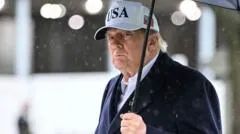
President Donald Trump has formally dismissed an Iranian offer to reopen the Strait of Hormuz, labeling the proposal as unacceptable. Speaking to reporters at the White House, the US President suggested that Tehran's attempt to secure a deal within a seven-day window was a reaction to their deteriorating position in the ongoing conflict. Trump asserted that the United States currently maintains 'total control' over the strait despite the disruption to commercial transit.
The rejection is rooted in a fundamental disagreement over the terms of engagement. While Iran claims its proposal aligns with a Memorandum of Understanding (MOU) signed in June, the US administration views the offer as insufficient. US Ambassador to NATO Matthew Whitaker reinforced this stance, describing the Iranian outreach as a series of 'half measures' and 'illusory deals' designed to improve Tehran's international image rather than provide a substantive resolution.
The impact of the waterway closure on global markets
The closure of the Strait of Hormuz has triggered significant volatility in energy markets. Because the strait facilitates the passage of roughly 20% of the world's oil and gas, its restricted access has led to massive rises in global oil prices. These fluctuations have a direct consequence on the end consumer, manifesting as steep increases in fuel costs globally. The US administration argues that its control over the area allows for the continued passage of 'massive amounts of oil,' even as the broader conflict persists.
How is Iran responding to the diplomatic deadlock?
Iranian Foreign Minister Abbas Araghchi has stated that only a 'negotiated solution' can provide a lasting end to the conflict between the United States and Iran. Following Trump's rejection, Araghchi utilized Telegram to acknowledge the President's comments while expressing skepticism regarding the consistency of US communications. He noted that the President has frequently issued statements that appear contradictory, making it difficult for Tehran to establish a stable negotiating framework.
Tehran maintains that the conditions for reopening the strait remain consistent with the MOU established in June. The Iranian government indicated that these terms were initially raised during discussions on the sidelines of the United Nations General Assembly in New York. Araghchi emphasized that Iran is currently waiting for mediators to convey a 'definitive' official response from the United States before making any further strategic decisions.
President Pezeshkian on the necessity of trust
Iranian President Masoud Pezeshkian has highlighted the psychological barriers to peace, stating that the deep-seated distrust generated by the war must be overcome for any dialogue to succeed. Speaking to CBS, Pezeshkian suggested that while Iran is open to a staged implementation of the MOU, the United States must provide guarantees that it does not intend to pursue regime change. He pointed to the US decision to resume bombing campaigns as a moment when the previous agreement was effectively 'tore up.'
What is 'Operation Economic Outcast' and its effectiveness?
The Trump administration has implemented a rigorous economic blockade against Iran, a strategy officially termed 'Operation Economic Outcast.' The primary objective of this campaign is to leverage intense economic pressure to force Tehran to cease its attacks on commercial vessels within the Strait of Hormuz. This strategy focuses on isolating Iran from the global financial system and restricting its ability to export energy.
Treasury Secretary Scott Bessent has reported that these sanctions are already impacting Iran's regional connectivity. According to Bessent, several nations, including Turkey and the United Arab Emirates, have suspended flights from various Iranian airlines. Furthermore, certain banking institutions in the UAE and Turkey have reportedly halted transactions involving Iranian entities, further tightening the economic noose around the country.
The role of major trading partners and China
Despite the intensity of 'Operation Economic Outcast,' the ultimate efficacy of the blockade remains a subject of debate among economists. The success of such sanctions depends heavily on the compliance of Iran's major trading partners. China remains a critical variable in this equation; as the largest buyer of Iranian oil, China has a history of bypassing US sanctions to maintain its energy security. If major importers continue to facilitate Iranian trade, the economic pressure exerted by the US may fall short of its intended goal to force a diplomatic surrender.
What is the status of the Supreme Leader and regional mediation?
The conflict has also been marked by questions regarding the internal stability and leadership of Iran. There has been significant international speculation concerning the health of the new Supreme Leader, Mojtaba Khamenei, following a US strike in February that killed his father. While reports suggested he sustained serious injuries to his face and legs, President Pezeshkian has countered these claims, stating that the Supreme Leader has been well enough to conduct lengthy seven-hour meetings and faces no ongoing health challenges.
Amidst these tensions, Oman continues to serve as a vital diplomatic bridge. Omani Foreign Minister Sayyid Badr bin Hamad bin Hamood Albusaidi has called for all involved parties to cooperate with Omani mediation efforts. Speaking at the UN General Debate, the minister emphasized the necessity of safeguarding navigation in the strategic waterway through open and continuous dialogue.
Frequently asked questions
Why is the Strait of Hormuz so important to the global economy?
The Strait of Hormuz is a critical maritime chokepoint through which approximately one-fifth of the world's total oil and gas supply flows. Any disruption to this waterway causes immediate volatility in energy markets, leading to higher global oil prices and increased fuel costs for consumers worldwide.
What is the main goal of Operation Economic Outcast?
Operation Economic Outcast is a US-led economic blockade designed to use financial and trade pressure to influence Iranian behavior. The administration's specific goal is to force Tehran to stop its military attacks on commercial shipping vessels navigating the Strait of Hormuz.
Has the June MOU been invalidated?
There is a dispute regarding the MOU's validity. Iranian President Masoud Pezeshkian claims the US 'tore up' the agreement when it resumed bombing campaigns, whereas Iran maintains that the terms for reopening the strait remain based on the original June memorandum.
How is Oman involved in the conflict?
Oman acts as a mediator between the United States and Iran. The Omani government is actively working to facilitate open dialogue between the two nations to ensure the safety of navigation in the Strait of Hormuz and to resolve the ongoing crisis.
Why are sanctions against Iran potentially ineffective?
The effectiveness of sanctions is often limited by the actions of major trading partners. For example, China remains a significant buyer of Iranian oil and has historically ignored US sanctions, which can mitigate the overall impact of the economic blockade on Tehran.
Key takeaways
- The US has rejected an Iranian proposal to reopen the Strait of Hormuz, calling it unacceptable.
- The closure of the strait has caused significant increases in global oil prices and fuel costs.
- 'Operation Economic Outcast' seeks to use economic pressure to end vessel attacks in the waterway.
- Oman is currently acting as a mediator to facilitate dialogue between the US and Iran.
- China's continued purchase of Iranian oil poses a challenge to the effectiveness of US sanctions.
The path toward a negotiated settlement
The current standoff in the Strait of Hormuz highlights the extreme difficulty of reconciling US security objectives with Iranian political demands. While the Trump administration utilizes economic warfare through 'Operation Economic Outcast' to enforce maritime security, the Iranian leadership maintains that only a formal, negotiated agreement can resolve the underlying conflict. As long as the fundamental issue of trust remains unaddressed—and as long as major economies like China continue to engage with Tehran—the volatility in global energy markets is likely to persist, leaving the strategic waterway in a state of precarious uncertainty.