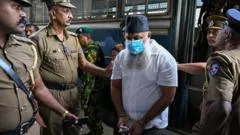
A Colombo High Court has found 15 men guilty of plotting the coordinated suicide bombings that claimed 270 lives, identifying Naufer Moulavi as the mastermind. This landmark ruling follows years of intense legal proceedings and investigations into the devastating attacks. The court's decision marks a significant moment for justice in the nation, providing some closure to the families of the victims. During the trial, prosecutors presented extensive evidence linking the defendants to the extremist cells responsible for the carnage. The verdict underscores the gravity of the crimes committed against the people of Sri Lanka.
Who were the individuals convicted in the Easter Sunday bombings trial?
The High Court in Colombo has delivered a guilty verdict for 15 men implicated in the 2019 suicide bombings that struck churches and luxury hotels across Sri Lanka. Prosecutors identified Naufer Moulavi as the central figure who masterminded the coordinated attacks. While 15 men received convictions, the court acquitted nine other individuals who had been part of the original indictment.
The scale of the legal proceedings was immense, with the accused facing more than 23,000 separate offences. During the court session, the defendants were transported to the capital in two prison buses and appeared in handcuffs in pairs. One of the indicted men died while in custody prior to the conclusion of the trial. The court has adjourned the proceedings to determine the specific sentences for the convicted individuals.
The profile of the accused
The 25 men originally indicted in the case were members of Sri Lanka's Muslim minority. Investigators have attributed the bombings to Islamist extremists. The conviction of the 15 men marks a significant step in the judicial process, though the acquittal of nine others suggests the court required a higher threshold of evidence for those specific defendants regarding their involvement in the conspiracy. All the bombers who carried out the actual attacks died in the blasts.
What was the human cost of the 2019 attacks?
The Easter Sunday bombings resulted in 270 fatalities and left more than 500 people injured during the simultaneous strikes on three churches and three luxury hotels. The attacks were the deadliest act of violence in Sri Lanka since the conclusion of the country's civil war in 2009. The victims included a diverse range of nationalities and local citizens, including many children.
The casualty list highlights the international impact of the tragedy. Among the 45 foreign nationals killed were 11 Indians, eight Britons, and five Americans. Citizens from several other nations were also lost, including Australia, Bangladesh, China, Denmark, Japan, the Netherlands, Portugal, Spain, Sweden, Switzerland, and Turkey. One notable international tragedy involved the children of Danish billionaire Anders Holch Povlsen, three of whom died during the attack on the Shangri-La hotel while the family was holidaying there.
Local devastation and specific victim profiles
Beyond the international community, the local Sri Lankan population suffered profound losses. Many of the deceased were local citizens, including high-profile figures such as celebrity chef Shantha Mayadunne and her daughter. The violence also claimed the lives of an entire young family of five and at least eight staff members from the targeted hotels. In the city of Negombo, five members of a single family were among those killed, illustrating the indiscriminate nature of the blasts.
Why did authorities cite a major intelligence lapse?
The 2019 bombings were preceded by significant warnings that failed to prevent the tragedy, leading to what Sri Lankan authorities have described as a "major intelligence lapse." During parliamentary discussions, it was revealed that a specific tip-off regarding the planned attacks had been provided by India but was not effectively shared or acted upon by Sri Lankan security agencies.
This failure to act has led to severe legal consequences for high-ranking officials. In 2023, the Supreme Court held former president Maithripala Sirisena responsible for national security failures that allowed the attacks to proceed, ordering him to pay millions in compensation to the victims. Furthermore, two former senior officials were recently sentenced to death for criminal negligence related to the bombings, although such sentences are typically commuted to life imprisonment in Sri Lanka due to a long-standing moratorium on executions.
What are the current investigations into political involvement?
Separate and ongoing investigations are examining whether the attacks were facilitated by political figures or high-level intelligence officials. A primary focus is the case against former intelligence chief Suresh Sallay, who is currently accused of orchestrating the bombings in collaboration with Islamist extremists. Sallay, who was arrested in February, has denied all allegations against him.
These investigations have touched upon sensitive political allegations regarding the Rajapaksa family, who have long dominated the nation's political landscape. A 2023 documentary by the British broadcaster Channel 4 featured whistleblower testimony suggesting the attacks might have been allowed to occur to bolster the popularity of the Rajapaksa family. Former president Gotabaya Rajapaksa, who rose to power following the attacks on a platform of combating Islamist extremism, has denied these claims. He is currently banned from leaving the country and has sought court intervention to prevent his arrest as investigations continue.
FAQ: Easter Sunday bombings
Who was the mastermind behind the bombings?
According to prosecutors, Naufer Moulavi was the individual who masterminded the suicide bombings. He was among the 15 men convicted by the Sri Lanka High Court for their roles in the 2019 coordinated attacks on churches and luxury hotels.
How many people died in the 2019 attacks?
The 2019 Easter Sunday bombings killed 270 people and injured more than 500 others. The victims included 45 foreign nationals and a significant number of Sri Lankan citizens, including children and hotel staff.
What was the role of the Indian government in the intelligence failure?
The Indian government provided a tip-off regarding the planned attacks, but Sri Lankan authorities failed to properly share or act on this information. This failure was identified in parliament as a major intelligence lapse that contributed to the tragedy.
Has anyone been held responsible for negligence?
Yes, the Supreme Court found former president Maithripala Sirisena responsible for national security failures and ordered him to pay compensation. Additionally, two former senior officials were sentenced to death for criminal negligence that led to the bombings.
Are there ongoing investigations into political figures?
Yes, investigations are ongoing into former intelligence chief Suresh Sallay and allegations regarding the Rajapaksa family. These inquiries seek to determine if political interests or intelligence failures played a role in allowing the attacks to occur.
Key takeaways
- The Sri Lanka High Court convicted 15 men, including mastermind Naufer Moulavi, for the 2019 bombings.
- The attacks killed 270 people and injured over 500, marking the deadliest violence since 2009.
- A major intelligence lapse occurred when an Indian tip-off was not properly shared with authorities.
- Former President Maithripala Sirisena was ordered to pay compensation due to security failures.
- Ongoing investigations are targeting former intelligence chief Suresh Sallay for alleged orchestration.
The path to justice in Sri Lanka
The conviction of the 15 plotters represents a pivotal moment in the long search for accountability following the 2019 Easter Sunday bombings. While the judicial system has begun to assign criminal responsibility to the executors of the attacks, the broader questions regarding state negligence and political complicity remain unresolved. The intersection of intelligence failures, high-level negligence, and ongoing investigations into political figures suggests that the legal process for the victims is far from complete. As the court moves toward sentencing, the nation continues to grapple with the lasting impact of the tragedy.