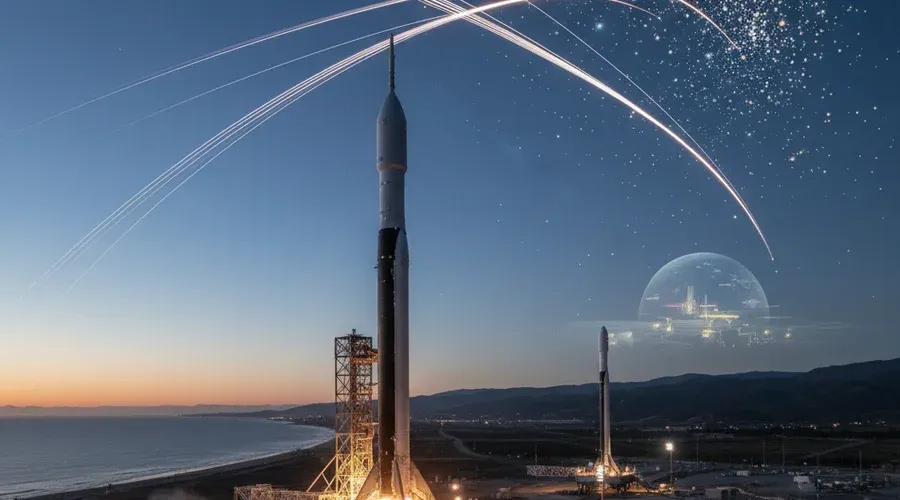
SpaceX is set to accelerate its operations in California in 2026, with a packed launch schedule from Vandenberg Space Force Base and Starbase. The year will be marked by critical Starship tests, expanded Starlink coverage, and preparations for Mars colonization. According to SpaceX, the company aims to conduct over 50 launches from California alone, including Falcon 9 missions and Starship orbital flights. This article explores SpaceX’s 2026 launch schedule, technological innovations, and the broader impact on space exploration and global connectivity.
SpaceX’s 2026 Launch Schedule: What to Expect from California
SpaceX’s 2026 launch calendar in California is one of the most ambitious in the company’s history. Vandenberg Space Force Base, a key site for polar and sun-synchronous orbits, will host the majority of Falcon 9 launches, while Starbase in Texas remains the primary hub for Starship development. According to internal SpaceX documents, the company plans to conduct at least 50 launches from California this year, a significant increase from 2025’s 38 launches.
The schedule includes regular Starlink deployments, NASA resupply missions to the International Space Station (ISS), and commercial satellite launches. Notably, SpaceX is expected to test its Starship vehicle in orbital configurations from Vandenberg, a first for the West Coast. These tests are critical for achieving full reusability, a goal SpaceX has set for 2027. Behind this packed schedule lies a strategic push to reduce launch costs further and increase the frequency of missions, a move that could redefine the economics of space travel.
Starship 2026: The Road to Full Reusability
Starship, SpaceX’s next-generation spacecraft, is at the heart of the company’s 2026 agenda. Designed for deep-space missions, including Mars colonization, Starship has undergone rapid development, with California playing a pivotal role in its testing. In 2026, SpaceX plans to conduct multiple orbital test flights from Vandenberg, focusing on refining the vehicle’s reentry and landing capabilities.
The company has already demonstrated Starship’s potential with successful high-altitude tests, but 2026 will be about scaling up. SpaceX aims to achieve full and rapid reusability by 2027, a milestone that would drastically cut the cost of space travel. According to Elon Musk, SpaceX CEO, "Starship’s reusability is the key to making life multiplanetary. If we can recover and reuse the vehicle within hours, we can make space travel as routine as air travel."
However, the road to reusability is not without challenges. Regulatory hurdles, technical setbacks, and environmental concerns have delayed previous tests. Yet, SpaceX’s iterative approach—learning from each failure—has been a hallmark of its success. If 2026’s tests go as planned, Starship could be ready for crewed missions by the end of the decade, marking a new era in human spaceflight.
Starlink Expansion: Bridging the Digital Divide in 2026
Starlink, SpaceX’s satellite internet constellation, is another cornerstone of the company’s 2026 strategy. With over 5,000 satellites already in orbit, SpaceX plans to expand coverage to more than 100 countries by the end of the year. California’s launches will play a crucial role in this expansion, with Falcon 9 rockets deploying batches of Starlink satellites into low Earth orbit (LEO) every few weeks.
The impact of Starlink’s expansion is far-reaching. In rural and underserved areas, the service provides high-speed internet access, bridging the digital divide. According to a 2025 report by the Federal Communications Commission (FCC), Starlink has already connected over 2 million users worldwide, with demand surging in Africa, Latin America, and Southeast Asia. By 2026, SpaceX aims to double its user base, making Starlink a viable alternative to traditional internet providers.
Yet, Starlink’s growth has not been without controversy. Astronomers have raised concerns about the constellation’s impact on night-sky observations, while competitors like Amazon’s Project Kuiper and OneWeb are racing to deploy their own satellite networks. SpaceX has responded by testing darker satellites and adjusting orbits to minimize interference, but the debate over space sustainability is likely to intensify in 2026.
Falcon 9: The Workhorse of SpaceX’s 2026 Missions
While Starship dominates headlines, Falcon 9 remains the backbone of SpaceX’s launch operations. In 2026, the rocket is expected to conduct the majority of the company’s California launches, including NASA’s Crew-9 mission to the ISS and multiple commercial satellite deployments. Falcon 9’s reliability—with over 200 successful launches to date—makes it the go-to choice for governments and private companies alike.
One of Falcon 9’s key advantages is its reusability. The rocket’s first stage is designed to land vertically after launch, a feat SpaceX has perfected over the years. In 2026, the company aims to push the limits of reusability further, with some boosters expected to fly up to 20 times. This not only reduces costs but also increases launch frequency, a critical factor for SpaceX’s ambitious schedule.
Looking ahead, Falcon 9’s role in 2026 extends beyond Earth’s orbit. The rocket is slated to launch the first modules of SpaceX’s lunar lander, a precursor to NASA’s Artemis program. If successful, Falcon 9 could pave the way for human missions to the Moon and, eventually, Mars.
Mars Colonization: SpaceX’s Long-Term Vision for 2026 and Beyond
Mars colonization remains SpaceX’s ultimate goal, and 2026 is a pivotal year in this journey. While the first crewed mission to Mars is not expected until the late 2020s, SpaceX is laying the groundwork now. The company’s Starship tests in California are a critical step toward developing a vehicle capable of carrying humans and cargo to the Red Planet.
According to SpaceX’s timeline, the first uncrewed Starship mission to Mars could launch as early as 2028, with crewed missions following in the 2030s. The 2026 tests will focus on refining Starship’s life-support systems, radiation shielding, and in-orbit refueling capabilities—all essential for long-duration spaceflight. Elon Musk has stated that "the goal is to make Mars a self-sustaining civilization. Every launch in 2026 brings us one step closer to that reality."
However, the challenges of Mars colonization are immense. Beyond the technical hurdles, there are ethical and logistical questions about establishing a human presence on another planet. SpaceX is collaborating with NASA, international space agencies, and private partners to address these issues, but 2026 will be a year of testing, learning, and iterating.
Frequently Asked Questions About SpaceX’s 2026 Operations
What is SpaceX’s launch schedule for California in 2026?
SpaceX plans to conduct over 50 launches from California in 2026, including Falcon 9 missions for Starlink, NASA resupply flights, and Starship orbital tests. Vandenberg Space Force Base will be the primary launch site for polar and sun-synchronous orbits.
How is SpaceX advancing Starship’s reusability in 2026?
SpaceX is conducting multiple orbital test flights of Starship from Vandenberg in 2026, focusing on reentry and landing capabilities. The goal is to achieve full and rapid reusability by 2027, which would significantly reduce the cost of space travel.
What is the status of Starlink’s expansion in 2026?
Starlink aims to expand its coverage to over 100 countries by the end of 2026, with California launches playing a key role. The service already connects over 2 million users worldwide, with demand growing in rural and underserved regions.
How many times can a Falcon 9 booster be reused?
SpaceX aims to reuse Falcon 9 boosters up to 20 times in 2026, building on the rocket’s proven reliability. This reusability is a cornerstone of SpaceX’s strategy to reduce launch costs and increase mission frequency.
When will SpaceX send humans to Mars?
SpaceX’s first uncrewed Starship mission to Mars is targeted for 2028, with crewed missions expected in the 2030s. The 2026 tests in California are critical for developing the technology needed for long-duration spaceflight.
Key Takeaways: SpaceX’s 2026 Milestones
SpaceX plans over 50 launches from California in 2026, including Falcon 9 and Starship missions.
Starship’s 2026 tests focus on achieving full reusability by 2027, a key step toward Mars colonization.
Starlink aims to expand coverage to 100+ countries, bridging the digital divide in rural and underserved areas.
Falcon 9 remains the workhorse of SpaceX’s launch operations, with boosters expected to fly up to 20 times.
Mars colonization is SpaceX’s long-term goal, with 2026 marking a pivotal year in testing and development.
Conclusion: A Year of Innovation and Ambition
SpaceX’s 2026 operations in California are set to be a defining chapter in the company’s history. With a packed launch schedule, groundbreaking Starship tests, and the expansion of Starlink, SpaceX is pushing the boundaries of what’s possible in space exploration. The company’s focus on reusability, cost reduction, and global connectivity reflects its broader mission: to make humanity multiplanetary.
Yet, the challenges ahead are significant. Regulatory hurdles, technical setbacks, and ethical questions about space sustainability will test SpaceX’s resilience. However, if 2026’s tests and launches go as planned, the year could mark a turning point in the commercial space industry, bringing us closer to a future where space travel is routine and Mars is within reach.