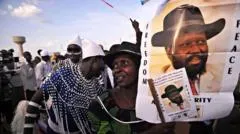
South Sudan President Salva Kiir has dissolved the transitional government just three months before the nation's first scheduled elections since independence in 2011. The move, formalized through an amended law signed on Monday, removes the five vice-presidents and dissolves parliament along with national and state governments. As the SPLM candidate, Kiir will retain full constitutional powers until an elected successor is sworn in. This restructuring comes amid significant security concerns in Juba and a massive funding deficit for the electoral process. This article examines the implications of the dissolution, the status of the opposition, and the risks to the 2018 peace agreement.
Why has President Salva Kiir dissolved the transitional government?
President Salva Kiir dissolved the existing transitional administration to clear the path for the upcoming December 22 elections, marking a decisive shift in the country's governance structure. By signing an amended law on Monday, Kiir officially removed the five vice-presidential positions and dissolved both the national parliament and various state-level governments. While the move is framed as a step toward the first democratic elections since the country's 2011 independence, it significantly centralizes power within the presidency.
Under the new legal framework, Kiir will maintain full constitutional authority until the election results are certified and a new president is inaugurated. To ensure continuity in basic administration, the president has reappointed certain ministers and governors to serve in caretaker capacities. This transition period is intended to bridge the gap between the end of the long-standing transitional phase and the establishment of a permanent elected government.
The centralization of executive power
The dissolution of the vice-presidency is a notable departure from the power-sharing arrangements that have defined South Sudanese politics for years. By removing these high-ranking officials, the presidency regains direct control over the executive functions that were previously distributed among various political factions. This consolidation occurs at a moment when the political landscape is increasingly dominated by the incumbent's party, the Sudan People's Liberation Movement (SPLM).
What is the current status of the political opposition?
The political opposition in South Sudan is currently marginalized, with the primary rival, Riek Machar, unable to participate in the electoral process. Machar, who was a central figure in the 2018 peace deal designed to end a five-year civil war, was removed from his position as vice-president last year. He currently faces treason charges and remains under house arrest, effectively removing the most prominent challenger from the December polls.
The lack of visible opposition candidates has created a political vacuum. Currently, no major political figures have formally announced intentions to challenge Kiir for the presidency. This absence of competition raises questions regarding the inclusivity and democratic legitimacy of the upcoming vote. The Sudan People's Liberation Movement in Opposition (SPLM-IO), the party associated with Machar, has taken a defiant stance against the electoral preparations.
Threats of conflict in opposition territories
The SPLM-IO has actively discouraged citizens from participating in the voter registration and campaigning processes. Nathaniel Pierino, the acting chairperson of the group, issued a stern warning via social media, stating that anyone attempting to register voters or campaign within territories controlled by the SPLM-IO would be treated as a prisoner of war. This rhetoric highlights the deep-seated mistrust between the government and opposition forces, suggesting that the election process could trigger localized violence in contested regions.
How is the election being financed and managed?
The logistical and financial viability of the South Sudan elections 2026 is under severe pressure due to a massive shortfall in required funding. According to reports from the national elections commission, the body requires approximately $250 million to conduct a credible and transparent election. However, as of August, the commission had received only $21 million, leaving a deficit of nearly $229 million.
Compounding the financial crisis is a leadership change within the electoral oversight body. President Kiir recently dismissed the chairman of the national elections commission, Abednego Akok Kacuol, without providing a specific reason for the removal. Kacuol was replaced by the commission's secretary-general, Gabriel Bol Deng. The sudden replacement of the official who had been vocal about the funding crisis adds a layer of uncertainty to the commission's ability to manage the complex electoral cycle.
What is the impact of the recent security measures in Juba?
A heavy security presence has been deployed across the capital, Juba, following the announcement of the government dissolution. Reports indicate that soldiers from both the national army and the national security services have established blockades at various government ministries. This surge in military visibility has disrupted daily life and government operations, with some staff being turned away from their workplaces and instructed to return the following week.
The atmosphere in the capital has necessitated caution even for international organizations. United Nations agencies operating in Juba have advised their staff to work remotely while monitoring the evolving security situation. The presence of patrolling soldiers and the restriction of access to administrative buildings suggest a high level of tension as the country moves toward the December deadline.
Security implications for international agencies
The decision by UN agencies to move to remote work reflects a heightened risk assessment regarding civil unrest or sudden escalations in military activity. When government ministries are inaccessible and security services are actively patrolling urban centers, the stability required for international development and humanitarian work is compromised. This environment makes the coordination of election-related humanitarian aid particularly difficult.
Is the 2018 peace agreement still being upheld?
The implementation of the 2018 peace agreement is currently described as being in a "critical phase" by the Reconstituted Joint Monitoring and Evaluation Commission (RJMEC). While the agreement was intended to end the civil war and establish a roadmap for stability, several fundamental components of the deal remain unfulfilled. The transition from a power-sharing transitional government to a permanent elected one is the most significant hurdle remaining.
The RJMEC has urged all political parties to find a consensus-based path toward credible elections. The commission warns that without a peaceful end to the transitional period, the gains made since the 2018 agreement could be lost. The current political environment—characterized by the arrest of opposition leaders, the dissolution of the legislature, and the lack of election funding—suggests that the spirit of the peace agreement is under significant strain.
Frequently asked questions
Who is the main candidate for the 2026 South Sudan election?
Salva Kiir, the current President of South Sudan and leader of the Sudan People's Liberation Movement (SPLM), is the primary candidate. Following the dissolution of the transitional government, he remains in power with full constitutional authority until the election results are finalized and a new president is sworn in.
Why is Riek Machar not participating in the elections?
Riek Machar is currently unable to participate because he was removed from his vice-presidential role last year and is facing treason charges. He is currently under house arrest, which prevents him from campaigning or leading the SPLM-IO in the upcoming December polls.
How much money is needed for the South Sudan elections?
The national elections commission has stated that $250 million is required to successfully conduct the elections. However, the commission has reported receiving only $21 million, leaving a significant funding gap that threatens the logistical feasibility of the voting process.
What has the SPLM-IO said about the election process?
The SPLM-IO has warned its supporters not to engage in election preparations. The group's acting chairperson, Nathaniel Pierino, has stated that individuals attempting to register voters or campaign in SPLM-IO controlled areas will be treated as prisoners of war, highlighting the risk of armed conflict during the election period.
What is the role of the RJMEC in this process?
The Reconstituted Joint Monitoring and Evaluation Commission (RJMEC) is the body responsible for overseeing the implementation of the 2018 peace agreement. It has warned that South Sudan is in a critical phase and has called for all parties to agree on a path toward credible elections to ensure a peaceful transition.
Key takeaways
- President Salva Kiir has dissolved the transitional government and parliament ahead of the December 22 elections.
- The main opposition leader, Riek Machar, remains under house arrest and cannot participate in the polls.
- The national elections commission faces a $229 million funding deficit for the upcoming electoral process.
- Security forces have increased their presence in Juba, leading to restricted access to government ministries.
- The RJMEC warns that the 2018 peace agreement is in a critical and unstable phase.
Conclusion
The dissolution of South Sudan's transitional government by President Salva Kiir marks a pivotal and volatile moment in the nation's history. While the move is intended to facilitate the first elections since 2011, the combination of a massive funding deficit, the sidelining of the main opposition, and heightened military presence in Juba creates a precarious environment. The success of the December 22 elections depends not only on logistical readiness but also on whether the political actors can honor the spirit of the 2018 peace agreement. Without inclusive participation and adequate resources, the transition risks deepening existing political fractures.