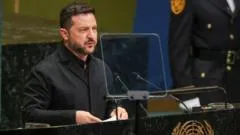
The South Korea Ukraine prisoner dispute escalated after President Zelensky publicly announced the transfer of two North Korean prisoners of war to Seoul. Although the transfer followed lengthy negotiations, Seoul expressed strong regret after details emerged during the UN General Assembly. The disagreement centers on a breach of confidentiality meant to protect soldiers' families and sensitive security interests. This article examines the diplomatic fallout, the domestic political pressure on President Lee Jae Myung, and the broader implications for the Russia-North Korea-South Korea security triangle.
Why did the transfer of North Korean prisoners cause a diplomatic crisis?
The diplomatic tension stems from the public disclosure of a transfer that South Korea maintains was intended to remain strictly confidential. Following more than a year of complex negotiations between Seoul and Kyiv, President Volodymyr Zelensky announced at the UN General Assembly that two North Korean soldiers, captured in Russia's Kursk Oblast in early 2025, had been successfully transferred to South Korea.
Seoul's Vice Foreign Minister, Park Yoon-joo, summoned Ukraine's acting ambassador, Andrii Vieshkin, to lodge a formal complaint. The South Korean government expressed "strong regret" that the announcement was made publicly, arguing that the disclosure violated the spirit of their agreement. According to the office of President Lee Jae Myung, the secrecy was essential for two primary reasons:
- Protection of Families: To shield the families of the North Korean soldiers from potential retaliation or hardship in Pyongyang.
- Exchange Optics: To prevent criticism in Ukraine that the government was bypassing opportunities to exchange these soldiers for Ukrainian prisoners of war.
While South Korean officials claimed Kyiv had indicated the soldiers would be mentioned in the UN address, they insisted the specific fact of their transfer should not have been made public. The dispute intensified when the Ukrainian presidency countered that no formal non-disclosure agreement existed between the two nations, leading Seoul to demand an apology for what it termed the "announcement of a falsehood."
How is the dispute impacting South Korean domestic politics?
President Lee Jae Myung is facing significant domestic scrutiny following the disclosure, as the incident touches upon the highly sensitive issue of North Korean relations. The President characterized the leak as "greatly disappointing" and a threat to national security, but his administration is not without its critics.
The South Korean opposition has used the incident to target the administration's handling of Pyongyang. Specifically, opposition leaders have accused President Lee of attempting to cover up the transfer to avoid provoking North Korea. This criticism is compounded by the fact that Lee’s political party typically advocates for a more conciliatory approach toward the North, a stance that often clashes with hardline security requirements.
The political landscape in Seoul
President Lee's efforts to reopen peace talks with North Korea have seen limited success, making him vulnerable to accusations of being too soft on the regime. The prisoner controversy provides political leverage for opponents who argue that the administration's desire for stability is compromising the country's strategic transparency and security protocols.
What is the impact of North Korean involvement on South Korea's aid to Ukraine?
The deployment of North Korean troops to support Russia in 2024 has fundamentally altered the calculus of South Korea's involvement in the Ukraine conflict. While Seoul has maintained a long-standing policy against providing lethal weapons to active war zones, the "totalitarian axis" formed by Russia and North Korea has increased pressure on the administration to escalate its support.
Kyiv has intensified its requests for advanced military hardware, specifically anti-air missiles, to defend its energy infrastructure from Russian drone and missile strikes. Mykhailo Podolyak, a senior adviser to President Zelensky, argued that South Korea cannot remain a "distant observer" when North Korea is actively participating in a European war. Podolyak suggested that providing defense technologies is a matter of South Korean long-term security, aimed at containing the expansion of aggressive regimes.
In response to these pressures, Seoul has expanded its non-lethal assistance. In July 2026, South Korea announced a $100 million assistance package. This follows previous contributions of essential gear, including:
- Personal body armor
- Military helmets
- Medical equipment
How does this conflict affect the broader Russia-South Korea relationship?
The prisoner dispute and the potential for increased military aid place South Korea in a precarious position regarding its relations with Moscow. Since the collapse of the Soviet Union, Seoul has worked to maintain cordial ties with Russia, viewing it as a vital partner in regional stability and a key actor in influencing North Korean behavior.
Russia has responded to the growing South Korean-Ukrainian alignment with clear warnings. The Russian foreign ministry stated it would have "no choice but to retaliate" should South Korea move from providing non-lethal aid to supplying direct arms to Ukraine. While Moscow has not specified the nature of such retaliation, the threat underscores the risks inherent in Seoul's delicate balancing act.
South Korea's strategic interest lies in maintaining functional diplomatic channels with both Russia and China. Both nations are seen as essential components in any long-term effort to manage the North Korean threat. Consequently, any escalation in military support for Kyiv could jeopardize Seoul's ability to use these powers as mediators or influencers in the Korean Peninsula's security architecture.
Frequently asked questions
Why did South Korea summon the Ukrainian ambassador?
South Korea summoned the ambassador because President Zelensky publicly announced the transfer of two North Korean prisoners of war. Seoul argues this disclosure violated a confidential agreement intended to protect the soldiers' families and manage the political sensitivity of the transfer, thereby damaging trust between the two nations.
What were the North Korean soldiers doing in Ukraine?
The two North Korean soldiers were among thousands of troops deployed to support Russia's military efforts in the Ukraine war. They were captured by Ukrainian forces in Russia's Kursk Oblast in early 2025 and were eventually transferred to South Korean custody following extensive negotiations.
Has South Korea provided lethal weapons to Ukraine?
No, South Korea has maintained its longstanding policy of not providing lethal weapons to countries engaged in active warfare. Instead, Seoul has focused on non-lethal assistance, including a $100 million package featuring medical equipment, helmets, and personal armor to support Ukrainian needs.
What is Russia's stance on South Korean aid?
Russia has warned that it will be forced to retaliate if South Korea begins providing arms to Ukraine. While the Russian foreign ministry has not detailed the specific actions it might take, the warning serves as a deterrent against Seoul shifting from non-lethal to lethal military support.
Why is the North Korean prisoner issue considered a national security matter?
The issue is sensitive because it involves the direct involvement of North Korean troops in a foreign conflict. Managing these prisoners requires careful diplomacy to avoid provoking Pyongyang, protecting the identities of those involved, and maintaining the strategic balance between Seoul, Moscow, and Beijing.
Key takeaways
- The diplomatic row was triggered by President Zelensky's public disclosure of a secret North Korean POW transfer.
- South Korea claims the disclosure violated agreements meant to protect the prisoners' families and manage political sensitivities.
- President Lee Jae Myung faces domestic criticism for his administration's handling of North Korean relations.
- Russia has threatened retaliation if South Korea transitions from non-lethal aid to providing direct military arms.
Conclusion
The dispute over the North Korean prisoners of war highlights the intricate and often volatile intersection of regional security and international diplomacy. For South Korea, the incident is more than a mere breach of protocol; it is a complication of a delicate balancing act involving North Korea, Russia, and the West. As the "totalitarian axis" of Russia and North Korea continues to deepen, Seoul must navigate the pressure to support Ukraine against the necessity of maintaining stable relations with Moscow and Beijing. The resolution of this tension will likely dictate the future of South Korea's role in European security dynamics.