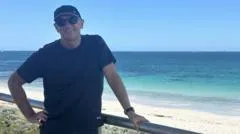
Authorities have issued an extraordinary catch-and-kill order for a great white shark following the tragic death of 63-year-old swimmer Greg O'Neill at Sorrento Beach. This rare legal measure allows officials to prevent the media from reporting specific details regarding the shark's location or the ongoing investigation to ensure public safety and operational success. The incident has sent shockwaves through the local community, prompting urgent calls for increased beach patrols and better warning systems. As experts monitor the waters, the focus remains on preventing further encounters in this high-risk area.
What happened during the fatal attack at Sorrento Beach?
The fatal encounter occurred on Friday at Sorrento Beach, located in the northern suburbs of Perth, involving a great white shark estimated to be approximately 2.5 metres (8ft 2in) long. Witnesses described a violent scene that left the local community in shock.
According to witness Jacqui Rapaic, who spoke to the ABC, two individuals were swimming in the area when the attack took place. She reported that while one person managed to return to the shore, she observed a "pool of blood" in the water. Another witness, speaking to WAtoday, provided a more harrowing account, stating that the victim was being "mauled" and tossed by the shark with significant force.
The victim has been identified as 63-year-old Greg O'Neill. His family released a statement expressing that they were "deeply shocked and devastated by the terrible tragedy." They described O'Neill as a passionate swimmer and a dedicated worker who loved the ocean. As of the latest reports, his body has not been located, complicating the immediate aftermath of the tragedy. On Saturday, his family visited the scene, where locals have been laying flowers in his memory.
Why was a rare catch-and-kill order issued?
Western Australia Fisheries Minister Jackie Jarvis authorised an "extraordinary step" by issuing a catch-and-kill order after water police positively identified the shark involved in the Sorrento Beach attack on Saturday morning. This order allows fisheries officers to destroy the shark if it is captured.
The decision was driven by the "exceptional circumstances" of the attack and the immediate hazard the specific shark poses to the public. While great white sharks are a protected species in Australia, the minister emphasised that this is not a widespread cull. Instead, it is a targeted response to a confirmed predator linked to a fatality.
The legal and environmental context of shark culls
The use of catch-and-kill orders remains a highly controversial subject in Australian environmental policy. Because great white sharks are protected, any move to kill them often triggers intense debate between public safety advocates and conservationists. Minister Jarvis noted that this is the first time in approximately 10 years that such an order has been implemented in Western Australia.
This distinction is crucial to differentiate the current situation from the large-scale shark culls seen in previous years. In 2014, the state government faced months of significant public protests following the authorisation of a broad cull. The current order is strictly limited to the specific animal identified by authorities as the perpetrator of the Sorrento Beach incident. The minister emphasized that the order is a response to the specific hazard posed by this individual shark rather than a general policy shift.
How are authorities responding to the recent surge in attacks?
In the wake of the Sorrento Beach incident, Joondalup authorities implemented immediate closures of all local beaches as a precautionary measure. These closures, which include coastal areas near the capital, Perth, were scheduled to remain in effect until at least midday on Sunday to allow for ongoing searches and patrols.
Law enforcement and maritime authorities have increased their presence in the area. On Saturday, the coastline was being actively monitored by police boats and helicopters. Beyond physical patrols, the government is looking toward technological solutions to mitigate future risks.
Minister Jarvis stated that there will be an increase in the use of drones and shark tagging. These technologies are intended to provide better real-time data on shark movements, allowing authorities to warn beachgoers and manage coastal access more effectively without relying solely on reactive measures. The goal is to use these tools to help protect beachgoers through improved monitoring.
What is the broader context of shark attacks in Australia?
The attack at Sorrento Beach is part of a concerning trend of shark-related incidents across Australia. It represents the fifth fatal shark attack on the continent this year, highlighting a period of increased volatility in human-shark interactions.
The frequency of these incidents varies by region, but the impact is felt nationwide. In January, a 12-year-old boy lost his life following a bite in Sydney Harbour. Between May and June, three divers were killed in separate incidents, two of which occurred in Western Australia and one in Queensland.
In Western Australia specifically, the Sorrento incident was the second attack within a single week. On the preceding Monday, a 56-year-old man was bitten while surfing off the coast of Geraldton, approximately 430km (270 miles) north of Perth. While the surfer survived the encounter, he suffered the loss of part of his leg, according to reports from the ABC.
| Location | Incident Type | Outcome |
|---|---|---|
| Sorrento Beach, WA | Fatal attack (swimmer) | Deceased (Greg O'Neill) |
| Geraldton, WA | Bite (surfer) | Survived (loss of leg) |
| Sydney Harbour, NSW | Fatal attack (child) | Deceased |
| Queensland | Fatal attack (diver) | Deceased |
The current data shows a pattern of fatal encounters involving various groups, including swimmers, surfers, and divers, across multiple states, underscoring the complexity of managing coastal safety in the face of shark activity.
Key takeaways
- A fatal shark attack at Sorrento Beach has resulted in the death of 63-year-old Greg O'Neill.
- Authorities issued a rare catch-and-kill order for the 2.5m great white shark involved.
- This is the third fatal shark attack recorded in Western Australia so far this year.
- Beaches in the Perth region were closed as a precaution during the search and patrol operations.
- The government plans to increase the use of drones and tagging to improve beach safety.
FAQ: Shark attack Western Australia
Who was the victim of the Sorrento Beach attack?
The victim was identified as 63-year-old Greg O'Neill. He was described by his family as a passionate swimmer and a dedicated worker. His body has not yet been recovered following the attack on Friday.
What is a catch-and-kill order?
A catch-and-kill order is a rare legal authorisation that allows fisheries officers to destroy a specific shark if it is captured. This is typically reserved for animals that have been positively identified as a direct threat to human safety.
Why are beaches being closed in Western Australia?
Beaches, including those in Perth and the Joondalup area, were closed as a precautionary measure. This allows police and water authorities to conduct searches, patrol the waters with boats and helicopters, and ensure public safety.
How many shark attacks have occurred in Australia this year?
There have been five fatal shark attacks in Australia this year. These incidents have occurred in various locations, including Sydney Harbour, Queensland, and Western Australia, affecting swimmers, surfers, and divers.
Is Western Australia conducting a large-scale shark cull?
No, the current measures are not a widespread cull. Fisheries Minister Jackie Jarvis clarified that the catch-and-kill order is a specific response to the shark identified in the Sorrento Beach incident and is not a general population reduction program.
Conclusion
The fatal attack at Sorrento Beach has underscored the ongoing tension between marine conservation and public safety in Western Australia. While the issuance of a catch-and-kill order is a rare and controversial move, authorities have framed it as a necessary response to an exceptional hazard. As the search for Greg O'Neill continues and the identified shark is sought, the focus shifts toward long-term prevention. The increased deployment of drones and tagging technology suggests a move toward more proactive, data-driven management of Australia's coastal waters to protect both citizens and the marine ecosystem.