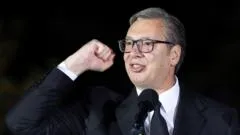
The Serbian president resignation of Aleksandar Vučić marks the end of a nine-year era defined by significant political shifts and civil unrest. Following more than a year of student-led protests and widespread allegations of government corruption, Vučić officially stepped down from the presidency in September 2026. This move triggers a series of mandatory early elections, including snap parliamentary votes in late October and a presidential election shortly thereafter. The political transition follows a period of intense public discontent sparked by the Novi Sad railway station disaster. This article examines the causes of the resignation, the upcoming electoral landscape, and the potential future of Vučić's political influence.
Why did Aleksandar Vučić resign as president?
Aleksandar Vučić resigned primarily due to sustained public pressure and a year-long wave of protests led by students and various civil sectors. While the president maintained in his address in Belgrade that his administration preserved stability during his nine-year tenure, the political climate had become untenable. The resignation follows his previous announcement in June regarding his intention to step down, a move necessitated by constitutional limits that prevent him from seeking a third presidential term.
The catalyst for this political breakdown was not a single event but a culmination of grievances regarding governance and transparency. For much of his time in power, the administration faced accusations of systemic corruption and 'corner-cutting' in major infrastructure projects. These allegations gained significant traction following a major tragedy that shook the nation's confidence in state-led development.
The Novi Sad catalyst
The collapse of the roof at the Novi Sad railway station in 2024 served as the definitive turning point for public sentiment. The disaster resulted in 16 deaths and became a symbol of perceived negligence within the government. Because Vučić had closely associated himself with the station's renovation—a project intended to showcase Serbian progress—the failure was viewed by many as a direct indictment of his administration's management and oversight.
What is the impact of the Novi Sad disaster on Serbian politics?
The Novi Sad railway station disaster transformed localized discontent into a broad-based national movement involving students, teachers, workers, and farmers. What began as anger over a specific infrastructure failure evolved into a systemic critique of the Progressive Party's decade-long governance. Protesters argued that the disaster was a symptom of a deeper culture of corruption that prioritized speed and political optics over safety and structural integrity.
The unrest intensified throughout the summer of 2026, particularly after accusations of police brutality surfaced during demonstrations. This escalation meant that even high-level resignations within the government failed to satisfy the demands of the public. The protesters' list of demands eventually included a call for early elections, a demand that the government was ultimately forced to address through the calling of snap parliamentary votes.
When will the upcoming Serbian elections take place?
Serbians will participate in two distinct electoral processes before the end of 2026 due to the constitutional requirements triggered by the presidential resignation. According to Serbian law, presidential elections must be conducted no later than three months after a vacancy occurs. Consequently, the electoral calendar is divided into two critical phases: the snap parliamentary elections and the subsequent presidential vote.
- Snap Parliamentary Elections: Scheduled for late October 2026, these were called in direct response to the ongoing protests.
- Presidential Election: This will occur more than one month after the parliamentary vote, as confirmed by Vučić.
During this interim period, parliamentary speaker Ana Brnabić, a member of the Progressive Party, will serve as the interim president. This ensures constitutional continuity while the nation prepares for the transition of power.
How will Aleksandar Vučić participate in the new elections?
Aleksandar Vučić intends to remain a central figure in Serbian politics by transitioning from the presidency to a leadership role in the parliamentary sphere. Although he cannot run for a third presidential term due to constitutional restrictions, he is currently standing as the Progressive Party's candidate for prime minister. This strategic shift allows him to potentially retain significant executive influence despite leaving the presidency.
The upcoming parliamentary contest will be a high-stakes battle between the established ruling party and new, organized opposition forces. The political landscape is expected to be shaped by three primary factions:
| Political Faction | Description |
|---|---|
| Progressive Party | The ruling party led by Vučić, seeking to maintain control through the parliamentary elections. |
| Students Win | A student-led movement focused primarily on anti-corruption and systemic reform. |
| European Serbia | A coalition of pro-Western opposition parties seeking a shift in national direction. |
Vučić's ability to navigate these elections will determine whether his party can maintain its grip on the legislature, which would provide him a platform to continue his policy objectives.
What are the geopolitical implications of the political shift?
The outcome of the upcoming elections will have significant consequences for Serbia's foreign policy and its position between major global powers. For over a decade, Vučić has pursued a complex balancing act, publicly expressing a desire for European Union membership while simultaneously maintaining close ties with Russia and encouraging substantial Chinese investment in Serbian infrastructure.
The emergence of the 'European Serbia' coalition suggests that a significant portion of the electorate is pushing for a more decisive pivot toward Western institutions. Conversely, the Progressive Party's continued influence could maintain the current status quo of multi-vector diplomacy. The stability of Serbia's relations with the EU, Russia, and China will depend heavily on whether the incoming government prioritates integration with the West or continues the policy of strategic neutrality and investment from Eastern powers.
Frequently asked questions
Why is Vučić unable to run for president again?
Aleksandar Vučić is barred from seeking a third presidential term by the Serbian constitution. This legal restriction necessitated his resignation and his subsequent decision to run for a different office, specifically as the Progressive Party's candidate for prime minister in the upcoming parliamentary elections.
What role will Ana Brnabić play during this transition?
Ana Brnabić, who serves as the parliamentary speaker and is a member of the Progressive Party, will act as the interim president. She will hold this position to ensure constitutional stability until the new president is officially elected following the scheduled snap elections.
What caused the protests in Serbia?
The protests were triggered by the 2024 Novi Sad railway station roof collapse, which killed 16 people, and were fueled by long-standing allegations of government corruption. The unrest grew following accusations of police brutality and demands for early elections from various civil groups.
Who are the main competitors in the parliamentary election?
The Progressive Party faces two major challenges: the 'Students Win' movement, which is driven by anti-corruption sentiment, and 'European Serbia,' a coalition of pro-Western opposition parties. These groups represent the primary alternatives to the current administration's leadership.
Will Serbia change its foreign policy after the elections?
The direction of Serbian foreign policy depends on the election results. While Vučić has balanced EU aspirations with ties to Russia and China, the rise of pro-Western opposition groups could lead to a more focused effort toward European integration and a shift away from current multi-vector diplomacy.
Key takeaways
- Aleksandar Vučić resigned the presidency following intense student-led protests and corruption allegations.
- The 2024 Novi Sad railway station disaster was a primary driver of public discontent.
- Serbians will vote in snap parliamentary elections in October and presidential elections shortly after.
- Vučić intends to run for prime minister to maintain his political influence.
- The election features a contest between the Progressive Party, Students Win, and European Serbia.
Conclusion
The resignation of Aleksandar Vučić marks a volatile turning point in Serbian history. Driven by the tragic consequences of the Novi Sad disaster and a widespread demand for accountability, the nation now enters a period of intense electoral activity. The dual elections in late 2026 will decide not only the immediate leadership of the country but also its long-term political trajectory. Whether Serbia moves toward a more Western-aligned path under the opposition or maintains its current balancing act under the Progressive Party remains the central question for the upcoming polls.