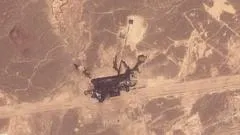
The strike caused injuries and damage, prompting Riyadh to halt operations that carry 4% to 5% of global oil supply. Iraq removed the regional operations commander and opened an investigation. The move coincides with Houthi advances along Yemen's Red Sea coast that threaten additional shipping routes.
Why did Saudi Arabia close the East-West pipeline?
Saudi authorities shut the 1,200 km pipeline after drones struck a section near the site, according to satellite images showing scorched ground and smoke. The foreign ministry confirmed injuries and ongoing damage assessment. The pipeline normally moves between 4% and 5% of global crude supply, Reuters reported from ship tracking data. The 1,200 km (745 mile) pipeline has helped Saudi Arabia bypass the Strait of Hormuz. Riyadh said the decision was precautionary. It has not launched a military response after a call from Iraq's prime minister, but reserved the right to protect its facilities. The foreign ministry statement read: "The Kingdom of Saudi Arabia affirms that it reserves its right to take all necessary measures to safeguard its sovereignty and security, protect its facilities, and ensure the safety of its citizens and residents." The Gulf Co-operation Council condemned the strike as a dangerous escalation and a flagrant violation of international law that threatens Saudi territorial integrity and vital installations. Riyadh has previously accused Iran-backed militias in Iraq of targeting its oil facilities and has conducted strikes alongside the US against such groups. The shutdown follows satellite evidence of damage and comes as the kingdom assesses the full extent of harm to the critical infrastructure that normally bypasses the Strait of Hormuz for exports.
Where did the drones originate and what did Iraq do?
Iraq confirmed the drones were launched from Maysan governorate, which borders Iran. The prime minister's office removed the local operations commander and began an investigation. Saudi Arabia has previously accused Iran-backed groups in Iraq of similar attacks on its oil infrastructure. The Iraqi prime minister's office stated that the operations commander in Maysan had been dismissed following confirmation that the attack originated in that province. The Gulf Co-operation Council, representing Saudi Arabia, the United Arab Emirates, Bahrain, Oman, Qatar and Kuwait, issued a joint statement describing the incident as an unacceptable threat to the security of the Kingdom and a violation of the principles of international law. Secretary general Jasem Mohamed Albudaiwi condemned the attack on behalf of the council. Saudi Arabia has previously carried out strikes alongside the US against Iran-backed militias in Iraq after accusing the groups of launching drones from Iraqi territory at oil facilities. Iraq's admission that the attack came from its territory bordering Iran led directly to the commander's removal and the start of a formal probe into how the drones were launched across the border.
How does the Yemen fighting affect oil routes?
Houthi forces seized Mokha and claimed control of the Bab al-Mandab Strait, the entrance to the Red Sea and Suez Canal. Yemen's Saudi-backed government forces struck back at Houthi positions in Mokha and Taiz governorate. The UN reported at least 76,000 people displaced since July, with numbers quadrupling in the past week. The group said maritime navigation remains safe for all companies except Saudi vessels. Yemen's Armed Forces spokesman Majid al-Nuzaili said government forces had targeted Houthi positions in and around Mokha, destroying vehicles and weapons and killing a number of fighters. Local sources reported additional air strikes in Taiz and neighbouring Ibb governorates. The UN warned of a rapidly worsening displacement crisis, noting that entire families are moving at night with almost no resources. This week a lightning advance in Yemen has also seen Houthi militants seize control of much of the country's coastline. The strategic coastal city of Mokha on the Red Sea is situated about 80 km north of the Bab al-Mandab Strait. The Houthis seized control of Mokha on Thursday, driving many people to flee to Aden. The advance places new pressure on the gateway to the Suez Canal while the UN highlights the hourly worsening humanitarian impact along the coast.
What are the immediate market consequences?
Analyst Richard Bronze of Energy Aspects said rerouting Saudi oil around Africa already adds 30 days to voyages and raises transport costs. Diesel prices have reached record levels, increasing costs for manufacturing and logistics. He warned that prices could return to the earlier $120 peak if both conflicts continue. The combined pressure on both sides of the Arabian Peninsula has pushed crude prices above $100 a barrel for the first time since July. Bronze noted that the buffers that have helped the oil market manage the crisis so far are mostly gone, so prices will keep rising if both crises continue. Challenges are particularly acute in diesel markets, where record prices push up costs for a range of goods used in manufacturing and transportation. Fears over inflation have risen with the spike in energy prices, further pushing up government borrowing costs. Unless the situation across the Middle East improves, crude oil prices are likely to return to the peak of $120 per barrel seen earlier in the Iran war and could go even higher. The analyst stressed that existing market cushions have largely disappeared, leaving prices vulnerable to further rises if the parallel crises on either side of the peninsula persist.
Frequently asked questions
Has Saudi Arabia retaliated?
Saudi Arabia has chosen not to retaliate at this stage and said it will support Iraqi government efforts to stop further attacks launched from its territory.
How much oil normally flows through the pipeline?
The pipeline carries 4% to 5% of global oil supply, according to ship tracking companies and analysts cited by Reuters.
Where exactly was the attack launched from?
Iraqi authorities confirmed the drones originated in Maysan governorate, a province bordering Iran. The local military commander has been dismissed.
What is the current situation in Mokha?
Houthi fighters seized the strategic Red Sea city on Thursday. Government forces conducted air strikes on Houthi positions in and around Mokha the following day.
How many people have been displaced in Yemen?
The UN stated that at least 76,000 people have been displaced since July, with the figure quadrupling in the past week alone.
Key takeaways
- Saudi Arabia closed its East-West pipeline after a confirmed drone strike from Iraq.
- The pipeline normally transports 4% to 5% of global crude supply.
- Iraq removed the Maysan operations commander and launched an investigation.
- Houthi advances have placed the Bab al-Mandab Strait under new pressure.
- Crude oil prices have risen above $100 a barrel.
Outlook for oil markets and regional stability
The shutdown adds further strain to already disrupted shipping lanes. Continued escalation on either side of the peninsula risks pushing prices toward previous peaks and raising costs across diesel-dependent sectors. Both governments have signalled they will pursue diplomatic and security measures to contain the immediate threat. The developments have squeezed both sides of the Arabian Peninsula, pushing crude oil prices to over $100 a barrel for the first time since July. The combined effect leaves markets with fewer buffers and heightens the risk of sustained higher prices if the parallel conflicts continue without resolution.