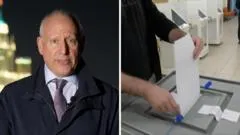
Preliminary results suggest the Kremlin-backed United Russia party will maintain its firm grip on parliament following a vote held during the ongoing conflict in Ukraine. This outcome indicates that the ruling party remains in control of the legislative process despite the significant geopolitical tensions currently surrounding the nation.
Preliminary results indicate ruling party dominance
Early data emerging from Russia's parliamentary elections suggest that United Russia, the party backed by President Vladimir Putin, is set to maintain its dominant position within the legislature. The preliminary results indicate that the Kremlin-aligned party will secure its grip on parliament, a development that aligns with expectations for the current political climate.
The outcome of the vote has been met with little shock from international observers on the ground. Steve Rosenberg, the BBC's Russia editor who has been following the elections from Moscow, stated that the emerging results come as "no surprises."
Political landscape and opposition restrictions
The electoral process was significantly shaped by the absence of major opposition voices. The Yabloko party, which stands as the only anti-war party in the country, was removed from the ballot in the run-up to polling day. While the party was blocked from the official ballot, the situation was not uniform across the country, as some individual candidates managed to remain on the ballot in certain constituencies.
This restriction on the anti-war political movement occurred as the nation continues to navigate the complexities of a prolonged conflict. The political landscape remains heavily influenced by the ongoing war against Ukraine, which has now lasted for more than four and a half years.
Context of the national vote
The parliamentary elections are being held against a backdrop of significant national strain. The conflict in Ukraine has resulted in huge battlefield losses for the Russian army, adding to the domestic pressures facing the government.
In addition to the military toll, the war has also sparked economic hardship across the country. These combined factors—military attrition and economic instability—provide the critical context for a vote that appears to reinforce the existing power structure in Moscow.