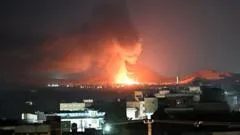
A fresh wave of Pakistani aerial bombardments in several Afghan provinces has left at least four civilians dead. This recent surge in military activity marks a significant and dangerous escalation in the volatile border dispute between Islamabad and the Taliban government. Local officials and international observers are closely monitoring the situation as tensions rise. The strikes have caused widespread alarm regarding the humanitarian impact on local populations living near the border regions. According to reports from the United Nations, these operations are linked to ongoing security concerns involving the TTP.
What triggered the recent wave of Pakistani air strikes?
The recent escalation in cross-border violence was triggered by a lethal attack on a police compound in north-western Pakistan on 18 September. According to AFP, this attack on a mosque within the police facility resulted in at least 31 fatalities. A group linked to Tehreek-e-Taliban Pakistan (TTP), which has waged a violent campaign against Pakistan for years, claimed responsibility for the incident.
The TTP's involvement has reignited a long-standing friction between the two neighbors. Islamabad has repeatedly accused the Taliban government in Kabul of providing sanctuary to TTP militants, a claim that Kabul continues to deny. The Taliban leadership asserts that the militancy is an internal Pakistani security issue rather than an Afghan one. This fundamental disagreement over the responsibility for cross-border terrorism remains the primary driver of the current friction and the recent return to kinetic operations.
Where did the strikes occur and what was the impact?
The strikes targeted several key provinces in Afghanistan, including Kandahar, Paktia, and Khost, according to Taliban spokesman Zabihullah Mujahid. Kandahar is particularly significant as it serves as the primary base of power for the Taliban government. The strikes represent the second wave of Pakistani aerial operations on Afghan territory within a single week.
Reports from the ground suggest varying degrees of impact across the targeted regions, highlighting the discrepancy between military objectives and civilian reality:
- Paktia: An official reported that jets had bombed the Afghan Armed Forces' 203 Mansouri Corps, a unit controlled by the Taliban, though specific casualty figures for this location were not immediately provided.
- Khost: A spokesman confirmed that while houses sustained damage during the strikes, no casualties were reported in this specific province.
- Kunar: Farid Dehqan, a Taliban spokesman for Kunar, told the BBC that the strikes in this province killed three people and injured four others.
The UN mission Unama corroborated the reports of civilian loss, confirming that at least three civilians were killed in the recent operations. This follows earlier reports from this week where Pakistan claimed to have killed 28 militants in air strikes in the border region. The cumulative impact of these recent actions suggests a rapid breakdown in the relative calm that had existed for the previous three months.
Eyewitness accounts of the strikes
The human impact of the aerial bombardments was described by residents as sudden and terrifying. Abdullah, a local resident, told Reuters news agency that the strikes occurred around midnight, causing widespread panic. He noted that people were shouting and that village elders had to arrive after the explosions to call out to the houses, asking if anyone had been killed in the darkness.
Other residents, such as Salamat Khan, disputed the presence of military targets in their immediate vicinity. Khan told Reuters that there is no military base in his area, nor are there any military personnel, adding that there are only the homes of ordinary civilians. These accounts provide a stark contrast to the official narratives provided by both governments regarding the nature of the targets.
How has the Taliban and Pakistan responded to the violence?
The Taliban government has condemned the strikes as "reckless, careless, and hostile," with spokesman Zabihullah Mujahid warning that the attacks will have "adverse consequences" for the Pakistani military. The Afghan leadership views the strikes as a violation of sovereignty and an escalation of unprovoked aggression.
Conversely, Pakistan's Information Minister Attaullah Tarar defended the operations, describing them as "deliberate, precise, calibrated, and proportionate." According to Tarar, the strikes were strictly limited to identified military objectives that are directly linked to the attempted attacks against Pakistan. Pakistan has also maintained a firm stance on the drone issue; following reports on Wednesday that Pakistan detected drones launched from Afghanistan, Islamabad claimed all such drones were "neutralised," though Taliban officials denied launching any drones against Pakistan that day.
The diplomatic tension was further highlighted during the UN General Assembly earlier this week. Pakistan's Foreign Minister Ishaq Dar called for "concrete and verifiable" measures to ensure that Afghan territory is not used for terrorism. This demand underscores Pakistan's requirement for tangible proof that Kabul is actively addressing the TTP threat, while the Taliban continues to maintain its stance that the militants are a domestic Pakistani problem.
What is the broader context of the Afghanistan-Pakistan border conflict?
The current violence follows a brief three-month period of relative stability between the two neighbors. This calm was shattered by the recent TTP-linked attacks and subsequent retaliatory strikes. The history of this border region is marked by frequent and deadly exchanges of fire and aerial bombardment, with international mediation efforts failing to produce a lasting resolution.
The scale of civilian suffering in this conflict is significant and documented by international observers. According to Unama, between October 2025 and June 2026, cross-border armed violence between Taliban government forces and Pakistani security forces resulted in at least 499 civilian deaths and 1,216 injuries. The volatility of the situation is evidenced by the severity of individual incidents; for example, in March, a Pakistani air strike on Kabul killed more than 269 people. While the Taliban claimed the strike hit a drug rehabilitation centre, Islamabad maintained it was targeting terrorist support infrastructure. This pattern of high-casualty incidents and conflicting claims of target legitimacy continues to define the border crisis.
Frequently asked questions
Why is Pakistan conducting air strikes in Afghanistan?
Pakistan states that the strikes are a response to terrorist attacks launched from Afghan soil, specifically targeting groups like the TTP. Islamabad claims these operations are necessary to neutralize military objectives directly linked to attacks on Pakistani security forces, such as the recent attack on a police facility that killed 31 people.
What does the Taliban say about the TTP?
The Taliban government denies harboring the Tehreek-e-Taliban Pakistan (TTP). They maintain that the group's activities are an internal matter for Pakistan to resolve and reject the accusation that they provide sanctuary or support to militants operating across the border.
How many civilians have been killed in recent strikes?
The Taliban and the UN mission Unama have confirmed that at least four civilians were killed in the latest wave of strikes. These deaths occurred in provinces such as Kunar, following aerial bombardments that also resulted in multiple injuries to local residents.
Has there been any successful mediation to stop the violence?
No, international mediation efforts have so far failed to produce a lasting resolution or a permanent ceasefire. While a ceasefire was agreed upon in March, the recent surge in violence indicates that the underlying security concerns and accusations remain unresolved.
What is the role of the UN in this conflict?
The UN mission Unama monitors and reports on the impact of the conflict, particularly regarding civilian casualties. Unama provides data on the number of deaths and injuries resulting from cross-border violence, serving as a primary source for documenting the human cost of the hostilities.
Key takeaways
- Pakistani air strikes in Afghanistan killed at least four civilians, according to the Taliban and Unama.
- The escalation follows a September 18 attack on a Pakistani police facility that killed 31 people.
- Pakistan maintains that its strikes are precise and limited to military targets linked to terrorism.
- Unama reported 499 civilian deaths due to border violence between October 2025 and June 2026.
The cycle of border instability
The recent strikes represent a recurring pattern of escalation in the Afghanistan-Pakistan border region. The tension between the Taliban's denial of hosting militants and Pakistan's insistence on retaliatory strikes creates a volatile environment where civilian populations bear the brunt of the conflict. Without verifiable security guarantees or successful international mediation, the cycle of air strikes and retaliatory terrorism appears likely to continue, further destabilizing the region.