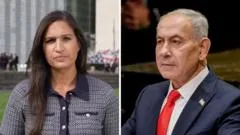
Israeli Prime Minister Benjamin Netanyahu defended military campaigns in Iran and Gaza during his recent UN General Assembly speech. He addressed the international community directly, maintaining his stance on security despite the existence of an active ICC warrant for alleged war crimes committed during the ongoing conflicts.
Defense of military operations
During his address to the United Nations General Assembly on 24 September, Benjamin Netanyahu defended his country's military campaigns. He specifically cited ongoing operations in Gaza and Iran, as well as elsewhere in the Middle East, as part of his justification for Israel's strategic posture.
The Prime Minister used the international forum to outline Israel's security objectives amidst regional instability. His speech served as a platform to address the international community regarding the necessity of these military engagements, focusing on the defense of Israel's borders and the response to threats originating from various Middle Eastern actors.
International Criminal Court warrant context
Netanyahu's appearance in New York occurred while an arrest warrant from the International Criminal Court (ICC) for alleged war crimes is in effect. Despite the existence of this warrant, the Prime Minister was not arrested after speaking at the UN General Assembly.
The legal status of the warrant provides a significant backdrop to his diplomatic activities in the United States. The presence of the warrant highlights the ongoing tension between international legal institutions and sovereign political leaders. While the ICC has issued the mandate, the practical enforcement of such warrants often depends on the cooperation of host nations and member states.
Diplomatic immunity and jurisdiction
The ability of the Israeli Prime Minister to travel to the United States and participate in UN proceedings despite the ICC warrant involves complex legal and diplomatic frameworks. Under international protocols, high-ranking officials often receive specific protections during official visits to international organizations.
The current situation underscores the challenges faced by international courts when attempting to enforce mandates against sitting heads of government. The legal implications of the warrant continue to be a central point of discussion in international relations, as the Prime Minister continues his official duties in the face of the ICC's allegations.