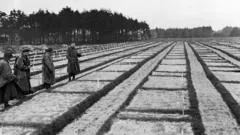
A Nazi PoW camp investigation has been launched by German prosecutors against a 105-year-old man suspected of being an accessory to multiple murders. The suspect is alleged to have served as a guard at the Stalag 326 VI K prisoner of war camp in Senne, located in northwestern Germany, during World War Two. This legal action follows a similar case involving another former guard at the same site who recently passed away at age 99. The investigation highlights the ongoing efforts to prosecute Nazi-era crimes despite the extreme age of the suspects. This article examines the details of the Senne camp, the legal framework in Germany, and the challenges of late-stage war crimes prosecutions.
What are the allegations against the 105-year-old suspect?
The investigation focuses on allegations that the centenarian served as an accessory to multiple counts of murder during his time as a camp guard. According to Dortmund public prosecutor Sonja Frodermann, the suspect was stationed at Stalag 326 VI K in Senne, a major prisoner of war complex in northwestern Germany. The legal proceedings aim to determine the extent of his involvement in the deaths that occurred at the facility during the Nazi regime.
This specific case is not an isolated instance of legal scrutiny regarding the Senne site. Frodermann noted that a second former guard from the same camp had been under investigation, though that individual died a few months ago at the age of 99. While the identities and specific roles of these individuals remain largely confidential, the cases underscore a persistent judicial commitment to addressing historical atrocities through the German legal system.
The scope of the Senne investigation
The investigation is specifically tied to the activities performed at the Stalag 326 VI K complex. Prosecutors are working to establish whether the suspect's actions met the legal threshold for accessory to murder. Because the suspect is 105 years old, the speed and logistics of the investigation face unique hurdles, yet the legal mandate remains active due to the nature of the alleged crimes.
How significant was the Stalag 326 VI K camp in Senne?
Stalag 326 VI K was one of the largest prisoner of war complexes in Nazi Germany, serving as a central hub for captives during the conflict. According to the Senne memorial site, one in three Soviet prisoners of war who entered Nazi territory between 1941 and 1945 passed through this specific complex. The scale of the facility was immense, with registration records indicating that between 180,000 and 200,000 Soviet prisoners of war were held there.
The conditions within the camp were characterized by extreme hardship and systemic neglect. Prisoners were subjected to appalling mistreatment and severe malnutrition, which contributed to a high mortality rate. Of the vast number of Soviet prisoners registered at Senne, tens of thousands are believed to be buried within the region. While the majority of the victims were Soviet soldiers, the camp also held prisoners from various other nations, including:
- France
- Poland
- Serbia
- Belgium
Beyond the camp itself, many of the prisoners processed through Senne were utilized for forced labour throughout the surrounding area, further expanding the reach of the camp's impact on the local population and the lives of the captives.
What was the fate of Soviet prisoners of war?
The plight of Soviet soldiers in German captivity was exceptionally dire compared to other nationalities. During World War Two, more than 5.3 million soldiers from the Soviet Red Army were held by German forces, and it is estimated that half of them died in captivity. The mortality rates were driven by a combination of intentional mistreatment, starvation, and the brutal conditions of the Stalag system.
The tragedy for Soviet soldiers did not end with the conclusion of the war. Many of the survivors who managed to return to their homeland faced severe social consequences. Instead of being greeted as heroes, many were treated as traitors by the Soviet state upon their return, complicating the historical memory and the ability of survivors to seek justice or recognition for their experiences.
Why can Nazi crimes still be prosecuted in Germany?
The ability of German authorities to pursue these cases decades later is due to the absence of a statute of limitations for murder and accessory to murder. Since 1979, German law has ensured that there is no time limit on prosecuting these specific crimes, allowing investigators to bring even the oldest surviving suspects to court. This legal mechanism is essential for addressing the systemic crimes committed during the Nazi era.
The judicial process follows a specific hierarchy. While local public prosecutors, such as those in Dortmund, handle the active investigations, the initial responsibility for taking on Nazi crime cases lies with the central office for Nazi crime investigations located in Ludwigsburg in southwestern Germany. This centralized approach ensures that the specialized knowledge required for such complex historical investigations is applied consistently.
Challenges in modern-day prosecutions
Bringing perpetrators to justice more than 80 years after the events of World War Two presents immense practical and legal difficulties. Prosecutors must rely on decades-old evidence, witness testimonies that are increasingly rare, and the physical health of defendants who are often well over a century old. Despite these obstacles, recent years have seen significant, albeit rare, successes in the courtroom.
What are the precedents for prosecuting elderly Nazi suspects?
Recent legal history demonstrates that while successful prosecutions are infrequent, they are possible even at extreme ages. In a notable case from four years ago, a 101-year-old former concentration camp guard, Josef Schütz, was sentenced to five years in prison for complicity in murder at Sachsenhausen. Schütz holds the distinction of being the oldest Nazi criminal ever brought to justice, though he died in 2023 while appealing his sentence and never served his term.
Other recent cases include a 2022 conviction of a former Nazi concentration camp secretary. She was found guilty of abetting murder and received a suspended jail term. Similar to the guard in the Senne case, she passed away shortly after her legal troubles, dying at the age of 99. These precedents illustrate a pattern where the legal system pursues accountability until the very end of the suspects' lives, even when the practical application of a prison sentence is unlikely.
Frequently asked questions
Why is a 105-year-old being investigated for crimes from the 1940s?
German law has had no statute of limitations for murder or accessory to murder since 1979. This allows prosecutors to investigate and charge individuals for Nazi-era crimes regardless of how much time has passed, provided there is sufficient evidence to support the allegations of complicity.
What happened at the Senne PoW camp?
Stalag 326 VI K in Senne was a massive prisoner of war complex where between 180,000 and 200,000 Soviet prisoners were held. The camp was known for horrific living conditions, malnutrition, and mistreatment, resulting in the deaths of tens of thousands of prisoners.
Who is responsible for investigating Nazi crimes in Germany?
The central office for Nazi crime investigations in Ludwigsburg is responsible for initially taking on these cases. Once the investigation progresses, local public prosecutors, such as those in Dortmund, handle the specific legal proceedings and prosecutions in their respective jurisdictions.
How many Soviet prisoners died in German captivity?
It is estimated that approximately half of the 5.3 million Soviet Red Army soldiers held in German captivity during World War Two died. This massive loss of life was a result of the brutal conditions within the Stalag system and intentional mistreatment.
Did the elderly Nazi suspects ever serve prison time?
In many recent cases, defendants have died before serving their sentences. For example, Josef Schütz, the oldest Nazi criminal brought to justice, died while appealing his sentence, and a secretary convicted of abetting murder in 2022 died the following year at age 99.
Key takeaways
- German prosecutors are investigating a 105-year-old for alleged complicity in murders at the Senne PoW camp.
- Stalag 326 VI K held up to 200,000 Soviet prisoners, one-third of whom passed through the complex.
- Germany has had no statute of limitations for murder or accessory to murder since 1979.
- The investigation is managed through the central office in Ludwigsburg and local Dortmund prosecutors.
The pursuit of historical justice
The investigation into the 105-year-old former guard at Senne represents the final chapters of a decades-long judicial effort to confront the atrocities of the Nazi era. While the physical reality of the suspects' ages makes traditional punishment difficult, the legal proceedings serve a significant symbolic and historical purpose. By refusing to let the passage of time erase criminal accountability, the German justice system continues to validate the experiences of the millions who suffered in the Stalag system, ensuring that the crimes of the past remain a matter of active legal and historical record.