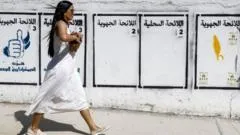
The Morocco election scheduled for Wednesday is being defined by a volatile mix of economic desperation, sporting celebrity, and geopolitical tension. As candidates vie for 395 seats in the House of Representatives, the political landscape is split between established parties and rising populist sentiments. Key drivers include a massive migration surge toward Ceuta, where 60,000 people attempted to cross in July, and high youth unemployment, which reached 37.3% according to IMF data. This article examines the influence of football icons, the debate over Israel-Morocco ties, and the disconnect felt by a young electorate.
What is the political structure of the Morocco election?
The Morocco election functions within a constitutional monarchy where the legislative process is central, yet executive authority remains concentrated within the crown. Voters are competing for 395 seats in the House of Representatives, the nation's legislative chamber. While the election determines the composition of the next government, the King holds significant power over the country's direction.
King Mohammed VI, the 63-year-old monarch, plays a decisive role in the governance of the kingdom. Although the King appoints the prime minister based on the results of the parliamentary vote, he also presides over the Council of Ministers. This council serves as the most critical body for national policy-making, ensuring that the monarchy maintains a steering hand in the country's long-term strategic decisions.
The role of the monarchy in governance
In the Moroccan system, political parties compete for influence, but they generally operate within a framework established by the royal vision. According to political expert Rachid Aourraz of the Moroccan Institute for Policy Analysis (MIPA), major parties do not typically offer competing alternative models for the state; instead, they compete on the implementation of policies directed by the monarchy.
How are economic hardships and migration impacting the vote?
Economic instability and the recent migration crisis in Ceuta have become central themes for disillusioned voters. In late July, a massive surge saw approximately 60,000 people attempt to cross from Morocco to the Spanish enclave of Ceuta, a movement driven largely by a lack of local opportunities. This migration event was tragic, resulting in at least 100 deaths.
The underlying economic drivers are reflected in stark statistical disparities. While the International Monetary Fund (IMF) estimated overall unemployment at 13% last year, the situation for the youth is much more severe. Unemployment among those aged 15 to 24 stood at 37.3%, fueling widespread frustration among Gen Z Moroccans.
This frustration manifested in September 2025 through large-scale protests regarding healthcare, living costs, and job scarcity. These demonstrations saw slogans directed at current Prime Minister Aziz Akhannouch and led to the prosecution of more than 2,400 individuals. For many young people, the political scene feels like a "complete circus," as described by environmental activist Siham Azeroual.
The rise of young political candidates
Despite the prevailing cynicism, some young activists are attempting to bridge the gap by running for office. Hamza El Kharroubi, a 29-year-old who was arrested during recent protests, is contesting a seat with the Environment and Sustainable Development Party. His campaign focuses on securing a voice for Gen Z and seeking justice for the families lost during the Ceuta migration surge.
Why is football becoming a political tool in the campaign?
Fouzi Lekjaa, a prominent figure in the finance ministry and head of the Royal Moroccan Football Federation, has emerged as a major political heavyweight. His entry into the centrist Party of Authenticity and Modernity (Pam) in July has brought a new level of celebrity engagement to the electoral process, particularly in a nation obsessed with football.
Lekjaa's campaign leverages the national pride generated by the Atlas Lions, Morocco's men's national team. His rallies have gone viral, featuring crowds using the catchphrase "Sir"—an iconic term from Morocco's historic 2022 World Cup run. In a bold rhetorical move, Lekjaa has promised to elevate Morocco's education and healthcare rankings to match the FIFA ranking of the national football team.
This strategy targets a massive demographic, as football remains a primary cultural touchstone. However, traditional parties like the National Rally of Independents (RNI), led by Prime Minister Akhannouch, are also making big promises. The RNI has pledged to create one million jobs by 2031, though experts like Rachid Aourraz remain skeptical, noting that such slogans often fail to address the structural inability to create stable, long-term employment.
How does the relationship with Israel influence political platforms?
The normalization of ties with Israel, established in December 2020 under the US-brokered Abraham Accords, remains a deeply polarizing issue. The Islamist Justice and Development Party (PJD) is actively using anti-Israel sentiment to attract voters, with leader Abdelilah Benkirane calling the normalization a "mistake" made during his party's previous tenure.
The PJD is campaigning on a platform that promises to terminate all diplomatic ties with Israel. This sentiment has been bolstered by significant public outcry during the Gaza conflict, which saw weekly protests in Rabat and the temporary suspension of direct flights and the closure of the Israeli liaison office. Benkirane has framed the issue as a matter of national will, suggesting that the King would act to close the embassy if the people demanded it.
Despite these political pressures and the intense pro-Palestinian demonstrations, the diplomatic reality has shifted toward reintegration. Earlier this month, it was announced that Morocco and Israel had agreed to open full embassies in their respective countries following high-level diplomatic meetings involving the US ambassador to the United Nations. This creates a tension between the official state trajectory and the populist rhetoric of the PJD.
What is the engagement level of Morocco's youth?
While more than half of Morocco's 38.8 million citizens are under the age of 35, there is a significant gap in formal political participation. Only 4% of the 15.8 million registered voters fall within the 18 to 24 age bracket. This demographic disconnect is a primary concern for the stability and representation of the country's future.
Many young Moroccans, particularly those in the diaspora, feel more empowered to protest from abroad. In cities like Montreal, which hosts a large Moroccan community, Gen Z activists have organized protests that they feel have successfully forced youth issues into state media debates. However, for those within the country, the choice is often between participating in a system they distrust or focusing on grassroots community building.
Community building versus parliamentary politics
The debate among the youth is divided between institutional change and local activism. Some, like Hamza El Kharroubi, believe that entering parliament is the only way to ensure Gen Z has a seat at the table by 2031. Others, such as Siham Azeroual, argue for a microscale approach, suggesting that building strong local communities is a more effective way to eventually influence the top levels of power.
Frequently asked questions
How many seats are up for election in Morocco?
There are 395 seats available in the House of Representatives. These seats are contested by 27 different political parties, ranging from the centrist Party of Authenticity and Modernity to the Islamist Justice and Development Party, all seeking to influence the next government.
What is the role of the King in Moroccan elections?
The King appoints the prime minister from the political party that wins the most seats in the election. However, the King also presides over the Council of Ministers, which is the country's most significant body for determining major national policies and strategic directions.
What is the current youth unemployment rate in Morocco?
According to IMF data, while the overall unemployment rate in Morocco was approximately 13% last year, the rate for young people aged 15 to 24 is significantly higher, reaching 37.3%. This economic disparity is a major driver of political unrest and migration.
Why is the Ceuta migration surge significant?
The surge is significant because it highlighted the extreme economic desperation among Moroccan youth. In late July, approximately 60,000 people attempted to cross into the Spanish enclave of Ceuta, a movement that resulted in at least 100 deaths and underscored the lack of domestic opportunities.
What is the PJD's stance on Israel?
The Islamist Justice and Development Party (PJD) campaigns on a platform of ending diplomatic ties with Israel. Led by Abdelilah Benkirane, the party views the 2020 normalization under the Abraham Accords as a mistake and seeks to leverage pro-Palestinian sentiment to win voters.
Key takeaways
- Youth unemployment in Morocco has reached 37.3%, significantly higher than the national average of 13%.
- The Morocco election involves 395 seats in the House of Representatives under a constitutional monarchy.
- A massive migration surge in July saw 60,000 people attempt to cross into Ceuta, causing at least 100 deaths.
- Football celebrity Fouzi Lekjaa has become a major political figure, utilizing his sporting status for campaigning.
- The PJD is campaigning heavily on a platform to terminate Morocco's diplomatic ties with Israel.
Conclusion
The 2026 Morocco election serves as a critical barometer for a nation caught between traditional monarchical governance and a restless, young population. While established parties attempt to address economic concerns through large-scale job pledges, the rise of celebrity politics and populist anti-Israel rhetoric suggests a shifting landscape. The disconnect between the official diplomatic and economic trajectories and the lived reality of the youth—marked by high unemployment and migration risks—remains the most significant challenge for the incoming government. The results will ultimately determine if the political system can successfully integrate the demands of its largest demographic.