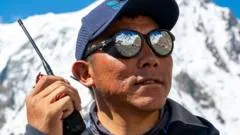
Mingma Gyalje Sherpa reached the bodies of Nirmal Purja and Kili Pemba Sherpa on Broad Peak after an avalanche on 30 July. He coordinated a foot recovery that brought several climbers home amid unstable slopes and changing weather.
What happened on Broad Peak on 30 July?
On 30 July a group of ten climbers was ascending Broad Peak in Pakistan when an avalanche struck. The Alpine Club of Pakistan told the BBC that heavy snow earlier in the week likely caused an ice slab to collapse. Two trekkers who had been cheering the climbers on saw a thundercrack and watched a huge avalanche start from the top and run down both sides of the mountain. They could no longer see the silhouettes on the slope. The trekkers' guide notified base camp. Drone footage later showed bodies on the slope. Mingma Gyalje Sherpa, who was leading a separate team on nearby K2, learned that altitude readings from the Broad Peak group had dropped sharply by around 1,600 m. By 15:00 no one at base camp had contact with the group. Mingma G was at 7,300 m on K2 when the news reached him around 20:00. He had spoken to Kili Pemba Sherpa at 08:30 that morning about good snow conditions. The pair had agreed to speak again after reaching the next camp. Mingma G had also been waiting to meet Nims one last time before their separate climbs but that meeting never occurred. The cause of the avalanche remains under investigation even after initial findings pointed to the ice-slab collapse. Mingma G had hoped the experienced climbers might still be alive and in need of help, a feeling he carried until the drone images confirmed otherwise.
Who were the climbers involved?
Nirmal Purja, known as Nims, was a former Gurkha and British Special Forces soldier who had climbed the fourteen highest peaks in six months and featured in the Netflix documentary 14 Peaks. Kili Pemba Sherpa, a childhood friend of Mingma G, was also in the group. Other climbers included Wang Zhong, a close friend and client of Mingma G, Nadhira Al Harthy, the first Omani woman to summit Everest, and Pur Bahadur Gurung, a Nepalese climber who had summited 12 of the world's 14 highest peaks. Nima Sherpa, Gyaljen Sherpa, Sohail Sakhi and Mallory Geis were also part of the broader group on the mountain that day. Nawang Thindu Sherpa was another Nepalese climber in the party. Mingma G and Nims had first climbed together on K2 in winter 2021 after deciding to share the record. Mingma G had initially viewed Nims as arrogant but later described him as kind-hearted after they worked together. The pair had climbed many of the world's highest peaks together under clear skies and in storms, building a friendship that Mingma G still recalls through shared songs on previous summits.
How did Mingma G organise the recovery?
After the drone confirmed fatalities, Mingma G cancelled his K2 expedition. Helicopter recovery was ruled out because of weather and availability; the Pakistani army did not respond to requests and the Alpine Club of Pakistan said an approved request could not be carried out for days because of poor weather. A nine-person team set out on foot on 1 August. The slope remained unstable; a second avalanche moved bodies into more dangerous positions near glacial ice pillars. The team later reduced to four members. Mingma G monitored by drone while three climbers completed the retrieval. Bodies were lowered by rope over five to six hours. The recovered climbers were flown to Skardu, then Islamabad, and onward to their families. Logistics proved difficult because the Pakistani army helicopters were unavailable and weather blocked flights. Mingma G noted that in Nepal such a recovery would have taken two minutes by helicopter. Families of the deceased urged the team not to leave anyone behind, adding emotional weight to every decision about who stayed and who descended.
What did Mingma G observe at the site?
Mingma G saw that Nims and Kilu had covered their faces with jackets, suggesting they had seen the avalanche approach. The two were connected by rope and their legs were wrapped in it. He believes they collided during the fall of roughly 500 m rather than the fall itself proving fatal. He told the BBC: "They didn't fall that much, almost 500 m. But unfortunately they hit each other a lot, I think. If they were not on the rope, maybe there was a possibility that Nims and Kilu might have survived." He reached the fluorescent down suits expecting perhaps to help survivors but found his friends gone. The moment still haunts him. [TO VERIFY: cause of death remains unconfirmed by official autopsy reports] He had promised the bodies he would take them home, a vow he repeated while holding them in the cold before the long descent began.
What happened after the bodies were brought down?
The recovered climbers were flown to Skardu, then Islamabad, and onward to their families. Sohail Sakhi and Mallory Geis were found days later. Nawang Thindu Sherpa remains on the mountain. Nims’s family thanked Mingma G’s team for working in difficult conditions. When Mingma G called Nims's wife and brother-in-law they struggled to believe the news. Kilu's wife told him: "don't leave your brother on the mountain". Mingma G says the operation does not compare to any other mission he has done and he is unsure whether the memories will allow him to keep climbing. He recalls the three friends singing together on a previous sunny K2 ascent and wonders if those memories will keep him climbing or make him stop. The recovery tested every member of the shrinking team as numbers fell from nine to six then four, each departure leaving more risk on the unstable slope.
Frequently asked questions
Was a helicopter used in the recovery?
No helicopter was used. Requests were approved but poor weather prevented flights for several days.
Did Mingma G and Nims climb together before?
Yes. They summited K2 together in winter 2021 and met on other peaks including Everest.
How many bodies were recovered by Mingma G’s team?
Four bodies were recovered in the main operation; additional bodies were located later by other teams.
What was the cause of the avalanche?
The Alpine Club of Pakistan indicated an ice-slab collapse; the exact trigger is still under investigation.
Did Nims face prior allegations?
In 2024 the New York Times reported sexual misconduct allegations that Nims denied through his lawyer.
Key takeaways
- An avalanche on 30 July killed at least eight climbers on Broad Peak.
- Mingma Gyalje Sherpa led a foot recovery after helicopter options were unavailable.
- Nims and Kilu were found with faces covered and attached by rope.
- One body was moved by a secondary avalanche during the operation.
- Nawang Thindu Sherpa’s body remains on the mountain.
Conclusion
The recovery on Broad Peak tested the limits of what a small team could achieve on unstable terrain. Mingma G returned home with his friends but questions whether the memory will allow him to continue climbing.