A measles outbreak in Pennsylvania has become the deadliest in the United States since 1992, claiming four lives. The outbreak is particularly impacting the Amish community, where low vaccination rates and limited medical access have facilitated rapid transmission. State health officials report the victims include two newborns, an 18-year-old, and a 40-year-old woman. To combat the spread, health departments are deploying nurses for door-to-door vaccinations. This article examines the community challenges, the political tensions surrounding the outbreak, and the public health response.
How is the measles outbreak in Pennsylvania affecting the Amish community?
The measles outbreak is spreading rapidly through the Amish community due to high social connectivity and low immunization rates. Because the Amish are an extremely social group, a single infection within a church congregation can quickly escalate into a wider outbreak among unvaccinated members. Experts note that the virus is currently rampant in these areas, causing significant fear among community members as they witness the illness affecting friends and relatives.
In the Lancaster area, where the outbreak is centered, it is estimated that only about a quarter of the Amish population has received the MMR (measles, mumps, and rubella) vaccine. This lack of coverage is not necessarily driven by a formal religious prohibition against vaccines, but rather by practical barriers to healthcare.
Barriers to vaccination in Amish communities
According to Braxton Mitchell, a genetic epidemiologist at the University of Maryland School of Medicine, the primary issue is often convenience rather than ideological opposition. Many Amish individuals do not have regular contact with the western medical system and face significant logistical challenges in attending standard medical appointments. Furthermore, a lack of health insurance among some members of the community can create additional hurdles to accessing preventative care. Consequently, many remain unvaccinated simply because they have not had the opportunity to secure the shots.
What strategies are health officials using to stop the spread?
Public health departments are utilizing a "boots-on-the-ground" approach, including door-to-door visits and pop-up clinics, to reach isolated populations. In Chester County, officials have actively knocked on doors to inform residents about the outbreak and to offer vaccinations in private, comfortable settings. This method has proven effective in building trust and providing a sense of privacy for those hesitant to visit traditional medical facilities.
The scale of the response is significant. The state health department reported that it has administered nearly 4,300 MMR vaccines at pop-up clinics located near the outbreak's epicenter since late April. Within Chester County alone, 538 MMR vaccines have been administered, with 340 of those occurring in private settings like homes. This strategy helps address the needs of individuals who may feel uncomfortable in public clinics or who have recently decided to change their stance on vaccination.
Why is misinformation impacting vaccination rates?
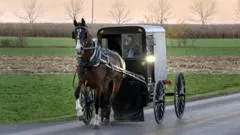
Misinformation and disinformation regarding vaccine safety continue to influence even insulated communities with limited digital access. Although the Amish rely on horse and buggies and avoid much modern technology, health workers report that false theories have still found a way into their circles. These theories often stem from "hard-core" anti-vaccination groups that promote unfounded claims on social media.
Nurse Dale Weiser, a clinical supervisor for the Chester County Health Department, has encountered residents asking if vaccines contain heavy metals that could make them magnetic or if the shots include microchips. While these extreme views are held by a small minority, the presence of such misinformation creates a climate of doubt. Health officials distinguish between "classic anti-vaxxers" and those who are simply unaware or culturally cautious, noting that the latter group is much more open to dialogue and education.
How has the outbreak triggered political tension in the US?
The outbreak has become a flashpoint for political debate, involving high-level disagreements between state and federal health officials. Following the announcement of the first two infant deaths, Health Secretary Robert F. Kennedy Jr. used social media to dispute the cause of at least one death. This prompted criticism from Pennsylvania Governor Josh Shapiro, who accused the Health Secretary of spreading misinformation that exacerbates the public health crisis.
The debate has also touched upon specific medical findings and recent policy changes. While Lancaster County coroner Stephen Diamantoni suggested one infant died from a ruptured spleen rather than measles directly, medical experts argue the connection is inseparable. Dr. William Moss, a specialist at the Johns Hopkins Bloomberg School of Public Health, stated that the measles infection likely made the child vulnerable to such a complication.
The impact of federal policy on public trust
Recent executive actions have also added to the complexity of the situation. An executive order passed by the Trump administration recommended splitting the MMR shot into three separate injections. Medical professionals have criticized this move, arguing that it is both unnecessary and costly for a vaccine that is already proven to be safe in its combined form. Experts like Dr. Moss suggest that such recommendations cast doubt on the safety of existing vaccines, making it harder for local officials to combat the current outbreak.
What is the current outlook for the outbreak?
Health officials warn that the outbreak is currently in a phase of community transmission, making it difficult to halt quickly. There is significant concern regarding the upcoming school year, as the highly contagious nature of the measles virus provides more opportunities for the disease to spread among children. The current trend suggests that the outbreak could persist for several months.
According to Dale Weiser, the situation is likely to continue for six to 12 months. She noted that the virus appears to be spreading and accelerating, highlighting the difficulty of stopping transmission once it has reached this level within a community. As the virus continues to circulate, the focus remains on intensive outreach to prevent further fatalities, particularly among vulnerable groups like infants and young children.
Frequently asked questions
How many people have died from the measles outbreak in Pennsylvania?
So far, state officials have reported four deaths resulting from measles complications. The victims include two newborns, an 18-year-old, and a 40-year-old woman. These fatalities mark the deadliest measles outbreak in the United States since 1992, causing significant alarm among public health professionals.
Why are the Amish community members at higher risk?
The risk is higher due to a combination of low vaccination rates and high social interaction within church groups. Additionally, many Amish residents face barriers to healthcare, such as lack of insurance and limited access to modern medical facilities, which prevents regular immunization.
Is the Amish religion against vaccinations?
There is no specific religious text within the Amish faith that advises against receiving vaccines. The primary reasons for lower vaccination rates in the community are related to logistical inconveniences, limited contact with the western medical system, and the influence of external misinformation.
How are health departments reaching unvaccinated people?
Health departments are using a door-to-door approach to provide vaccinations in private settings, such as homes. This strategy, used by the Chester County Health Department, helps build trust and provides privacy for those who are hesitant to visit public clinics or medical centers.
What is the political controversy surrounding the outbreak?
The controversy involves disputes between state officials and Health Secretary Robert F. Kennedy Jr. over the cause of deaths and the spread of misinformation. Additionally, recent executive orders suggesting the MMR vaccine be split into three shots have been criticized by doctors for undermining vaccine safety perceptions.
Key takeaways
- The Pennsylvania measles outbreak is the deadliest in the US since 1992, with four confirmed deaths.
- Amish communities face higher risks due to low MMR vaccination rates and high social connectivity.
- Health officials are using door-to-door visits to overcome medical access barriers and build trust.
- Political tensions have emerged between state leaders and federal health officials regarding misinformation.
- Experts predict the outbreak may continue for six to 12 months due to community transmission.
Conclusion
The measles outbreak in Pennsylvania represents a complex intersection of public health, cultural isolation, and political volatility. While the Amish community's unique social structure and limited medical access have facilitated the spread of the virus, proactive door-to-door vaccination efforts offer a pathway to containment. However, the effectiveness of these efforts is being challenged by both misinformation and high-level political disputes regarding vaccine safety. As the virus enters a phase of community transmission, the focus remains on intensive local outreach to protect vulnerable populations and prevent the outbreak from escalating further as the new school year approaches.