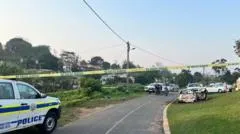
A horrific scene unfolded in a township near Durban after gunmen stormed a residential building during a local party. At least 11 people, including a pregnant woman, were killed in the violent attack. The community is currently in shock as police investigate the circumstances surrounding this mass shooting. Witnesses described a chaotic moment as the attackers opened fire on the unsuspecting crowd. Authorities have arrived at the scene to secure the area and begin forensic collection. This tragedy has left many families mourning their loved ones tonight.
What are the details of the KwaMakhutha township shooting?
At least 11 individuals were killed during a targeted attack on a residence in the KwaMakhutha township near Durban on Tuesday night. According to police statements, the victims were gathered for a party when three gunmen arrived and opened fire with pistols and rifles. The group consisted of 13 men and one woman, the latter of whom is believed to have been pregnant and is among the deceased.
The attack resulted in immediate fatalities and subsequent deaths in medical care. Ten people were confirmed dead at the scene of the shooting. Four others were transported to a hospital for emergency treatment, where one victim later died from their injuries. This brings the total confirmed death toll to 11.
Witnesses and media reports provided additional details regarding the perpetrators' actions. A reporter from the eNCA channel reported that the gunmen set fire to a vehicle belonging to one of the victims before fleeing the area. Video footage obtained by the channel corroborated the presence of a burnt-out vehicle at the location. South African police have since launched a manhunt to locate the three suspects involved in the massacre, who were reportedly armed with both pistols and rifles.
Why was this specific group targeted?
While the exact motive for the massacre has not been officially confirmed, investigators are looking into several possibilities including criminal disputes. Police have stated they cannot rule out a "feud between rival groupings" as a primary driver for the violence. The investigation is currently ongoing, and authorities have been cautious about releasing specific details regarding the identities or backgrounds of the victims.
The police noted that some of the individuals targeted may have been on their watch in connection with illegal activities. However, officials have declined to divulge specific information at this time to protect the integrity of the active investigation. This lack of immediate clarity highlights the difficulty law enforcement faces when investigating crimes that may be deeply embedded in local criminal subcultures.
The role of gang rivalry and turf wars
The possibility of a gang-related motive is a central focus for investigators. In many South African townships, violence is frequently driven by rivalry among criminal gangs engaged in turf wars, drug trafficking, and illegal mining operations. These conflicts often spill over into residential areas, turning private gatherings into scenes of mass violence. The targeted nature of this attack, involving multiple gunmen and specific weaponry, suggests a level of planning often associated with organized criminal groups rather than random acts of violence. Such rivalries are a common driver of violence within many South African communities.
How does this incident fit into South Africa's murder rate?
This mass shooting is part of a broader, deeply concerning trend of high-intensity violence across South Africa. National police data indicates that the country maintains one of the highest murder rates globally, with statistics showing an average equivalent to more than 60 deaths every single day. The frequency and brutality of such killings have become a defining characteristic of the nation's security landscape.
Recent weeks have seen a spike in high-profile, gruesome discoveries that have intensified public anxiety. This includes the recent finding of at least nine murdered women, some of whom had their bodies abandoned by roadsides. Such incidents contribute to a pervasive sense of insecurity among the general population. The KwaMakhutha shooting follows other significant mass casualty events, such as the killing of nine people at a Johannesburg tavern last year, illustrating that large-scale attacks are becoming a more frequent phenomenon that elicits increased feelings of unsafety, fear, and shock.
What is the impact of organized crime on South African democracy?
Organized crime has been identified by top leadership as a fundamental threat to the stability of the nation. In February, President Cyril Ramaphosa characterized organized crime as "the most immediate threat to our democracy, our society and our economic development." To combat this, the President announced plans to deploy the army to support police efforts in high-risk areas.
The rise of specialized criminal entities has added a layer of complexity to the violence. There are growing calls for the government to dismantle sophisticated networks, including "murder for hire" syndicates, which are believed to be among the leading instigators of these types of attacks. These syndicates operate with a level of brutality that traditional policing struggles to contain, often targeting specific individuals or groups to settle debts or secure territory.
Economic drivers and systemic failures
Beyond the immediate violence, experts point to deep-seated socioeconomic issues that fuel the criminal economy. Improving economic conditions is frequently cited as a necessary step to reduce the attractiveness of crime as a livelihood. However, even as economic discussions continue, several systemic failures hinder the effectiveness of law enforcement.
Security experts have identified several critical vulnerabilities in the South African justice and policing systems. These include the high proliferation of illegal firearms, insufficient visible policing in high-crime hotspots, and a slow judicial process that fails to provide timely deterrence. Furthermore, allegations of corruption—specifically regarding links between senior politicians or police officers and criminal gangs—undermine public confidence in the state's ability to regain control of the security situation. These factors combined contribute to a pervasive sentiment that local authorities are losing the fight against crime.
Frequently asked questions
How many people died in the KwaMakhutha shooting?
At least 11 people died in the shooting. Ten individuals were killed at the scene in the township near Durban, and one person died later in the hospital after being treated for their injuries sustained during the attack.
Who were the victims of the attack?
The victims included 13 men and one woman, who is believed to have been pregnant. Police have suggested that some of the victims may have been involved in illegal activities, though they have not released specific details to protect the ongoing investigation.
What weapons were used by the gunmen?
The suspects involved in the mass shooting were reported to be carrying both pistols and rifles. This weaponry allowed the three gunmen to open fire rapidly on the 14 people gathered inside the residential building.
Is there a suspected motive for the massacre?
While a definitive motive has not been established, police are investigating the possibility of a feud between rival criminal groups. The investigation is currently focused on determining if the attack was a targeted hit related to gang activity or illegal enterprises.
What is the current status of the investigation?
Police have launched a manhunt to apprehend the three suspects responsible for the shooting. Law enforcement is also investigating the circumstances surrounding the event and the potential connections between the victims and local criminal networks.
Key takeaways
- Eleven people, including a pregnant woman, were killed in a KwaMakhutha township shooting.
- Three gunmen used pistols and rifles to attack 14 people during a residential party.
- South Africa's murder rate averages more than 60 deaths per day according to police data.
- President Ramaphosa has identified organized crime as a major threat to democracy and development.
Conclusion
The mass shooting in KwaMakhutha serves as a grim reminder of the persistent violence plaguing South Africa. As the manhunt for the three gunmen continues, the incident highlights the lethal intersection of gang rivalry and organized crime in residential communities. While the government has moved toward deploying military support to assist police, the systemic issues—ranging from illegal firearm proliferation to alleged corruption within the ranks—remain significant hurdles. Addressing these complex drivers of violence is essential to restoring public safety and protecting the country's democratic and economic stability.