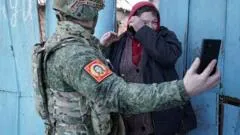
More than 300 people are still listed as missing in Russia's Kursk region after Ukraine's August 2024 incursion. Families report lost contact for months, incomplete official lists and bodies recovered only after prolonged delays. This article examines the scale of the disappearances, how relatives organised searches and the limited official response.
What scale of disappearances followed the 2024 incursion?
The Kursk regional governor stated that more than 300 residents remain missing. No-one really knows the true figure. Russian authorities estimated that roughly 2,000 civilians stayed in settlements overrun by Ukrainian forces. Within six days Ukrainian units had taken more than 777 square kilometres. Communication blackouts lasted eight months in many areas, leaving relatives without information. Lyubov last spoke to her mother the day after Ukrainian forces entered the region more than two years ago. She had urged her mother to leave the Sudzha area village but blamed state television for convincing residents the situation would end in two or three days. Russia's foreign ministry accused Ukraine of war crimes against civilians; Kyiv rejected the claims. Nearly 200 Russians wrote to Presidents Zelensky and Putin and the United Nations requesting a humanitarian corridor; none was created. The local governor noted the uncertainty around exact numbers while families in Belgorod and Kursk regions waited months for any official word. State channels repeatedly told viewers that two or three days would restore the previous situation, discouraging early departures even after border checkpoints fell and around 40 prisoners were taken. The scale remained unclear because mobile and internet links stayed down for most of the following eight months, cutting families off from any updates on who had survived the initial advance.
How did families begin tracing relatives?
Residents who lost contact formed informal groups. One woman collected names visible in videos released by Ukrainian forces and journalists. She later recorded burial locations reported in those same videos. Lyubov, whose mother lived in the Sudzha district village of Darino, wrote to the Red Cross and the Kursk interior ministry without reply. In early 2025 Russia's human rights commissioner published a list of 517 names that mixed missing persons with those searching for them. Families described the document as disrespectful and inaccurate. One young woman whose parents had gone missing called the publication the height of incompetence and a lack of basic respect. Soon the informal lists reached about 1,000 names. Lyubov said taking action brought a certain sense of relief and helped cope with the stress. Regional officials met the search groups several times in the second half of 2025, yet relatives said the meetings produced no concrete progress. The groups expanded their records to include possible burial sites shown in open-source footage and continued updating lists even after official channels stayed silent. Lyubov appealed directly to the Red Cross and interior ministry yet received no response, forcing the volunteers to rely entirely on videos and word of mouth.
What conditions did civilians face inside the captured zone?
Heavy fighting in late 2024 destroyed about 90 percent of Darino. Elderly residents who remained struggled with lack of medical care and supplies. Lyubov later learned that her mother had died from a head injury whose circumstances were never clarified. Other older residents also died, unable to endure the conditions. Volunteers later recovered bodies from streets and fields; body bags and fuel were paid for by donations or the volunteers themselves. The head of one local village council, Yuri Tkachev, joined volunteers retrieving remains and noted it is hard for people not to know whether loved ones are captive or dead and where they died. Lyubov heard that bodies of neighbours who died alongside her mother were removed from Darino in April, but her mother's body remained. She received no answer from authorities, who said it was still dangerous and no-one would deal with it right now. Ukrainian officials stated that all civilians they evacuated were handed over to Russian authorities. Volunteers described retrieving remains from open fields without state support while heavy fighting continued nearby. Several elderly people who stayed behind died simply because they could not cope with the lack of food, medicine and shelter during the months of isolation.
Why did official lists and evacuations fall short?
Regional officials met families searching for the missing several times in late 2025, yet relatives said the meetings produced no concrete progress. Lyubov received no body after her mother's death. She eventually identified the remains in a Kursk mortuary photograph taken in April 2025 after asking about an unidentified woman born in 1949 from Darino. A DNA sample she provided in January had been reported lost, so the body stayed unidentified for months. She had wanted to bury her mother in their home village, but that remains impossible; the body was cremated and the ashes are now in her apartment in Belgorod. She is bitter that the government failed to stop the incursion, did not evacuate residents when it could, and persuaded them the situation was not serious. Asked by the BBC to comment, there was no response from the Kursk governor, Russia's human rights commissioner or the Russian Red Cross. The command of Ukraine's Territorial Defence Forces and Ukraine's human rights commissioner said all civilians evacuated from the zone were transferred to Russian custody. Volunteers covered the costs of body bags and fuel themselves because no state funding was provided for the recoveries.
Frequently asked questions
How many people are still missing in Kursk?
The regional governor reports more than 300 missing. Family-compiled lists reached higher figures, but no verified total exists.
Did Russian authorities organise evacuations before the incursion?
State media told residents the situation would be resolved within days. Many stayed after being told everything was under control. No large-scale evacuation occurred before Ukrainian forces advanced.
Were bodies recovered by official teams?
Volunteers and local council members retrieved most remains. Authorities did not supply body bags or transport; costs fell on private donors.
Was a humanitarian corridor ever created?
No corridor was opened. A joint appeal to Kyiv, Moscow and the UN received no practical response.
Where are the unidentified remains now?
Some bodies stayed in regional mortuaries for months. Lyubov identified her mother only after visiting the Kursk facility in October 2025.
Key takeaways
More than 300 residents are still recorded missing by the Kursk governor. Families compiled lists reaching 1,000 names after official registers proved incomplete. Volunteers recovered bodies without state funding or equipment. A 2025 official list mixed missing persons with searchers. Communication blackouts lasted eight months in affected areas.
Relatives continue to seek information on the fate and location of those who remained in the zone. Lyubov recalls crossing the border by bicycle for sausages, yarn and ice cream; now none of the villages exists any more.