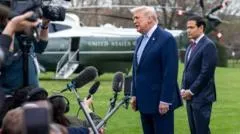
The US Justice Department has officially filed legal documents accusing three specific media outlets of 'trafficking in verifiable falsehoods.' These filings come as the government prepares to defend the administration's controversial decision to bar these organizations from the White House. This legal maneuver marks a significant escalation in the ongoing conflict between the executive branch and the press. By arguing that access is a privilege rather than a right, the Department aims to uphold its authority over press credentials during this high-stakes constitutional showdown.
What are the specific accusations from the Justice Department?
The US Justice Department has filed formal documents in a District of Columbia court accusing three specific media organisations of disseminating 'verifiable falsehoods' and compromising national security. According to a court filing by the Justice Department, the White House had previously provided these outlets with a list of 'reporting incidents' prior to implementing the ban.
The government's legal position rests on the assertion that White House access is a privilege rather than an absolute right. The filing details several specific areas of reporting that allegedly triggered the administration's response, including:
- Reports regarding construction projects at the White House, specifically concerning a security bunker.
- Information regarding the development of a new ballroom within the complex.
- Coverage of an internal investigation into information leaks.
By categorising these reports as threats to national security, the administration seeks to justify the removal of credentials as a necessary protective measure rather than an act of censorship. The Justice Department maintains that the content of the reporting itself necessitated the restriction of access to the premises. The administration's argument hinges on the idea that the nature of the information being disclosed—such as the details of the security bunker or the internal leak investigation—crosses a line from journalism into a threat to the safety and operations of the White House.
How are the media outlets challenging the ban?
CNN, Politico, and MS NOW have launched a joint legal action, arguing that the administration's decision to bar their journalists is unconstitutional. The core of their argument is that the ban violates the First Amendment, which prohibits the government from abridging the freedom of the press.
The media organisations contend that the administration is using administrative powers to punish journalists for their coverage. In a joint statement, the outlets argued that the revocation of credentials occurred 'without notice or process' and was motivated solely by the White House's objection to their reporting. They have framed the situation as a direct threat to the public's right to receive independent journalism that remains free from government interference.
The First Amendment conflict
The legal battle focuses on the tension between the government's ability to manage its own facilities and the constitutional protections afforded to the press. While the administration argues that managing access to a secure building is a matter of privilege and security, the plaintiffs argue that when that access is denied specifically because of the nature of the news being reported, it becomes a form of government-sanctioned censorship. The court's decision on whether to issue a temporary order lifting the ban will set a significant precedent for how the executive branch interacts with critical media outlets. The central question remains whether the government can use its control over physical access to the White House to effectively silence specific viewpoints or reporting styles.
What is the impact on the White House media pool?
The dispute has caused a significant disruption to the traditional media-sharing arrangements used by journalists covering the presidency. In protest of the ban on CNN, Politico, and MS NOW, major television networks have withdrawn from the 'pool'—a system where selected reporters share video footage and images of the president to ensure comprehensive coverage.
This withdrawal of support from the pool has altered the landscape of presidential media coverage. In response to the lack of traditional media participation, the White House has launched 'Trump TV,' a dedicated 24/7 streaming channel. This platform provides a continuous feed of clips featuring the president, effectively creating a government-controlled alternative to the traditional press pool. This shift represents a move toward a more direct, unfiltered communication model between the administration and the public, bypassing the scrutiny of the mainstream media outlets currently in conflict with the White House. The removal of major networks from the pool arrangement means that the shared visual record of the president's activities is no longer being managed by the collective press corps, but is instead being driven by the administration's own media channel.
How has the administration interacted with barred journalists?
Tensions between President Donald Trump and the affected media outlets have remained high, characterized by direct confrontations and public criticism. The President has frequently used social media and public appearances to attack the credibility of the journalists involved, even labeling them as 'treasonous.'
One notable instance occurred at the United Nations General Assembly, where the President engaged in a verbal dispute with CNN reporter Kaitlin Collins. According to reports, the President questioned why Collins was present to cover his speech, alleging that the network had previously declined to cover him. However, Collins later clarified on air that the network had made no such pledge to abstain from coverage. He also took to social media to attack Collins, once again questioning why she and others were reporting on the president at the UN. Such interactions highlight the personal and professional friction that has defined the current relationship between the administration and the press corps, as the President continues to publicly challenge the legitimacy of those covering his activities.
FAQ: Trump administration media ban
Why did the White House ban CNN, Politico, and MS NOW?
The White House barred these outlets after accusing them of spreading 'fake news' and 'trafficking in verifiable falsehoods.' The administration specifically cited reports concerning White House construction and internal leak investigations as being detrimental to national security and justified the removal of press credentials.
Is White House access a constitutional right for journalists?
The media outlets argue that access is a First Amendment right essential for independent journalism. Conversely, the Justice Department's legal filing asserts that White House access is a privilege, not a right, which the administration believes it can manage based on security and reporting standards.
What is the purpose of the media 'pool'?
The media pool is a sharing arrangement where a group of journalists provides video and images of the president to other news organisations. This ensures that all outlets, including those without a direct presence, can provide coverage of presidential movements and events.
What is Trump TV?
Trump TV is a 24/7 streaming channel launched by the White House. It provides a continuous feed of video clips featuring the president, serving as a government-run alternative to traditional media coverage following the protest by major networks against the media ban.
What is the current status of the legal challenge?
The three media organisations have filed a lawsuit claiming the ban is unconstitutional. A judge is tasked with deciding whether to issue a temporary order to lift the ban on credentials while the full legal hearing regarding the First Amendment implications is pending.
Key takeaways
- The Justice Department argues that the media ban is necessary due to reports that 'threatened national security.'
- CNN, Politico, and MS NOW claim the ban violates First Amendment protections against government interference.
- Major networks have withdrawn from the White House media pool in protest of the administration's actions.
- The White House has responded to the media dispute by launching Trump TV, a 24/7 streaming service.
The legal and democratic implications of the ban
The ongoing legal battle over the Trump administration's media ban represents a fundamental test of the boundaries between executive authority and press freedom. If the courts uphold the administration's position that access is a privilege contingent on the quality and security implications of reporting, it could significantly alter the relationship between the presidency and the Fourth Estate. Such a precedent might allow future administrations to use security justifications to limit coverage of sensitive topics. Conversely, a ruling in favour of the media outlets would reinforce the First Amendment's role in protecting journalists from retaliatory administrative actions, ensuring that the press can continue to perform its role as an independent watchdog without fear of losing access to the subjects of its scrutiny.