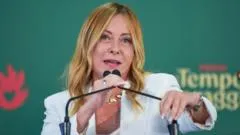
The Italy school veil ban and new linguistic restrictions were approved by the Italian Council of Ministers to facilitate student integration. The decree prohibits the wearing of burqas and niqabs in educational settings and imposes a 30% cap on students lacking Italian citizenship or proficiency in the national language. According to the government, these measures aim to prevent the formation of 'ghetto classes' in primary, middle, and high schools. While Prime Minister Giorgia Meloni frames the policy as a tool for gender equality and social cohesion, opposition leaders have criticized the move as political propaganda. This article examines the specific details of the decree, the linguistic criteria for the caps, and the surrounding political controversy.
What are the specific details of the Italy school veil ban?
The newly approved decree specifically prohibits the use of the burqa and the niqab within school environments. It is important to distinguish these garments from the hijab, as the legislation does not extend the ban to headscarves that leave the face visible.
The distinction between the banned garments is central to the legal framework of the decree:
- The Niqab: A veil that covers the face but leaves the area around the eyes clear, though it may be worn with a separate eye veil and an accompanying headscarf.
- The Burqa: A one-piece garment that covers both the face and the body, frequently featuring a mesh screen over the eyes to allow for visibility.
Prime Minister Giorgia Meloni defended the prohibition by linking it to the principles of gender equality. She stated that students must attend school with their faces uncovered, asserting that no individual should be permitted to decide that a young woman must hide her identity in the name of tradition. By framing the ban through the lens of women's rights, the administration seeks to position the measure as a defense of personal autonomy rather than a religious restriction.
How will the 30% language cap be implemented in schools?
The Italian government is introducing a 30% limit on the proportion of pupils in any single class who possess limited Italian language skills or lack Italian citizenship. This measure is intended to ensure a balanced distribution of students to prevent linguistic isolation.
The application of this cap varies depending on the educational stage of the student:
Implementation by educational level
In primary schools, the 30% threshold applies to non-Italian citizens who were either not born in Italy or have not completed at least two years of nursery school. For lower- and upper-secondary schools, the limit targets students without Italian citizenship who have not successfully finished at least three years within the Italian school system.
To manage these requirements, local school offices will be tasked with spreading students with limited Italian proficiency more evenly across nearby institutions. In instances where such a distribution is mathematically or logistically impossible, the decree allows for exemptions, provided that these students receive additional Italian language instruction. The Education Minister, Giuseppe Valditara, has emphasized that these limits are "purely linguistic" and are designed to avoid the creation of "ghetto classes" rather than to target specific nationalities.
What impact will the decree have on parents and social services?
The decree extends its reach beyond the classroom by involving parental responsibility and social welfare monitoring. According to reports from the Ansa news agency, the legislation requires schools to take an active role in reporting specific domestic circumstances to social services.
If persistent language barriers among parents or legal guardians are found to be actively hindering a child's integration into the school system, schools will be mandated to report these cases. This move is intended to address the root causes of educational stagnation, ensuring that the home environment supports the linguistic goals of the state. To assist in this transition, the government has pledged to offer free Italian language courses to help bridge the communication gap between families and educational institutions.
Why is the new law causing political controversy in Italy?
The announcement of the decree has triggered a sharp divide between the governing coalition and opposition parties, with critics suggesting the move is motivated by upcoming electoral cycles. While the government presents the law as a common-sense tool for integration, opposition leaders view it as a calculated political maneuver.
The political friction centers on several key arguments:
- Electoral Pandering: Opposition parties, including the centre-left Democratic Party (PD), have accused Prime Minister Meloni of attempting to appease the hard-right Futuro Nazionale party. This party is led by retired military general Roberto Vannacci, who is seen as a significant influence on the right flank of the current coalition.
- Implementation Feasibility: Elly Schlein, the leader of the Democratic Party, has dismissed the plan as "propaganda" and argued that the measures are practically impossible to implement effectively within the existing school infrastructure.
- Political Motivation: Deputy Anna Ascani of the PD accused the government of conducting propaganda at the expense of the well-being and education of schoolchildren.
Education Minister Giuseppe Valditara has rejected these accusations, notably during a press conference from New York, where he stated that the government is not chasing Vannacci, but rather that Vannacci is chasing them. Meanwhile, the political landscape remains complex, with League leader Matteo Salvini having recently launched separate measures regarding "political Islam," further complicating the debate over religious expression and national identity in the public sphere.
What is the legal status and history of these regulations?
The new measures are being enacted as a decree law, which grants them immediate effect upon approval, though they remain subject to parliamentary ratification. Under Italian law, such a decree must be formally ratified by Parliament within 60 days to become permanent legislation.
This is not the first time Italy has attempted to regulate language proficiency in schools. A 2010 ministerial notice, established under the administration of then-Education Minister Mariastella Gelmini, already included a guideline setting a 30% limit on students without Italian citizenship as a general rule. The primary difference with the current decree is its legal weight; while the 2010 measure functioned as a guideline or "rule," the new decree elevates these restrictions into codified law, providing a more robust legal basis for school administrators to enforce linguistic quotas.
Frequently asked questions
What is the difference between a burqa and a niqab under this ban?
The ban targets the burqa, which is a full-body covering often including a mesh eye screen, and the niqab, which covers the face but leaves the eyes visible. Notably, the hijab is not included in the ban because it leaves the face fully uncovered.
How many non-Italian students are currently in Italian schools?
According to research from the Fondazione ISMU, non-Italian citizens currently account for 11.6% of the total pupil population in Italy's educational system. The new law seeks to manage the concentration of these students within individual classrooms.
Will the 30% cap apply to all students regardless of citizenship?
No, the cap specifically targets students who either lack Italian citizenship or demonstrate limited proficiency in the Italian language. The criteria for determining "limited proficiency" differ between primary and secondary school levels to account for age and prior schooling.
What happens if a school cannot meet the 30% limit?
In cases where local school offices cannot distribute students evenly enough to stay below the 30% threshold, exemptions will be granted. However, these exemptions are conditional on the provision of extra Italian language teaching to the affected students.
Is this a new policy for Italy?
The concept of a 30% limit is not entirely new, as a 2010 ministerial notice under Mariastella Gelmini suggested a similar rule. However, the current government is transforming that previous guideline into a formal decree law with immediate effect.
Key takeaways
- The decree bans the burqa and niqab in schools to promote gender equality and integration.
- A 30% cap will be enforced on students with limited Italian proficiency or non-citizenship.
- The law aims to prevent "ghetto classes" by distributing students more evenly across schools.
- Schools must report persistent parental language barriers to social services to aid integration.
- The measure is a decree law requiring parliamentary ratification within 60 days.
Conclusion
The Italian government's decision to implement a school veil ban and linguistic caps represents a significant shift in the nation's approach to educational integration and secularism. By codifying previous guidelines into law, the Meloni administration seeks to standardize the classroom environment and promote national linguistic cohesion. However, the move has deeply polarized the political landscape, drawing accusations of electoral opportunism and concerns regarding the practicalities of implementation. As the decree awaits parliamentary ratification, the balance between religious expression, gender equality, and social integration remains a central point of contention in Italian public policy.