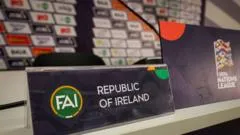
A series of delays, player meetings, and mounting political pressure has cast a shadow over the Republic of Ireland's upcoming Nations League matches against Israel. The squad faces significant uncertainty as calls for a boycott intensify following the escalation of the conflict in Gaza. Football Association of Ireland officials are currently navigating complex discussions with players to address these concerns. This tension threatens to disrupt the team's preparation and focus ahead of these crucial international fixtures, leaving fans and pundits questioning the stability of the upcoming matchday schedule.
Why is the Republic of Ireland vs Israel Nations League fixture controversial?
The scheduled match between the Republic of Ireland and Israel has become a focal point for political protest due to the ongoing conflict in Gaza. The 'Stop The Game' campaign, organized by the pressure group Irish Sport for Palestine, has been actively gathering pace, urging the Irish national team to withdraw from the fixture in protest of the war.
This movement has gained significant traction within the Irish sporting community, drawing support from high-profile figures. Former Republic of Ireland manager Brian Kerr and ex-international James McClean are among those who have backed the calls for a boycott. The tension is not limited to activists; even within the current squad, voices have emerged regarding the morality of playing the match.
Following Thursday's 1-0 defeat by Kosovo, midfielder Jason Knight expressed his reservations, stating he did not think "the game should be going ahead." In contrast, winger Chiedozie Ogbene has urged the public not to "put the pressure on us" regarding the team's approach to the scheduled game. While the boycott movement is vocal, there are also Irish supporters, perhaps less vocal, who have maintained that the match should be played with supporters in attendance.
What happened during the delayed press conference and training session?
Significant administrative confusion surrounded the Republic of Ireland's preparations in Hungary, characterized by multiple postponements and unconfirmed reports of player withdrawals. Originally, manager Heimir Hallgrimsson and a player were expected to address the media at 09:15 BST on Saturday, but a UEFA official announced a delay shortly before the scheduled start.
The situation escalated when the training session itself was postponed. During this period of uncertainty, players were reportedly held in a meeting at the team hotel. This led to widespread speculation regarding the stability of the squad. At one point, unconfirmed reports suggested that goalkeeper Gavin Bazunu had withdrawn from the fixture, with several others also considering their positions.
By 13:00 BST, the players began to emerge from their meeting, confirming they would travel back to the stadium for the planned news conference, with training scheduled for 14:45 BST. Despite this, the logistics remained fluid; while the press conference was initially planned for the stadium, it was eventually moved back to the team hotel. UEFA has been unable to provide specific information regarding the reasons for these delays.
The timeline of the Saturday disruptions
The sequence of events on the day of the scheduled news conference created a sense of instability within the camp. The initial delay at 09:15 BST was intended to push the conference to 11:30 BST. However, the subsequent cancellation of the training session and the players' confinement to a hotel meeting room intensified the narrative of an internal crisis. Although the team eventually resumed their schedule, the lack of clarity from UEFA officials contributed to the atmosphere of uncertainty surrounding the upcoming match.
How has the squad responded to the boycott calls?
The Republic of Ireland squad has engaged in internal deliberations to navigate the intense external pressure. A formal players' meeting took place on Friday to allow the team to air their views regarding both the Sunday fixture in Debrecen and the return match scheduled for 4 October in Backa Topola, Serbia. The fixture has been embroiled in controversy since the two teams were drawn to play each other in Group B3.
The players were initially expected to release a collective statement during the Saturday news conference. However, the delay in this communication has only heightened speculation about the level of consensus within the group. While some reports indicated that at least one player wished to withdraw from the squad, the team's eventual emergence from the hotel suggested a move toward fulfilling their competitive obligations.
The divide within the Irish football community remains evident. While the 'Stop The Game' campaign continues to gather momentum, there remains a segment of Irish supporters who believe that international fixtures should proceed as scheduled, emphasizing the importance of fans being able to attend matches in person.
What is the humanitarian context of the Israel-Gaza conflict?
The political tension surrounding the Nations League match is rooted in the devastating humanitarian crisis following the events of 7 October 2023. On that date, the armed Palestinian group Hamas attacked Israel, resulting in the deaths of approximately 1,200 people and the taking of 251 hostages.
In response, Israel launched a massive military offensive in Gaza. According to the Hamas-run health ministry, more than 73,000 people have been killed during the offensive. These figures are considered reliable by the United Nations, highlighting the severity of the conflict that continues to influence international sporting events and political discourse.
| Event/Entity | Detail/Statistic |
|---|---|
| Hamas Attack (7 Oct 2023) | ~1,200 killed; 251 hostages |
| Gaza Conflict Death Toll | Over 73,000 (per Hamas-run health ministry) |
| Nations League Fixture 1 | Debrecen, Hungary (Sunday) |
| Nations League Fixture 2 | Backa Topola, Serbia (4 October) |
Frequently asked questions
Why is the Ireland vs Israel match being protested?
The match is being protested by the 'Stop The Game' campaign and Irish Sport for Palestine due to the ongoing Israel-Gaza war. Activists are calling for the Republic of Ireland to boycott the fixture as a form of political protest against the military offensive in Gaza.
Who is leading the boycott calls in Ireland?
The boycott calls are led by the pressure group Irish Sport for Palestine. Support for the movement has also been voiced by prominent figures in Irish football, such as former manager Brian Kerr and former international player James McClean.
Did any players withdraw from the Republic of Ireland squad?
While there were unconfirmed reports that goalkeeper Gavin Bazunu and other players were considering withdrawing from the squad, the players eventually emerged from a meeting to confirm they would continue with the scheduled news conference and training sessions.
Where are the Nations League matches being played?
The first fixture is scheduled to take place in Debrecen, Hungary. The return fixture between the Republic of Ireland and Israel is set to be held in Backa Topola, Serbia, on 4 October.
Why was the press conference delayed?
The delay was officially announced by a UEFA official, though the specific reasons for the postponement were not provided. The conference was moved from the stadium to the team hotel following several scheduling shifts involving training and player meetings.
Key takeaways
- The 'Stop The Game' campaign is actively urging the Irish team to boycott the Israel fixture.
- High-profile Irish football figures, including Brian Kerr, have supported the boycott calls.
- The squad faced significant uncertainty following delayed training and unconfirmed reports of player withdrawals.
- The conflict context involves over 73,000 deaths in Gaza, according to figures cited by the UN.
Conclusion
The upcoming Nations League match between the Republic of Ireland and Israel transcends the boundaries of sport, becoming a significant moment of political tension. As the squad navigates internal debates and external pressure from the 'Stop The Game' campaign, the fixture highlights the complex intersection of international athletics and global humanitarian crises. Whether the team proceeds as planned in Debrecen or faces further internal shifts, the controversy underscores the profound impact that the Israel-Gaza war continues to have on the international community and the sporting world.