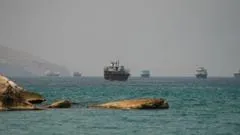
The Strait of Hormuz reopening deal has become a central point of tension as Iran proposes a seven-day timeline to restore maritime passage. Iranian Foreign Minister Abbas Araghchi stated at the UN that the strait could return to normal operations within one week if the conditions outlined in a June memorandum of understanding (MOU) are met. This proposal, delivered via Qatar, follows significant maritime disruptions that have impacted 20% of global oil and liquefied natural gas transit. While Tehran signals readiness, US President Donald Trump has reportedly expressed skepticism, with some reports suggesting a rejection of the terms. This article examines the proposed diplomatic framework, the impact on global energy security, and the geopolitical risks involved.
What is the core of the Iranian proposal to reopen the Strait?
Iran has officially proposed a mechanism to restore normal maritime passage through the Strait of Hormuz within a seven-day window, provided specific diplomatic conditions are fulfilled. Speaking to reporters at the United Nations in New York, Foreign Minister Abbas Araghchi emphasized that the framework for this reopening is not new, but is instead contained within the memorandum of understanding (MOU) signed in June.
According to Araghchi, the responsibility for the next move lies with the United States. He noted that the plan was communicated to Washington through Qatari mediators. The Iranian side maintains that if the US demonstrates a genuine commitment to the agreement, all necessary preparations for the reopening are already in place.
The role of the June Memorandum of Understanding
The 14-point MOU, signed on June 18, serves as the foundational document for these current negotiations. This agreement was originally designed to establish a ceasefire and facilitate the partial reopening of the vital waterway. Key provisions of the MOU included:
- A commitment from Iran to never pursue nuclear weapons.
- An agreement for the US, Iran, and their allies to cease military operations across all fronts.
- The termination of the US naval blockade.
- The provision of sanctions relief for Iran.
- Arrangements by Iran to ensure the safe passage of commercial vessels through the strait.
- Planned discussions with Oman regarding future shipping logistics.
Although the MOU was intended to stabilize the region, it collapsed shortly after signing when both nations resumed military strikes, leading to the current state of maritime instability.
How has the closure of the Strait impacted global energy markets?
The disruption of the Strait of Hormuz has triggered significant volatility in global energy prices due to the volume of resources passing through the chokepoint. Before the recent conflict and the subsequent closure, approximately 20% of the world's oil and liquefied natural gas (LNG) moved through the strait.
The current state of shipping through the area reflects the ongoing tension. While President Trump has claimed the US has successfully maintained oil exports through the strait, data suggests a significant decline in activity. According to Kpler, a commodities data and analytics firm cited by Reuters, recent shipping data shows a 10-day average of approximately 18 transits per day, with some days seeing as few as nine vessels passing through.
This reduction in transit capacity, combined with intensified Houthi attacks in the Red Sea, has created a dual pressure point for global energy security. The Houthi-led offensive has targeted Saudi Arabian oil exports and seized strategic coastal stretches, including the port of Mokha, which overlooks the Bab al-Mandab Strait. This secondary chokepoint adds further complexity to the global supply chain and increases the urgency for a resolution in the Persian Gulf.
What is the US response to the Iranian offer?
The United States has maintained a cautious and somewhat divided stance regarding the Iranian proposal, with official responses still pending while reports of internal dissent emerge. While a US official told the BBC that positive discussions are occurring through mediators—including talks on nuclear issues—the political leadership in Washington appears hesitant.
According to the Wall Street Journal, citing US officials, President Donald Trump has rejected the deal proposed by Tehran. The report suggests that the President remains privately skeptical about Iran's ability to adhere to the terms. Furthermore, the President has reportedly indicated to his staff that a renewed military bombing campaign remains a likely outcome if diplomatic efforts fail to meet US security requirements.
US strategic positioning and political pressures
The US administration faces a complex set of pressures that influence its negotiating position:
- Maritime Control: A US official informed the BBC that the United States remains in a "very strong position" due to its control over the Strait of Hormuz, suggesting that Washington is "not in a rush" to accept terms.
- Domestic Politics: With Congressional elections approaching in November, there is increasing pressure on the Trump administration to resolve the conflict and stabilize energy markets.
- Regional Alliances: The administration is managing requests for military support from regional partners, such as Saudi Arabia, following Houthi missile and drone attacks.
What are the implications for Iran's nuclear program?
As part of the broader push for a ceasefire, Iran has signaled a willingness to increase transparency regarding its nuclear activities. Iranian President Masoud Pezeshkian stated in an interview with CBS News that the ceasefire process would commence immediately upon US acceptance of the terms outlined in the existing agreements.
Crucially, Pezeshkian indicated that Iran would permit United Nations nuclear inspectors to return to the country. While addressing international concerns regarding the development of nuclear weapons, the President rejected claims that Iran is seeking such capabilities. He stated that if the international community wishes to conduct inspections, Iran is prepared to reach specific accords regarding that topic within the ongoing negotiations.
This move toward nuclear transparency is intended to be a component of the "return to normalcy" promised by the Iranian leadership, linking the reopening of the Strait of Hormuz to the broader resolution of the nuclear standoff. However, the success of this approach depends heavily on whether the US views these concessions as sufficient to offset the perceived risks of the MOU framework.
Frequently asked questions
Will the Strait of Hormuz reopen immediately if a deal is signed?
Iran claims the strait can be restored to normal maritime passage within seven days of the necessary conditions being met. These conditions are tied to the June memorandum of understanding, which includes the lifting of the US naval blockade and the provision of sanctions relief.
Why is the Strait of Hormuz so important for the global economy?
The strait is a critical chokepoint for global energy supplies. According to current data, approximately 20% of the world's oil and liquefied natural gas (LNG) passes through this waterway. Any disruption leads to wild fluctuations in energy prices worldwide.
What is the current status of US-Iran relations regarding the MOU?
The relationship is currently characterized by mediated discussions and significant skepticism. While US officials report positive talks through mediators, reports from the Wall Street Journal suggest that President Trump has rejected the recent Iranian proposal due to doubts about Iranian compliance.
How are Houthi attacks affecting the situation?
Houthi attacks in the Red Sea have intensified the global shipping crisis by targeting Saudi oil exports and seizing strategic ports like Mokha. This adds pressure to the Strait of Hormuz situation by creating multiple simultaneous chokepoints in the Middle East.
Has Iran agreed to UN nuclear inspections?
Yes, President Masoud Pezeshkian has stated that Iran would allow UN nuclear inspectors back into the country as part of the negotiations. He framed this as a way to reach specific accords to address concerns regarding Iran's nuclear intentions.
Key takeaways
- Iran proposes a seven-day timeline to reopen the Strait of Hormuz if MOU conditions are met.
- The Strait of Hormuz handles roughly 20% of the world's oil and LNG transit.
- President Trump has reportedly rejected the Iranian deal due to skepticism of compliance.
- Iran has signaled a willingness to allow UN nuclear inspectors back into the country.
- Shipping through the strait has dropped to a 10-day average of 18 transits per day.
Conclusion
The proposal by Iran to reopen the Strait of Hormuz within a week represents a high-stakes attempt to resolve a conflict that has destabilized global energy markets. While the Iranian leadership offers nuclear transparency and a return to the June MOU framework, the US administration remains deeply divided between diplomatic engagement and military deterrence. As the world watches the maritime transit data and the progress of mediated talks, the upcoming US elections and the escalating instability in the Red Sea will likely dictate whether this proposal leads to a lasting ceasefire or further escalation in the region.