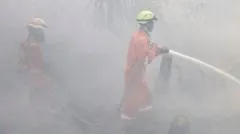
Indonesia wildfires have triggered a massive public health crisis, with the health ministry reporting approximately 175,000 respiratory illness cases since August. The surge in illnesses is driven by toxic smog from uncontrolled forest and peatland fires that have blanketed Indonesia, Malaysia, and Singapore. According to the health ministry, cases involving toddlers have exceeded 40,000, ranging from coughs to severe pneumonia. This article examines the scale of the fires, the impact of the 'Godzilla' El Nino, and the regional environmental consequences.
How many people are affected by respiratory illnesses?
Approximately 175,000 individuals in Indonesia have been diagnosed with respiratory conditions since August due to the ongoing wildfire crisis. The health ministry has highlighted a particularly alarming trend regarding vulnerable populations, noting that more than 40,000 of these cases involve toddlers. The medical spectrum of these illnesses is broad, encompassing mild symptoms like coughs to life-threatening conditions such as bronchitis and pneumonia.
The rapid escalation of these health issues was evident in early September. According to health ministry figures, the number of people suffering from wildfire-related respiratory ailments more than doubled in just eight days, rising from 50,891 on September 1 to 113,336 by September 9. This surge has placed immense pressure on the national healthcare infrastructure and led to widespread school closures across the archipelago to protect children from inhaling toxic particulates.
What is driving the intensity of the Indonesia wildfires?
The current wildfire season is being significantly intensified by a powerful El Nino phenomenon, colloquially referred to as "Godzilla" El Nino, which has created extremely dry environmental conditions. While Indonesia traditionally faces a dry season from July through October, the current year has seen a dramatic spike in fire activity due to these climatic shifts.
Data from the independent forest monitoring platform Nusantara Atlas reveals the scale of the current crisis. As of the second week of September, the platform detected roughly 734,000 hotspots across Indonesia. This figure represents a significant increase in volatility, sitting more than 30% higher than the levels recorded during the 2019 wildfire season, which was previously considered one of the country's most severe. The environmental impact is quantified by the vast area of scorched earth; since January, at least 895,657 hectares of land have been burned. To put this into perspective, the burned area is nearly six times the size of Greater London.
The role of peatland in fire suppression challenges
Firefighting efforts are complicated by the unique geography and soil composition of the affected regions. Indonesia has deployed over 54,000 officials and multiple aircraft to the islands of Borneo and Sumatra to conduct water bombing operations. However, authorities note that the vastness of the territory combined with challenging peatland conditions makes total extinguishment difficult. Peatlands, which are rich in organic matter, can hold fire underground for extended periods, making them notoriously difficult to suppress even with aerial intervention.
How is the haze impacting the wider Southeast Asian region?
The toxic smog generated by the Indonesian wildfires is not contained within national borders, affecting air quality indices in neighboring countries and pushing them into "unhealthy" territory. The haze has drifted across the region, impacting Malaysia and Singapore, and has even reached parts of the Philippines, where local officials have issued warnings for residents to remain indoors.
In Singapore, authorities have transitioned to issuing daily haze advisories to manage public exposure. In Malaysia, specifically in the state of Sarawak, the haze has become a critical concern for both public health and resource management. Authorities in Sarawak have engaged in cloud-seeding operations not only to mitigate the smoke but also to protect water security. As Deputy Premier Douglas Uggah Embas noted, October is forecasted to be even hotter and drier, making the replenishment of hydropower dam water levels a priority.
What is the impact on wildlife and biodiversity?
Beyond the human health crisis, the wildfires are causing significant mortality among Southeast Asia's endangered fauna. The toxic air and loss of habitat have taken a heavy toll on wildlife, with critically endangered orangutans being particularly vulnerable to the smoke and loss of food sources.
A tragic instance of this impact was documented in West Kalimantan, one of the hardest-hit provinces. A wildlife foundation released footage of an orangutan found struggling on a palm oil plantation. Although the animal was rescued and received emergency treatment for hypoxia—a condition caused by lack of oxygen—it eventually succumbed to its injuries. Such incidents highlight the direct link between the uncontrolled fires and the accelerating loss of biodiversity in the region.
Why are there legal challenges against the government?
The recurring nature of these disasters has led to significant legal friction between civil society and the state. In West Kalimantan, indigenous and civil society groups have initiated a class action lawsuit against both the central government and local administrations. The plaintiffs allege deliberate negligence, arguing that the authorities have failed to implement adequate measures to prevent or mitigate the annual haze disasters.
Legal representatives for the groups, including lawyer Glorio Sanen, argue that the predictable pattern of these fires proves that the defendants were aware of the potential risks. The lawsuit suggests that the failure to act on known environmental vulnerabilities constitutes a failure of duty to the public. This legal tension underscores the growing demand for accountability in land management and disaster preparedness in Indonesia.
How effective are cloud-seeding and international aid efforts?
Indonesia has turned to technological interventions, such as cloud-seeding, to combat the drought and haze. This process involves dispersing substances like salt crystals or silver iodide into existing clouds to stimulate rainfall. These operations have occasionally involved international cooperation, such as the assistance provided by members of Japan's Self-Defense Forces in Borneo earlier this month.
Despite these efforts, the effectiveness of cloud-seeding remains a subject of debate among meteorologists. While it is a standard tool in many regional drought-management strategies, its ability to provide consistent, large-scale relief during an extreme El Nino event is not universally guaranteed. The ongoing struggle to balance immediate firefighting with long-term water security remains a primary challenge for regional leaders as the dry season progresses toward its peak in October.
Frequently asked questions
What are the main health symptoms reported in Indonesia?
The most common symptoms reported by the health ministry include coughs and bronchitis. However, the severity of the haze has also led to more serious medical conditions, such as pneumonia, particularly among those with pre-existing vulnerabilities or prolonged exposure to the toxic smog.
Which groups are most at risk from the haze?
Toddlers and young children are among the most vulnerable populations, with over 40,000 reported respiratory cases involving this age group. The elderly and individuals with existing respiratory issues are also at high risk due to the high concentration of particulates in the air.
How does El Nino affect these wildfires?
The "Godzilla" El Nino phenomenon has exacerbated the dry season by creating extremely arid conditions across the archipelago. This lack of moisture makes the forest and peatland vegetation highly flammable and allows fires to spread more rapidly and intensely than in normal years.
What is being done to fight the fires?
Indonesia has deployed more than 54,000 officials and dozens of jets for water bombing missions. Additionally, the government is conducting cloud-seeding operations to induce rain and has received international assistance, including support from Japan's Self-Defense Forces in Borneo.
Is the haze affecting other countries?
Yes, the haze has significantly impacted air quality in Malaysia and Singapore, leading to daily advisories. It has also reached the Philippines and has caused concerns in Sarawak, Malaysia, regarding water levels in hydropower dams.
Key takeaways
- Approximately 175,000 Indonesians have suffered respiratory illnesses since August 2026.
- Over 40,000 respiratory cases involve toddlers, ranging from coughs to pneumonia.
- Hotspots in Indonesia are 30% higher than the severe 2019 wildfire season.
- The "Godzilla" El Nino has intensified the drought, fueling the current crisis.
- Nearly 895,657 hectares of land have been burned since January 2026.
Conclusion
The 2026 wildfire crisis in Indonesia represents a convergence of extreme climatic shifts and significant public health challenges. Driven by the intense El Nino phenomenon, the fires have caused widespread respiratory distress, particularly among children, and have devastated local biodiversity. As the haze spreads across Southeast Asia, the situation has evolved from a localized environmental issue into a regional humanitarian and legal concern. The effectiveness of current mitigation strategies, such as cloud-seeding and aerial water bombing, remains under scrutiny as the region faces a potentially hotter and drier October, testing both government capacity and international cooperation.