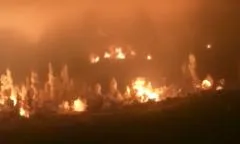
The Israel Defense Forces said it destroyed a major underground Hezbollah facility beneath the Ali Taher Ridge using more than 1,000 tonnes of explosives. The two tunnels, spanning over 2 km, housed a command centre, rockets and other weapons. The blast produced seismic activity recorded at magnitude 4.1 by the US Geological Survey. Residents up to 40 km away reported shaking and left the area. No immediate response came from Hezbollah or Lebanese authorities.
What infrastructure did the IDF target?
The IDF stated the complex served as a command centre for Hezbollah’s Badr unit and stored dozens of rockets, missiles, unmanned aerial vehicles, anti-tank weapons, mines and explosives. The tunnels were built over two decades with Iranian funding and planning, according to the Israeli military. The operation completed the destruction of eight tunnels and the creation of a security zone in the area. This was described by the IDF as strategic infrastructure constructed over two decades. All terrorists inside were said to have been eliminated or fled. The destruction marked completion of a mission targeting eight tunnels total. The source leaves unsettled exactly how many Hezbollah fighters were present and whether any equipment was removed beforehand. No independent verification of the command centre role or full inventory is provided beyond the IDF statement. The underground infrastructure included a command centre used by Hezbollah's Badr unit and contained dozens of rockets, missiles and unmanned aerial vehicles, as well as anti-tank weapons, mines and explosives. The IDF said the destruction of the complex completed a mission to destroy eight tunnels and establish a security zone in the area. The latest action comes amid renewed fighting in southern Lebanon, where Israeli forces have expanded operations against Hezbollah positions and continue to hold what Israel describes as a security zone near the border.
How did the blast affect nearby communities?
Residents in Nabatieh, 6 km west of the ridge, described a fireball followed by a loud explosion that shook houses. One witness said children were crying and cars headed toward Beirut. Tremors reached the coastal city of Saida, 40 km north. The Lebanese army increased deployments in Nabatieh and other areas outside Israeli control to maintain stability. Ahamed, a Nabatieh resident, told the BBC the house shook as if it were literally an earthquake, with people screaming and children crying. Cars filled the roads as residents left for Beirut. Lebanese media reported the Lebanese army deployments aimed to strengthen stability and reassure residents. The source leaves unsettled the exact number of people who fled and whether any returned the same day. No casualty figures from the blast itself were reported in the source. Images released by the Israel Defense Forces showed a fireball lighting up the sky. The blast triggered seismic activity equivalent to a magnitude 4.1 earthquake, according to the US Geological Survey. Tremors were even felt in the coastal city of Saida 40km north. The sky lit up and about 15 seconds later we heard the terrifying sound, the resident said. The house shook all together as if it was literally an earthquake.
What is the current territorial situation?
Israeli forces occupy roughly 5 % of Lebanese territory following operations that resumed in March. The IDF says it maintains a security zone near the border after expanding operations against Hezbollah positions. Lebanese media reported additional Israeli strikes on Thursday in Nabatieh al-Fawqa and Mansouri in the Tyre district. Israeli forces took control of the ridge last week after months of fighting. The military occupies a large swathe of southern Lebanon captured after the conflict resumed in March. The source leaves unsettled the precise boundaries of the security zone and how long Israeli forces intend to remain. No map or coordinate details appear in the source material. Israeli forces took control of the ridge last week after months of fighting with the Iran-backed group there. The Israeli military occupies a large swathe of southern Lebanon captured after the conflict with Hezbollah resumed in March.
What are the reported casualties since March?
Lebanon’s health ministry recorded at least 4,383 deaths, including 395 women and 259 children, from Israeli attacks since 2 March. At least 29 people were killed this week. Israeli authorities report 40 soldiers and four civilians killed in the same period. The UN estimates 330,000 people remain displaced, with many unable to return to Israeli-occupied areas. The health ministry figures do not differentiate between combatants and civilians. The source leaves unsettled how many of the 4,383 deaths occurred inside or near the tunnel complex itself. No breakdown by location beyond the overall total is given. At least 4,383 people - including 395 women and 259 children - have been killed in Lebanon by Israeli attacks since 2 March, according to the health ministry. At least 29 have been killed this week, the ministry says. Israeli authorities say 40 Israeli soldiers and four civilians have been killed in the same period. The UN says about 330,000 people in Lebanon remain displaced by the conflict.
How does the latest action fit into the broader conflict timeline?
Lebanon was drawn into the wider war on 2 March when Hezbollah launched rockets into Israel following a strike that killed Iran’s supreme leader. A ceasefire between Iran and the US in June, together with a Lebanon-Israel framework, reduced fighting. Hezbollah is expected to disarm and Israeli forces are to withdraw gradually under that framework, though Hezbollah rejected direct negotiations. Fighting decreased following the June ceasefire deal alongside the separate Lebanon-Israel agreement. Despite the reduction, Israeli strikes and demolitions continued. The source leaves unsettled whether the tunnel operation was planned before or after the June agreements. Hezbollah was not directly involved in the agreement. Lebanon was drawn into the war between Israel, the US and Iran on 2 March, when Hezbollah launched rockets into Israel in retaliation for a strike that killed Iran's supreme leader. Israel responded by launching a bombing campaign across Lebanon and invading a significant part of the country's south. Its forces continue to occupy roughly 5% of Lebanese territory. Fighting decreased following a ceasefire deal between Iran and the US in June, alongside a separate agreement between Lebanon and Israel.
Frequently asked questions
Did Hezbollah respond to the tunnel destruction?
No public statement from Hezbollah or the Lebanese government was reported immediately after the IDF announcement. There was no immediate public response from Hezbollah or the Lebanese government.
Where exactly is the Ali Taher Ridge?
The ridge lies in southern Lebanon, an area where Israeli forces took control last week after months of fighting.
What weapons were stored in the tunnels?
The IDF said the site contained rockets, missiles, unmanned aerial vehicles, anti-tank weapons, mines and explosives.
Has the fighting stopped after the June ceasefire?
Israeli strikes and demolitions have continued in southern Lebanon despite the reduction in large-scale combat.
How many tunnels has the IDF destroyed?
The operation brought the total to eight tunnels destroyed as part of efforts to establish a security zone.
Key takeaways
- IDF used over 1,000 tonnes of explosives on tunnels more than 2 km long.
- Seismic activity reached magnitude 4.1 according to the US Geological Survey.
- At least 4,383 people killed in Lebanon since 2 March per health ministry figures.
- Israeli forces occupy about 5 % of Lebanese territory.
- 330,000 people remain displaced, UN reports.
Outlook
The destruction of the complex marks the completion of one phase of Israeli operations in southern Lebanon. Continued strikes and the status of the security zone remain points of tension under the existing ceasefire framework. The UN says about 330,000 people in Lebanon remain displaced by the conflict, with Israeli military activity, air strikes, destruction and restrictions on returning to Israeli-occupied areas preventing many from going home. Under the Lebanon-Israel framework, Hezbollah is expected to disarm, Israeli forces to withdraw gradually from southern Lebanon and the Lebanese army to deploy across the area. Hezbollah was not directly involved in the agreement and has rejected direct negotiations. Despite a reduction in fighting, Israeli strikes and demolitions in southern Lebanon have continued. The latest action comes amid renewed fighting in southern Lebanon, where Israeli forces have expanded operations against Hezbollah positions and continue to hold what Israel describes as a security zone near the border.