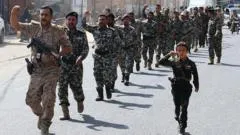
The lightning advance gives Iran influence over two major maritime choke points and raises shipping risks while Saudi Arabia and the US respond cautiously.
What territory did the Houthis capture along the Red Sea coast?
The Houthis advanced across the southern Tihamah coastal plain and seized significant areas previously held by the National Resistance. Estimates indicate the group now controls as much as 130km of strategically important coastline. Hisham al-Omeisi of the European Institute of Peace stated the Houthis are likely to entrench and that removing them would be costly. The lightning advance took most observers by surprise after the anti-Houthi coalition held substantial territory along the coast until recently. In a matter of days much of this territory fell. The group's most impressive military coup for several years shows that despite a civil war lasting 12 years, devastating Saudi air raids and attacks by American, Israeli and British forces, the Houthis remain a force to be reckoned with. With opponents stunned and demoralised, the Houthis are unlikely to be dislodged any time soon. Al-Omeisi warned that once entrenched the cost of pushing them out rises sharply, leaving the captured stretch of coastline under Houthi control for the foreseeable future. The speed of the gains has left the National Resistance coalition demoralised and without immediate means to recover the lost ground along the arid plain.
How does the advance affect control of the Bab al-Mandab strait?
The captured coastline overlooks the Bab al-Mandab, the gateway to the Red Sea and Suez Canal. Farea al-Muslimi of Chatham House noted that Iran, directly and through proxies, now influences both the Strait of Hormuz and the Bab al-Mandab, covering more than 35% of global fuel and oil trade. Iona Craig observed that territorial control increases leverage over shipping movements compared with earlier missile and drone operations. If the Houthis have also taken control of several key islands including Perim at the narrowest point of the Bab al-Mandab, their ability to interfere with international shipping will be greatly enhanced. Craig said the Houthis were already able to control what was going in and out of the Bab al-Mandab and up towards Suez without these territorial gains, but now controlling the area immediately overlooking the strait gives them far more leverage. This shift places additional pressure on vessels transiting the narrow passage and heightens the strategic value of the newly held coastal positions. The added oversight from land positions allows sustained monitoring that missile strikes alone could not guarantee.
What risks does the situation pose for international shipping?
The Houthis released a statement claiming maritime navigation remains safe except for Saudi vessels. Earlier attacks, however, struck vessels without Israeli links, including a Norwegian-flagged tanker. Analysts assess that control of islands such as Perim would further strengthen the group's capacity to monitor and disrupt traffic. Shipping firms are expected to remain cautious despite the recent assurance. The Houthis may nevertheless refrain from indiscriminate attacks, fearing a repeat of Operation Rough Rider, six weeks of major US air and naval strikes in the spring of 2025. Craig said they have already felt the wrath of the US. Companies therefore weigh the Houthi statement against past behaviour that extended beyond declared targets, leaving routes through the Bab al-Mandab under continued scrutiny. The combination of territorial gains and proven missile and drone reach keeps the risk of sudden interference elevated even if outright closure is avoided.
What is Iran's role and how has support shifted?
The Houthis receive Iranian backing. After setbacks for other members of the Axis of Resistance, including Hezbollah, Hamas and the former Syrian government, Tehran redirected resources to the Houthis. Al-Omeisi described this reallocation as a response to the need for continued regional influence. The advance followed a Houthi delegation's return from the funeral of Iran's Supreme Leader in July. Even though most analysts agree it is a mistake to describe the Houthis as Iranian puppets, events raise an uncomfortable new reality. Seven months after the US and Israel launched their huge combined assault on Iran, the regime in Tehran now exerts authority over not just one but two of the world's most important maritime passages. The reallocation of support has coincided with the latest territorial gains, strengthening Iran's indirect reach along the Red Sea without direct orders in every case. The shift underscores Tehran's adaptation after losses elsewhere in the region.
Why are Saudi Arabia and the United States responding cautiously?
Saudi Arabia faces threats to its East-West pipeline and Red Sea economic routes. Satellite images point to an apparent Houthi missile-and-drone attack on the East-West pipeline, a vital alternative route for oil exports. The United States has received appeals for intervention from Saudi Crown Prince Mohammed bin Salman but has so far avoided direct military involvement, according to Axios reporting. President Trump's existing conflict with Iran is described as unpopular, and further escalation carries political costs ahead of midterm elections. The US is increasingly concerned about the escalating conflict in Yemen and is working to intensify support for the kingdom while seeking to avoid direct military involvement. This measured stance leaves Saudi Arabia to manage immediate pipeline and shipping concerns while seeking non-combat assistance. The reluctance reflects calculations that new fronts would add little to domestic political standing.
Frequently asked questions
Has the Houthis' advance ended the 2022 UN truce?
The fighting represents the worst escalation since the UN-brokered truce. No formal end to the truce has been declared, yet renewed clashes have displaced additional civilians and risk broader resumption of hostilities. The origins of the latest upsurge can be traced back to July when a Houthi delegation returned from the state funeral of Iran's Supreme Leader.
Are the Houthis acting solely on Iranian orders?
Most analysts reject the description of the Houthis as Iranian puppets. The group maintains independent decision-making while benefiting from Iranian material and political support. Iran clearly stands to benefit even if it did not directly order the attack on the pipeline.
Could the United States launch new strikes on Houthi positions?
The US conducted major strikes in spring 2025 under Operation Rough Rider. Current policy emphasises support for Saudi Arabia without direct involvement, though this stance could change if shipping disruptions intensify. Appeals for US intervention have so far gone unanswered.
What islands are now under Houthi influence?
Reports indicate possible Houthi control of several Red Sea islands, notably Perim at the narrowest point of the Bab al-Mandab. Confirmation of full control remains limited. Such control would greatly enhance the group's ability to interfere with international shipping.
How has the civil war affected Yemen's population?
Twelve years of conflict have left millions displaced, bombed and impoverished. Renewed fighting is expected to worsen humanitarian conditions. For the people of Yemen, recent developments can only make their lives worse.
Key takeaways
Houthi forces captured up to 130km of Yemen Red Sea coastline within days. Iran-linked groups now influence two global maritime choke points. Shipping through the Bab al-Mandab faces heightened risk. Saudi Arabia seeks external support without direct US combat involvement. Yemen's civilian population faces renewed displacement and hardship.
Outlook for further escalation
The combination of Houthi territorial gains, Iranian strategic interest and Saudi economic vulnerability has added a new and potentially dangerous dimension to the US-Iran conflict. With Yemen teetering on the edge of a return to all-out war, Saudi Arabia anxious about preserving its economic lifeline to the Red Sea and Donald Trump apparently reluctant to get involved, observers expect continued low-level clashes and sustained pressure on shipping lanes unless diplomatic channels reopen.