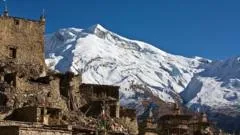
A Himalayan avalanche has left at least 10 Nepalese climbers missing after striking a staging area on Sunday morning. The incident occurred near the Himlung Himal peak in the Manang district, where local guides were preparing for upcoming expeditions. Local authorities have confirmed that the debris hit a primary staging zone used for gear preparation. While rescue operations face significant environmental hurdles, the tragedy highlights the increasing volatility of weather in the region. This analysis examines the circumstances of the disappearance and the broader impact on the mountain climbing industry.
Missing climbers near Himlung Himal peak
At least ten Nepalese mountaineers are currently unaccounted for following a sudden avalanche near the Himlung Himal peak. The climbers were positioned at a staging point in the Manang district, performing essential preparatory work for upcoming high-altitude expeditions. According to Bibhuti Chand Thakur of Himalaya Holidays Trekking, the group consists of eight members from his specific expedition team and two individuals from a separate trekking company.
These local guides were tasked with critical logistical duties, including managing the route and fixing ropes to facilitate the ascent of foreign climbers. The Himlung Himal, standing at 7,126m (23,380ft), sits on the border between Nepal and Tibet. Recent meteorological data confirms that the area has experienced heavy snowfall in the days leading up to the incident, creating a highly unstable environment for those working at base camp levels.
Obstacles to search and rescue operations
Severe weather conditions are currently preventing rescue teams and helicopters from accessing the site of the avalanche. The combination of persistent snow and unpredictable atmospheric shifts has made the terrain in the Manang district extremely treacherous. This lack of accessibility means that the immediate fate of the ten missing climbers remains unknown as teams wait for a window of safer weather.
The difficulty in reaching the Himlung Himal is not an isolated issue. Across Nepal's mountain districts, continuous rain and snow have been reported, complicating all forms of high-altitude movement. These conditions are not only a threat to life but also pose a significant risk to the technical operations required to locate individuals buried under snow or debris.
Impact on Nepal's climbing tourism industry
The recent surge in natural disasters is placing immense pressure on the economically vital climbing tourism sector in Nepal. The instability of the mountains has already forced climbers to abandon Mount Manaslu, the world's eighth-highest peak, earlier this week due to escalating avalanche risks. Such disruptions threaten the livelihoods of local guides and the stability of the broader tourism economy.
This incident follows a series of tragic events in the region. Less than two months ago, six people lost their lives on Broad Peak in Pakistan, including the prominent British-Nepali mountaineer Nirmal Purja. Furthermore, the region is still reeling from the aftermath of a glacial collapse that killed more than 1,400 people when debris flooded the Trishuli River valley. The cumulative effect of these disasters creates a climate of uncertainty for both local professionals and international adventurers.
Regional climate volatility and disasters
Beyond the immediate search in Manang, the wider South Asian region is experiencing extreme weather patterns. In the Indian state of Uttar Pradesh, officials reported that more than 50 people have died due to severe weather conditions. Meanwhile, the Nepal-Tibet border continues to deal with the fallout of a massive flood and landslide from August, which left more than 6,000 people missing.
The frequency of these events—ranging from glacial collapses to sudden avalanches—underscores a period of intense environmental instability. As the climbing community monitors the situation at Himlung Himal, the broader trend of extreme weather remains a primary concern for safety and economic continuity in the Himalayas.
Frequently Asked Questions
Who are the missing climbers?
The missing individuals are ten Nepalese climbers. According to Bibhuti Chand Thakur of Himalaya Holidays Trekking, eight members belong to his expedition team, while two others are from a different company. They were local guides preparing routes for foreign expeditions.
Where did the avalanche occur?
The avalanche struck a staging point in the Manang district of Nepal. The location is situated near the Himlung Himal peak, which reaches an altitude of 7,126m (23,380ft) and lies on the border between Nepal and Tibet.
Why is the rescue effort delayed?
Rescue efforts are being hampered by poor weather and heavy snowfall. These conditions have made it impossible for helicopters and ground rescue teams to reach the specific site near the Himlung Himal peak to begin search operations.
The evolving landscape of Himalayan safety
The disappearance of the ten climbers near Himlung Himal serves as a stark reminder of the inherent dangers present in high-altitude mountaineering. As extreme weather events become more frequent, the safety of local guides and the stability of Nepal's climbing tourism industry face unprecedented challenges. While the immediate focus remains on the search in Manang, the broader regional context—marked by recent glacial collapses and significant loss of life—suggests a period of heightened risk for the entire Himalayan corridor. Monitoring weather patterns and improving rescue accessibility will be vital for the future of the industry.