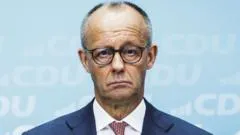
Germany's identity crisis is being laid bare by a series of bruising regional election results that have destabilised the coalition government. Chancellor Friedrich Merz faces significant political pressure after his party, the CDU, lost its first-place position in Berlin and faced heavy losses in Saxony-Anhalt and Mecklenburg-Western Pomerania. While economic growth forecasts for 2026 and 2027 have been raised above 1%, public anxiety regarding energy costs and industrial competition remains high. This article examines the erosion of Germany's political centre, the rise of the AfD, and the structural economic challenges facing the nation.
How are regional elections reshaping the German political landscape?
Recent local election results have fundamentally disrupted the traditional dominance of Germany's major political parties. In the last fortnight, the political standing of Chancellor Friedrich Merz has been severely tested as his party, the CDU, failed to secure its usual leadership positions in key regions. In Berlin, the CDU was overtaken by rival parties, while in Saxony-Anhalt, the party suffered significant losses in the polls. Most notably, the party was pushed out of parliament entirely in Mecklenburg-Western Pomerania.
This shift suggests a broader trend of voters moving away from the established 'big tent' parties that have traditionally anchored German governance. While the CDU and its centre-left partner, the SPD, attempt to maintain a governing coalition, the electoral data indicates a fragmentation of the political centre. This instability is not merely a temporary setback but appears to reflect a deeper, long-standing disconnect between the electorate and the governing establishment.
The erosion of the political centre
The traditional stability of German politics, once characterised by consensus-driven decision-making, is being replaced by a more polarised environment. The loss of support for the CDU and SPD in these regional contests highlights a growing dissatisfaction with the status quo. This fragmentation is further complicated by the performance of smaller parties, such as Die Linke, which recently topped the polls in Berlin, adding new layers of complexity to the national political dialogue.
Why is Chancellor Friedrich Merz facing such intense scrutiny?
Chancellor Friedrich Merz is currently navigating a period of extreme political vulnerability following record-low approval ratings. Voters have frequently described the Chancellor as being out of touch and arrogant, a sentiment that has translated into significant electoral setbacks for his party. Despite these challenges, internal dissent within the CDU remains contained, as no high-profile members have yet moved to openly challenge his leadership, despite persistent rumours regarding a potential 'Kanzlertausch' or chancellor swap.
Merz, who assumed office in 2025 with promises to tighten immigration controls and revitalise the economy, finds himself defending a record that is viewed through a lens of increasing public skepticism. Supporters of the Chancellor, such as Jürgen Hardt, the CDU/CSU foreign policy spokesperson, argue that leadership changes are not a panacea for the country's structural issues. Hardt has maintained that the party must focus on reform and improving its communication with the electorate rather than seeking a change in personnel.
Addressing the communication gap
The perception of Merz as a disconnected leader has become a central theme in political critiques. Government circles often refer to this as a 'communication issue,' suggesting that the administration's inability to effectively articulate its reforms is contributing to its declining popularity. Addressing this gap is seen by allies as essential for the CDU to regain its footing in the upcoming national political cycles.
What role does the AfD play in Germany's current instability?
The Alternative für Deutschland (AfD) has emerged as a significant disruptive force, capitalising on national anxieties to consolidate its power. The party has achieved notable success, including a third victory in a state election in Mecklenburg-Western Pomerania, and currently leads nationwide polls with approximately 28% support. The AfD has successfully tapped into a sense of nostalgia for past stability while simultaneously exploiting contemporary fears regarding immigration and economic security.
Security officials have expressed concerns regarding the AfD's political trajectory, noting its Russia-friendly stance and the fact that some of its regional branches have been classified as right-wing extremist by domestic intelligence agencies. The party's rise is particularly concentrated in the former communist east, where it has established strongholds. AfD leadership, including co-leader Alice Weidel, has been vocal in suggesting that the current administration's time is limited, reflecting the party's aggressive stance toward the political establishment.
The AfD's platform of 'order'
The party's messaging often focuses on a return to perceived traditional values and national order. This sentiment is reflected in local campaigning, where slogans such as 'Berlin braucht Ordnung' (Berlin needs order) resonate with voters who feel that the social and political fabric of the country is fraying. This approach has allowed the AfD to move from the fringes of German politics into a position where it is actively 'making the political weather.'
How are economic shifts affecting German national identity?
Germany is currently grappling with a profound economic transition that challenges its historical identity as a global industrial powerhouse. For decades, the nation's success was built on an export-driven model powered by affordable Russian energy. The loss of this cheap energy source, combined with high ongoing costs for both households and businesses, has disrupted the traditional economic recipe that once ensured stability and prosperity.
Furthermore, the German automotive sector, a cornerstone of the national economy, faces existential threats from international competition. There is growing concern that Chinese industry is increasingly capable of cannibalising Germany's market share in key sectors. While leading economic institutes have recently raised growth forecasts for 2026 and 2027 to above 1%, these figures do not fully alleviate the underlying anxieties regarding long-term industrial competitiveness and the rising cost of living.
The transition from energy abundance to scarcity
The shift away from cheap gas has forced a structural rethinking of German industry. This transition is not merely an economic hurdle but a psychological one, as it marks the end of an era of predictable, low-cost industrial growth. The uncertainty surrounding how Germany will maintain its manufacturing edge in a more competitive and expensive global market is a primary driver of current social and political tension.
What are the primary drivers of public anxiety in Germany?
Public anxiety in Germany is currently driven by a combination of economic pressures and concerns over social integration and safety. While illegal entries into Germany and Europe have seen a year-on-year decrease, the political discourse has shifted from the volume of new arrivals to more complex issues such as welfare costs, public safety, and the long-term success of integration efforts. These concerns are frequently leveraged by opposition parties to challenge the competence of the current government.
The intersection of economic hardship and social change has created a volatile environment. As households struggle with energy costs, the debate over immigration and national identity becomes more heated. This convergence of issues makes it difficult for the governing coalition to implement reforms without facing intense scrutiny from both the political right and the left, further contributing to the sense of a nation in flux.
Frequently asked questions
Why is the AfD gaining popularity in Germany?
The AfD is gaining support by capitalising on public anxieties regarding immigration, national identity, and economic stability. The party has successfully established strongholds in the former East Germany and maintains a high polling average of approximately 28% by promising a return to traditional order and addressing concerns about welfare and safety.
Is the German economy still growing?
Yes, leading economic institutes have recently increased growth forecasts for Germany for the years 2026 and 2027, placing them above 1%. However, this growth occurs alongside significant challenges, including high energy costs for businesses and intense competition in the automotive sector from countries like China.
What is the current status of Chancellor Friedrich Merz?
Chancellor Friedrich Merz is facing significant political pressure following poor regional election results for the CDU. While he currently maintains the support of his party leadership, his approval ratings are at record lows, and there is ongoing speculation regarding potential changes in leadership within the government.
How have recent elections affected the CDU and SPD?
Recent regional elections have seen a decline in the dominance of the CDU and SPD. The CDU lost its top position in Berlin and faced heavy losses in Saxony-Anhalt, while the SPD continues to struggle within its coalition. This indicates a growing fragmentation of the traditional political centre in Germany.
What are the main economic challenges facing Germany today?
Germany's primary economic challenges include the loss of cheap Russian gas, which has led to high energy costs for households and industry, and the threat of losing industrial dominance, particularly in the car-making sector, to international competitors such as China.
Key takeaways
- The CDU and SPD are facing significant electoral declines in recent regional polls.
- The AfD currently holds approximately 28% of the nationwide polling support.
- Economic growth forecasts for 2026 and 2027 have been raised above 1%.
- Germany faces structural economic threats from high energy costs and Chinese industrial competition.
Conclusion
Germany is currently navigating a period of profound transformation, where traditional political and economic certainties are being replaced by instability and competition. The erosion of the political centre, evidenced by the rise of the AfD and the struggles of the CDU, reflects a nation searching for a new sense of identity and order. Simultaneously, the shift in the economic landscape—from energy abundance to high-cost competition—demands a fundamental restructuring of the German industrial model. Whether the current administration can implement the necessary reforms to address these multifaceted crises remains the defining question for the country's future.