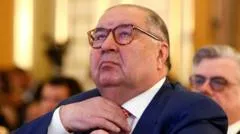
EU sanctions on Russian oligarchs are being modified as the European Union prepares to remove Alisher Usmanov and Mikhail Fridman from its restrictive lists. This decision follows intense diplomatic negotiations involving France and Luxembourg, resulting in a compromise that extends sanctions on approximately 2,600 to 3,000 other entities for three years. While the move aims to streamline the sanctions process, it has sparked significant backlash from Ukrainian officials. This article examines the details of the removals, the geopolitical compromises involved, and the reaction from Kyiv and Moscow.
Why are Alisher Usmanov and Mikhail Fridman being removed from the EU sanctions list?
The removal of Alisher Usmanov and Mikhail Fridman stems from specific diplomatic pressures and legal challenges within the European Union. France spearheaded the campaign to delist the Russian-Uzbek billionaire Alisher Usmanov, citing concerns regarding national security. Meanwhile, Luxembourg advocated for the removal of Mikhail Fridman, a Russian-Israeli businessman who has actively pursued legal action against the country to regain access to his frozen assets.
The decision represents a pivot in the EU's approach to managing individual sanctions, moving away from the rigid biannual renewal process toward a more extended framework for the remaining targets. However, the specific motivations for these two individuals' removal suggest a complex web of bilateral interests and legal necessities that clash with the broader goal of isolating the Kremlin.
The role of national interests in EU decision-making
The push for these removals was not uniform across the bloc. Reports suggest that France's initiative to delist Usmanov may have been linked to diplomatic negotiations involving a prospective prisoner release deal with Azerbaijan. This highlights how individual member states can influence the collective EU sanctions regime to serve specific foreign policy objectives or security arrangements.
What is the impact of these removals on Ukraine's diplomatic stance?
Ukrainian officials have described the decision to lift sanctions on these two individuals as "unacceptable," arguing that it weakens the unified front against Moscow. Foreign Minister Andriy Sybiha expressed deep concern on X, stating that the move provides Russia with a sense of impunity and serves to humiliate the EU while fostering division among European nations.
Kyiv views the removal not merely as a legal or administrative adjustment, but as a strategic signal that could embolden the Kremlin. Sybiha has urged EU member states to bypass the collective decision by implementing their own national sanctions against Usmanov and Fridman. Latvia has already signaled its intention to follow this path, asserting its own sovereign right to maintain restrictions despite the EU-wide compromise.
How does the new EU sanctions compromise work?
The removal of the two oligarchs was part of a broader compromise designed to stabilize the sanctions regime. While two individuals are being released, the EU has moved to extend sanctions on nearly 3,000 other individuals and entities for a period of three years. This is a significant structural change from the previous system, which required sanctions to be renewed every six months.
This extension aims to provide more long-term certainty and reduce the administrative burden of constant renewals. Latvia, which initially opposed the deal, eventually changed its position from a veto to an abstention to facilitate this compromise. The deal balances the specific demands of member states like France and Luxembourg with the need to maintain a robust, long-term pressure mechanism on the Russian economy.
The shift from six-month to three-year cycles
Under the previous framework, the EU had to re-verify and re-vote on sanctions every six months. This process was often subject to political friction and delays. By extending the duration for the remaining 2,600 to 3,000 targets to three years, the EU seeks to create a more durable and predictable sanctions environment, even as individual cases like those of Usmanov and Fridman are settled.
Who are Alisher Usmanov and Mikhail Fridman?
Both men are prominent figures in the Russian business landscape with significant international footprints. Alisher Usmanov, the founder of USM Holding, oversees an investment group with vast interests in copper, steel, and iron suppliers, as well as the Megafon telecommunications firm. He was previously known for his ties to English Premier League clubs Arsenal and Everton. The EU had originally frozen his assets in 2022, labeling him a pro-Kremlin oligarch with close ties to President Vladimir Putin.
Mikhail Fridman is the founder of the Alfa Group investment conglomerate, which holds major interests in the banking and energy sectors. As a Russian-Israeli citizen born in Ukraine, his legal standing and business interests have placed him at the center of complex jurisdictional battles. While Fridman expressed a desire for the conflict in Ukraine to end as soon as possible, he stopped short of an outright condemnation of President Putin, a nuance that influenced his status within the EU's restrictive measures.
How has the Kremlin and other stakeholders responded?
The Kremlin has welcomed the prospect of these removals, with spokesperson Dmitry Peskov claiming that the EU's original sanctions were illegal. Peskov argued that all Russians should be removed from such lists, framing the EU's decision as a validation of Russia's position. This reaction underscores the deep divide between the EU's stated goals of isolation and the Kremlin's narrative of Western overreach.
In Latvia, the response has been multifaceted. While the government participated in the EU compromise, it remains firm on its own security interests. This includes a strengthening of military presence and discussions with France regarding a nuclear deterrence initiative. The tension in Latvia is also personified by the case of Pyotr Aven, Fridman's business partner, who was stripped of Latvian honors in 2022 for failing to condemn the invasion.
Frequently asked questions
Why did France support Alisher Usmanov?
France campaigned for Usmanov's removal citing national security concerns. Additionally, reports indicate that the French initiative may have been tied to diplomatic discussions regarding a potential prisoner release deal involving Azerbaijan, illustrating how member states use sanctions as leverage in broader geopolitical negotiations.
What is the difference between the old and new sanctions renewal process?
Previously, the EU was required to renew sanctions on targeted individuals and entities every six months. Under the new compromise, sanctions for approximately 2,600 to 3,000 targets will be extended for a period of three years, providing greater administrative stability for the bloc.
How did Latvia react to the EU decision?
Latvia initially vetoed the decision during a meeting of EU ambassadors. However, it later changed its vote to an abstention as part of a compromise. Despite the EU-level change, Latvia has announced it will implement its own national sanctions against the removed oligarchs.
What was the EU's original reason for sanctioning Mikhail Fridman?
The EU categorized Mikhail Fridman as a top Russian financier and an enabler of President Putin's inner circle. His leadership of the Alfa Group, which has significant interests in energy and banking, made him a primary target in the effort to disrupt the financial resources of the Russian elite.
What is the Ukrainian government's view on this move?
Ukrainian officials, including Foreign Minister Andriy Sybiha, have called the removal "unacceptable." They argue that it sends a message of weakness to Moscow and allows the Kremlin to claim a victory in its efforts to divide European unity and maintain a sense of impunity.
Key takeaways
- The EU is removing sanctions on oligarchs Alisher Usmanov and Mikhail Fridman.
- France and Luxembourg led the push for these specific removals.
- Sanctions for nearly 3,000 other entities will now be extended to three years.
- Ukraine has condemned the move, calling it a sign of EU division.
- Latvia will implement its own national sanctions despite the EU compromise.
Conclusion
The decision to remove Alisher Usmanov and Mikhail Fridman from the EU sanctions list highlights the ongoing tension between collective European security goals and the specific diplomatic and legal interests of individual member states. While the move toward three-year sanction extensions offers a more streamlined administrative approach, the immediate fallout reveals deep fractures. Ukraine views the decision as a strategic setback that undermines the pressure on Moscow, while the Kremlin has used the development to claim legitimacy. As member states like Latvia pursue independent sanction paths, the unity of the European sanctions regime remains a complex, evolving challenge.