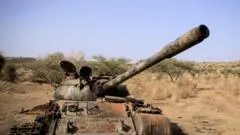
An Ethiopian rebel alliance comprising seven distinct militant groups has been announced, aiming to remove the current government in Addis Ababa. The coalition, named the Alliance for Survival, includes the Fano militia, the Oromo Liberation Army (OLA), and the Tigray People's Liberation Front (TPLF). This unification of forces represents a significant shift in the country's internal security landscape, as groups that were previously adversaries now coordinate against the Prosperity Party. The alliance claims the government is responsible for widespread poverty and instability. This article examines the composition of the coalition, the historical context of the conflict, and the potential implications for Ethiopia's sovereignty.
What is the composition of the Alliance for Survival?
The Alliance for Survival is a coalition of seven rebel groups that spans half of Ethiopia's 12 regional states. By uniting forces from diverse geographical and ethnic backgrounds, the alliance aims to present a unified front against Prime Minister Abiy Ahmed's administration. The coalition is notable for bringing together factions that have historically been on opposing sides of internal conflicts.
The primary members of this new alliance include:
- Fano militia: Based in the Amhara region, this group previously supported federal forces but turned against the government following disputes over disarmament.
- Oromo Liberation Army (OLA): A group that has been engaged in armed conflict with the federal government since 2018 in the Oromia region.
- Tigray People's Liberation Front (TPLF): The dominant force in the northern Tigray region, which was central to the civil war that ended with a 2022 peace deal.
- Ogaden National Liberation Front (ONLF): Representing interests in the Somali region, the ONLF has cited the government's failure to honor a 2018 peace agreement.
Beyond these major players, the alliance includes four smaller groupings and extends its reach into the Afar and Benishangul-Gumuz regions. This wide-reaching membership suggests an attempt to bypass the traditional regional silos that have defined Ethiopian conflict.
Why are these groups uniting against the central government?
The Alliance for Survival has explicitly accused the government of presiding over a period characterized by "war, genocide, mass destruction, and utter poverty." According to the coalition, the current political direction of the country is driving Ethiopia toward total disintegration. The central motivation for this unification is the belief that the Prosperity Party has become an obstacle to democratic self-determination and regional stability.
Abdikadir Addaani Hirmooge, the spokesman for the ONLF, emphasized that the alliance is a response to systemic failures in governance. He stated that ethnic conflict, insecurity, and mutual oppression have not been resolved, but rather have intensified, affecting every ethnic group in the nation. The coalition's stated objective is to enable communities to exercise their right to self-determination and to govern themselves through democratic means.
The failure of existing peace frameworks
A recurring theme in the alliance's rhetoric is the perceived inadequacy or violation of existing peace agreements. For instance, the ONLF points to the 2018 peace deal intended to end conflict in the Somali region as a failed promise. Similarly, in the Tigray region, despite the African Union-brokered peace deal in 2022, tensions remain high as both the government and Tigrayan forces accuse one another of violating the terms of the agreement. This lack of trust in federal mediation appears to be a primary driver for the formation of a collective resistance.
How has the Ethiopian political landscape contributed to this instability?
Ethiopia's political structure, defined by ethnic federalism, provides a degree of autonomy to its 12 regional states based on dominant ethnic groups. While intended to manage the country's more than 80 distinct ethnic groups, this system often creates social and political friction. The new alliance exploits these regional identities by coordinating across them, effectively attempting to turn the system of ethnic federalism against the central authority.
The instability is further compounded by the recent electoral outcomes. In June, Prime Minister Abiy Ahmed's Prosperity Party retained an overwhelming majority in parliament. However, the legitimacy of this victory has been questioned due to several factors:
- Conflict-driven suppression: The election took place amidst ongoing armed insurgencies in major states like Oromia and Amhara.
- Low participation: Many opposition parties boycotted or were unable to participate effectively due to the security climate.
- Accusations of repression: The electoral process was overshadowed by claims of government crackdowns on political dissent.
The combination of a dominant central party and a fragmented, ethnically-based opposition has created a volatile environment where armed resistance is increasingly viewed by some factions as the only viable path to political change.
What is the government's response to the new alliance?
Prime Minister Abiy Ahmed has maintained a stance of confidence regarding the state's ability to maintain order. Despite the formation of the Alliance for Survival and previous reports of potential cooperation between the TPLF and Eritrea, the Prime Minister has dismissed fears of a total collapse of state authority. In July, he told lawmakers that he had no fear regarding Ethiopia's sovereignty, even if additional external or internal actors were to join the opposition.
The government's position rests on its "defensive capabilities," suggesting a reliance on the federal military to suppress the various insurgencies. However, the sheer number of groups involved in the new alliance presents a significant tactical challenge. Unlike previous conflicts that were largely regional, the Alliance for Survival represents a multi-front threat that spans the Amhara, Oromia, Tigray, Somali, Afar, and Benishangul-Gumuz regions.
Historical shifts in regional allegiances
The current situation is marked by significant shifts in former alliances. A notable example is the Fano militia in the Amhara region. During the Tigray war, Fano fought alongside federal forces to combat the TPLF. However, the relationship soured less than a year after the war ended when the group refused government orders to disarm, subsequently launching an armed insurgency against the very government they once supported. This volatility makes the current alliance particularly unpredictable, as former allies are now unified in their opposition to the central state.
FAQ: Ethiopian rebel alliance
What is the name of the new rebel coalition?
The new coalition is called the Alliance for Survival. It is a group of seven different rebel organizations that have decided to coordinate their efforts to challenge the current Ethiopian government in Addis Ababa.
Which major groups are part of this alliance?
The alliance includes the Tigray People's Liberation Front (TPLF), the Oromo Liberation Army (OLA), the Fano militia from the Amhara region, and the Ogaden National Liberation Front (ONLF), along with four other smaller groups.
What are the main grievances of the alliance?
The alliance accuses the government of causing mass destruction, genocide, and widespread poverty. They argue that the current administration is leading Ethiopia toward disintegration and failing to respect the rights of ethnic communities to self-determination.
Does the government recognize the alliance's claims?
The Ethiopian government, led by Prime Minister Abiy Ahmed, has not validated the alliance's accusations. Instead, the Prime Minister has expressed confidence in the country's sovereignty and its ability to defend itself against such challenges.
How widespread is the influence of the alliance?
The alliance is geographically broad, with member groups operating in six of Ethiopia's twelve regional states, including Amhara, Oromia, Tigray, Somali, Afar, and Benishangul-Gumuz, covering a significant portion of the country.
Key takeaways
- Seven rebel groups, including TPLF and Fano, have formed the "Alliance for Survival" to oppose the central government.
- The coalition spans six of Ethiopia's twelve regional states, representing a significant portion of the country's territory.
- The alliance claims the Prosperity Party government is responsible for genocide, poverty, and national disintegration.
- The group aims to achieve democratic self-determination for Ethiopia's various ethnic communities.
The outlook for Ethiopian stability
The formation of the Alliance for Survival marks a critical escalation in Ethiopia's internal political struggle. By bridging the gap between previously warring factions like the TPLF and Fano, the coalition has created a multi-regional challenge that tests the limits of the federal government's military and political control. While Prime Minister Abiy Ahmed remains defiant, the convergence of these diverse interests suggests that the period of relative stability following the 2022 Tigray peace deal was temporary. The ability of the state to manage these overlapping ethnic and regional insurgencies will likely determine whether Ethiopia maintains its current structure or faces a period of profound fragmentation.