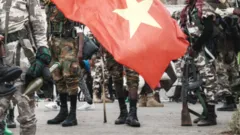
The Ethiopia Tigray conflict has entered a period of acute instability following mutual accusations of military offensives by the federal government and Tigrayan authorities. On Wednesday, September 23, 2026, Getachew Reda, an adviser to Prime Minister Abiy Ahmed, stated that Tigrayan fighters had seized control of federally administered airports and launched attacks in the Afar and Amhara regions. Conversely, Tigrayan leaders describe their actions as a defensive necessity following reports of drone strikes. This escalation threatens the fragile peace established by the 2022 Pretoria Agreement. This article examines the recent military developments, the formation of new rebel alliances, and the humanitarian implications of the rising tensions.
Why are tensions escalating between the Ethiopian government and Tigray?
The primary driver of the current escalation is a series of mutual accusations regarding military incursions and the seizure of strategic infrastructure. Getachew Reda, a cabinet minister and adviser to Prime Minister Abiy Ahmed, alleged that Tigrayan forces have taken control of airports under federal administration within the Tigray region. Furthermore, Reda claimed these forces have extended their operations into the neighbouring Afar and Amhara regions, characterizing the movement as an all-out offensive against government positions.
In response, Tigrayan authorities have framed their military activity as a "defensive war." This stance follows reports of significant drone strikes within the Tigrayan territory. The breakdown in communication and the physical movement of troops suggest that the peace established two years ago is facing its most severe challenge since the signing of the Pretoria Agreement in November 2022. The tension is exacerbated by the fact that both the federal government and the Tigray People's Liberation Front (TPLF) have faced criticism for failing to implement the core provisions of the original peace deal.
The role of strategic infrastructure in the current standoff
The control of transport hubs has become a central flashpoint in the recent hostilities. Following the reported seizure of regional airports, Ethiopian Airlines has cancelled all flights to Tigray, effectively isolating the region from commercial aviation. Residents in Mekelle reported that local forces successfully took control of the city's airport from the national police early on Wednesday. This loss of federal control over aviation assets represents a significant shift in the regional balance of power and complicates any potential humanitarian or diplomatic intervention.
How has the TPLF expanded its political and military influence?
The Tigray People's Liberation Front (TPLF) has moved to consolidate power through the formation of a broad anti-government coalition. On Sunday, the party announced an alliance with six other armed groups across Ethiopia, with the explicit goal of removing the current administration in Addis Ababa. This move indicates a shift from regional grievances toward a broader national movement aimed at regime change.
This political realignment follows several months of increasing friction. In the lead-up to the May general elections—which were not held in Tigray due to security concerns—the TPLF took steps to restore its pre-war administration. By disbanding the interim administration that had been appointed by Prime Minister Abiy Ahmed, the TPLF reasserted its local authority. However, this reassertion of power has been accompanied by controversial reports regarding the TPLF's recruitment methods, with allegations suggesting the forced recruitment of young men to bolster their combat capabilities.
What is the impact of recent drone strikes on civilians?
Recent military operations involving unmanned aerial vehicles (UAVs) have resulted in significant civilian casualties and psychological distress. In the southern town of Alamata, local officials reported a series of strikes on Tuesday that killed at least 14 people and injured 22 others. According to Mogos Shiferaw, the town's mayor, the attack involved more than five drones and one fighter jet, conducting over 21 separate strikes starting in the early hours of the morning.
The humanitarian toll is compounded by the specific nature of the targets. Mayor Shiferaw alleged that federal forces targeted two secondary schools, claiming they were hit under the suspicion that they were being used by Tigrayan forces. However, the mayor noted that because the academic year had not yet commenced, the schools were unoccupied. The strikes have left the local population in a state of panic and have caused widespread psychological trauma. While the Tigrayan authorities have been vocal about these incidents, the Ethiopian government has not provided a formal comment regarding the alleged strikes.
International condemnation of aid interference
Beyond the direct strikes in Alamata, the international community has raised alarms regarding the safety of humanitarian corridors. The US State Department's Bureau of African Affairs condemned a drone strike that occurred on Monday, which reportedly targeted a convoy of Catholic vehicles transporting food aid. The US has called for a formal investigation into the incident and has urged all combatants to prioritize the protection of humanitarian workers and to seek a resolution through diplomatic dialogue rather than military force.
What are the historical and political contexts of this conflict?
The current volatility is deeply rooted in the devastating two-year war that concluded in 2022. That conflict was one of the deadliest of the 21st century, with the African Union's mediator estimating that approximately 600,000 people lost their lives. The fighting brought the region to the brink of widespread famine, a trauma that continues to influence the political landscape and the motivations of both sides.
The fragility of the current peace is evidenced by the repeated violations of the Pretoria Agreement. Since the ceasefire, both Addis Ababa and the TPLF have been accused of stalling on key implementation steps. Prime Minister Abiy Ahmed had previously warned parliament in July that the TPLF was preparing for a return to conflict. This atmosphere of mutual suspicion has prevented the full restoration of public services and critical infrastructure, which Tigrayan authorities claim has been systematically disrupted by the federal government's actions.
Frequently asked questions
What triggered the recent accusations of war in Tigray?
The current escalation was triggered by reports of Tigrayan forces seizing federally controlled airports and launching offensives into the Afar and Amhara regions. Simultaneously, Tigrayan authorities claim they were forced into a defensive posture following a series of drone strikes within their territory.
Who are the main parties involved in the current standoff?
The primary combatants are the Ethiopian federal government, led by Prime Minister Abiy Ahmed, and the Tigray People's Liberation Front (TPLF). Additionally, the TPLF has formed a new alliance with six other Ethiopian rebel groups to oppose the central government.
What was the impact of the drone strikes in Alamata?
The drone strikes in Alamata resulted in at least 14 civilian deaths and 22 injuries. Local officials reported that the strikes targeted secondary schools and caused significant psychological trauma and panic among the local population.
Has the international community responded to the violence?
Yes, the US State Department has condemned recent strikes, specifically one targeting a food aid convoy. The US has called for an investigation and urged all parties to resolve the conflict through dialogue to prevent further humanitarian catastrophes.
Why was the 2022 peace deal failing to prevent this?
Both the federal government and the TPLF have been criticized for delays in implementing the Pretoria Agreement's provisions. Ongoing political tensions, including the TPLF's restoration of its pre-war administration, have undermined the stability the agreement was intended to provide.
Key takeaways
- Tigrayan forces have reportedly seized control of several federally administered airports in the region.
- The TPLF has formed a new military alliance with six other Ethiopian rebel groups.
- A drone strike in Alamata resulted in at least 14 civilian deaths and 22 injuries.
- The US State Department has condemned a strike on a Catholic food aid convoy.
- The conflict threatens the 2022 Pretoria Agreement, which ended a war that killed an estimated 600,000 people.
The path toward further instability
The current situation in Ethiopia represents a critical breakdown of the peace process that followed the devastating 2022 civil war. With the TPLF expanding its reach through a new multi-group alliance and the federal government facing challenges to its control over regional infrastructure, the risk of a return to full-scale warfare is high. The targeting of civilian infrastructure and aid convoys further complicates the humanitarian landscape. Unless international mediation can successfully address the implementation failures of the Pretoria Agreement, the region faces a prolonged period of instability and renewed violence.