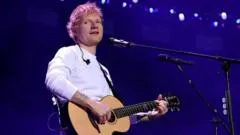
The singer addressed his Philadelphia crowd, navigating a complex humanitarian crisis that has seen support acts quit and ticket sales decline. During the emotional speech, he addressed the backlash regarding his recent decisions and the tension surrounding his touring schedule. He expressed deep regret for the mistakes made during this period of intense scrutiny. As the controversy continues to unfold, fans are left questioning the future of his upcoming performances. The singer remains committed to his audience despite the mounting pressure from both critics and industry peers involved in the recent dispute.
What triggered the Ed Sheeran Macklemore controversy?
The controversy began in early September when rapper Macklemore performed a song dedicated to pro-Palestinian protesters during a scheduled appearance on the Loop Tour. During the set, Macklemore referred to the death toll in Gaza as a genocide, a characterisation that Israel rejects. While the rapper clarified that his criticism of Israel was not intended as an attack on "my Jewish brothers and sisters," the remarks sparked immediate backlash from venue owners and promoters.
The tension escalated when major venues, including Gillette Stadium in Boston, Massachusetts, indicated they would refuse to host the tour if Macklemore remained on the lineup. Robert Kraft, the Jewish owner of Gillette Stadium and the New England Patriots, confirmed he had banned the rapper from performing. Kraft accused Macklemore of using hate speech and claimed the rapper was sharing selective information while ignoring the actions of Hamas. This confrontation between a prominent artist and a major venue owner set the stage for the subsequent fallout across the entire tour.
The role of promoters and venues
According to the tour's organizers, the decision to remove Macklemore was driven by logistical and safety concerns regarding venue access. Messina Touring Group stated that Macklemore was dropped because some venues would refuse to let the concerts take place if he performed. This move placed Ed Sheeran in a difficult position between maintaining his touring schedule and supporting his fellow artists, leading to a situation where the singer felt caught in the middle of an important and passionate argument about free speech and the most complex political issue on the planet.
The intervention of venue owners like Robert Kraft highlights the power that local authorities and stadium owners hold over international concert schedules. By banning Macklemore, Kraft effectively forced the hand of the promoters, creating a chain reaction that would eventually lead to the resignation of several other artists and a significant shift in the tour's public perception.
How has the controversy impacted the Loop Tour?
The Ed Sheeran Macklemore controversy has resulted in measurable financial and structural damage to the remaining US leg of the Loop Tour. Following the removal of Macklemore, several high-profile support acts, including Irish singer-songwriter Aaron Rowe and the Danish group Lukas Graham with his backing band Beoga, resigned from the tour in solidarity with the rapper. This exodus of talent has altered the concert experience and left the tour's lineup significantly diminished, as artists chose to prioritize political solidarity over their professional engagements on the tour.
Market reactions have also been visible in ticket pricing and sales. While Sheeran's previous tours were among the highest-grossing in history, the current tour has seen a decline in sales and a notable drop in ticket prices. Some tickets for the Philadelphia show were seen priced as low as $32 (£24). Additionally, while Ticketmaster and Messina Touring Group have not officially confirmed widespread reimbursements, some fans have reported being able to get ticket refunds due to the changing nature of the event and the controversy surrounding the lineup changes.
The financial impact is compounded by the fact that the tour, which was once a guaranteed blockbuster, now faces a landscape of declining interest and reduced margins. The shift from a high-demand mega-tour to one struggling with sales and refunds reflects the deep polarization caused by the removal of Macklemore.
What was Ed Sheeran's response during the Philadelphia concert?
Ed Sheeran used his first show in Philadelphia to directly address the controversy and apologise to his fans for making "mistakes." The singer, known for avoiding political commentary to maintain a sense of unity in his shows, admitted that the current humanitarian crisis made it impossible for him to remain silent. He described the situation as a complex intersection of free speech and one of the most difficult political issues on the planet, stating that he had tried throughout his career not to be a political commentator because he wanted his shows to be about unity, not division.
Sheeran offered a nuanced perspective on the conflict, describing the Hamas-led attacks on 7 October 2023 as "horrific" and noting that they compounded centuries of Jewish pain. Simultaneously, he characterised the situation in Gaza as "catastrophic," "unjustifiable," and "disproportionate," expressing heartbreak over the loss of civilian and children's lives. He also highlighted the "systemic injustice" occurring in the West Bank as an issue that cannot be overlooked. By addressing both the horror of the October 7 attacks and the devastation in Gaza, Sheeran attempted to acknowledge the pain on both sides of the conflict.
Addressing the future of his artistry
During his emotional address, Sheeran admitted that the recent turmoil had caused him to question his career, stating he had not known whether this tour would be carrying on or whether he even wanted to be an artist at all. However, he returned to the stage out of commitment to his fans. He also expressed being "deeply worried" by the idea of venues "pre-approving" content or performers, a sentiment that received applause from the Philadelphia crowd.
Sheeran noted that he is currently in a period of "listening and learning," because he does not feel he knows enough to provide definitive answers. He expressed a desire to find ways to contribute to those suffering in these "terrible times," indicating that while he is stepping into a political spotlight he previously avoided, he is doing so with a focus on the humanitarian aspect of the crisis rather than partisan commentary.
What is the impact on free speech and artist solidarity?
The fallout from the Macklemore incident has sparked a wider debate regarding the boundaries of free speech in the music industry and the responsibility of artists to stand by their peers. The resignation of support acts like Lukas Graham demonstrates a growing trend of artists using their professional positions to take political stances, even at the cost of their employment on major tours. This solidarity has created a divide between those who see the tour as a professional musical endeavor and those who view it as a platform for social and political expression.
Protesters have also become a visible part of the tour environment. In Philadelphia, individuals such as a protester named Cooper expressed support for the Palestinian struggle, arguing that artists like Macklemore need public platforms to speak on behalf of the people in Gaza. Cooper emphasized the need for artists to use their voices to speak for the struggle for liberation, particularly in the United States. Conversely, the debate remains polarised, with critics of the rapper's remarks viewing them as inflammatory or one-sided. The tension between maintaining a "unity" focused concert environment and acknowledging humanitarian crises remains a central theme of the current tour, leaving the audience to navigate their own views while enjoying the music.
Frequently asked questions
Why was Macklemore removed from the Ed Sheeran tour?
Macklemore was removed because several venues, most notably Gillette Stadium in Boston, threatened to cancel the shows if he performed. Promoter Messina Touring Group indicated the decision was made to ensure the tour could continue at these locations following his pro-Palestinian remarks.
Did Ed Sheeran make the decision to drop Macklemore?
No, Ed Sheeran clarified to his audience that the decision to remove Macklemore was made by his promoters and venue owners, not by him personally. He has expressed that he was caught in the middle of the resulting controversy.
What has been the financial impact on the Loop Tour?
The tour has experienced a decline in ticket sales and a drop in ticket prices, with some seats selling for as low as $32. There have also been reports of fans seeking and receiving ticket refunds following the controversy.
Which artists quit the tour in solidarity?
Several support acts have left the tour to show solidarity with Macklemore. These include the Irish singer-songwriter Aaron Rowe and the Danish musician Lukas Graham, along with his backing band, Beoga.
What is Ed Sheeran's stance on the Israel-Palestine conflict?
Sheeran described the October 7 attacks as horrific and noted the pain they caused the Jewish community. He also described the situation in Gaza as catastrophic and unjustifiable, citing the devastation of civilian lives and systemic injustice in the West Bank.
Key takeaways
- Macklemore was removed from the Loop Tour after making pro-Palestinian remarks that led to venue bans.
- Support acts including Lukas Graham and Aaron Rowe quit the tour in solidarity with Macklemore.
- Ed Sheeran apologised in Philadelphia, citing "mistakes" made during the handling of the controversy.
- Ticket prices for the tour have declined, with some reaching $32 in the US.
The future of the Loop Tour
As the Loop Tour continues through North and South America, the atmosphere remains charged with political tension. Ed Sheeran has expressed a desire to move forward by focusing on humanitarian aid and learning more about the complexities of the region, noting that he is "listening and learning" because he does not know enough. While the tour has faced significant logistical and reputational challenges, the singer's recent efforts to address the controversy with sincerity appear to have been met with cautious acceptance by his core audience in Philadelphia, with some fans noting he covered both sides nicely, while others appreciated his perceived sincerity.