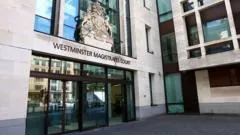
Rwanda genocide charges have been brought against a 65-year-old medical professional in a landmark UK legal proceeding. Dr Vincent Brown, formerly known as Dr Vincent Bajinya, appeared at Westminster Magistrates' Court following a seven-year British investigation into the 1994 mass killings. He faces one charge of conduct ancillary to genocide and six counts of conduct ancillary to murder as crimes against humanity. The case, which involves alleged killings in the Rugenge district of Kigali, has been transferred to the Old Bailey for a hearing on 9 October. This article examines the specific allegations and the legal framework.
What are the specific charges against Dr Vincent Brown?
Dr Vincent Brown is facing a series of serious allegations related to his alleged involvement in the 1994 genocide in Rwanda. According to court proceedings at Westminster Magistrates' Court, the charges include one count of conduct ancillary to genocide and six counts of conduct ancillary to murder, categorized as crimes against humanity.
The prosecution alleges that these actions were part of a widespread or systematic attack directed against a civilian population. Crucially, the charges are brought under the 2001 International Criminal Court Act, which allows for the prosecution of such crimes within the UK jurisdiction. The legal basis for the genocide charge rests on the accusation that Brown was involved in "killing, directing or encouraging" the deaths of members of the Tutsi ethnic group, with the intent to destroy the group, either in whole or in part.
The legal framework of the 2001 Act
The use of the International Criminal Court Act 2001 is central to this case. This legislation enables British courts to prosecute individuals for international crimes, such as genocide and crimes against humanity, even if the acts were committed abroad. By utilizing this Act, investigators are addressing the principle that certain atrocities are so grave that they fall under universal concern and legal accountability, regardless of where the perpetrator currently resides.
What events in Rwanda are linked to these charges?
The charges against Dr Brown specifically relate to a period of intense violence in the Rugenge district of Kigali between 6 April and 13 April 1994. This window occurred during the first two weeks of the 100-day genocide, during which Hutu extremists conducted a systematic campaign of slaughter against Tutsis and moderate Hutus.
Prosecutors have identified several specific victims allegedly murdered during this period. The names of the deceased, as cited in the proceedings, include:
- Dominique Mukurarinda
- Immaculee Mukankusi
- Gerasi Rurangirwa
- Leandre Mbogoye
- Charlotte Kamaguja
- Olivier Tuyishime
The allegations suggest that the victims included three members of the same household, a taxi driver, a mother, and her young son. These specific instances are being used to build the case that the killings were not isolated incidents but were part of the broader, systematic intent to destroy the Tutsi population.
Who is Dr Vincent Brown and what is his background?
Dr Vincent Brown is a medical professional who qualified in Rwanda during the 1980s. His professional history shows a significant connection to both the Rwandan medical establishment and the UK refugee community. Before the genocide, he served as the head of the Department of Family Health in Kigali and resided in a Kigali suburb with his wife and son.
Following his time in Rwanda, his professional trajectory led him to the United Kingdom, where he became involved in humanitarian work. In 2006, he worked for Praxis, a London-based charity dedicated to assisting refugees from regions including Rwanda. Furthermore, he served on the Refugee Nurses Task Force, an advisory body established in 2003 to provide guidance to the UK government on refugee-related healthcare issues.
A dual identity in professional life
The contrast between his alleged involvement in the 1994 atrocities and his subsequent career in the UK has been a focal point of the investigation. While his work with Praxis and the Refugee Nurses Task Force positioned him as an expert in refugee welfare, the seven-year investigation by British authorities sought to reconcile this professional standing with the allegations of his conduct during the Rwandan genocide.
How has the defense responded to the allegations?
The defense has maintained a position of total denial regarding the charges. Sam Blom-Cooper, the barrister representing Dr Brown, informed the court that his client intends to fight the allegations before a jury to clear what he described as the "stains of these appalling allegations."
The defense's strategy appears to focus on the long-standing nature of the case and the defendant's desire for exoneration. According to Blom-Cooper, Dr Brown has spent nearly two decades anticipating this legal process, with the barrister stating that the defendant had "hoped for, longed for, and prayed for" this day. The defense characterizes the current legal proceedings as the "beginning of the end" for Dr Brown, suggesting a commitment to a full trial to resolve the matter.
What is the significance of this case for the UK?
This case marks the first time an individual has been charged in a UK court in connection with the 1994 Rwandan genocide. It represents a significant milestone for British law enforcement and the judicial system regarding the prosecution of international war crimes.
Senior police officers have previously emphasized that the United Kingdom must not serve as a "safe haven" for individuals accused of war crimes. The investigation into Dr Brown involved specialized training for investigators in international war crimes legislation, reflecting a broader institutional effort to ensure that the UK adheres to international standards of justice and accountability for crimes against humanity.
FAQ: Rwanda genocide charges in the UK
Who is the individual facing charges in the UK?
The individual is Dr Vincent Brown, a 65-year-old medical doctor formerly known as Dr Vincent Bajinya. He is the first person to be charged in a UK court in relation to the 1994 genocide in Rwanda following a seven-year investigation.
What specific crimes is Dr Brown accused of?
Dr Brown faces one charge of conduct ancillary to genocide and six counts of conduct ancillary to murder, classified as crimes against humanity. These charges stem from alleged killings in the Rugenge district of Kigali in April 1994.
When will the case proceed to a full hearing?
The case has been transferred to the Old Bailey. A formal hearing is scheduled to take place on 9 October, following an initial appearance at Westminster Magistrates' Court where his identity and address were confirmed.
What was the defendant's professional background?
Dr Brown qualified as a doctor in Rwanda in the 1980s and later headed the Department of Family Health in Kigali. In the UK, he worked for the charity Praxis and served on the Refugee Nurses Task Force.
How does the defense intend to proceed?
The defense, led by barrister Sam Blom-Cooper, denies all allegations. The defense intends to present the case to a jury, seeking to clear Dr Brown of the charges he has faced for nearly twenty years.
Key takeaways
- Dr Vincent Brown is the first person charged in the UK for the 1994 Rwanda genocide.
- The charges include genocide and six counts of murder as crimes against humanity.
- The alleged crimes took place in Kigali's Rugenge district in April 1994.
- The legal proceedings are being conducted under the 2001 International Criminal Court Act.
- The case is scheduled for a hearing at the Old Bailey on 9 October.
Conclusion
The prosecution of Dr Vincent Brown represents a pivotal moment in the UK's involvement with international criminal law. By bringing charges related to the 1994 Rwandan genocide, the British judicial system is addressing long-standing allegations of crimes against humanity through the framework of the 2001 International Criminal Court Act. While the defense maintains a firm denial and seeks to clear the defendant's name, the case underscores the commitment of UK authorities to ensure the country does not become a sanctuary for those accused of war crimes. The upcoming hearing at the Old Bailey will be a critical step in this complex legal journey.