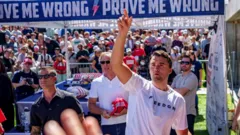
The Charlie Kirk security review has identified significant shortcomings at Utah Valley University (UVU) following the fatal shooting of the conservative activist in September 2025. An independent report released by the university indicates that UVU failed to conduct a formal written security assessment or establish a dedicated event action plan for the high-profile gathering. Instead, critical decision-making was largely deferred to Turning Point USA, the organization Kirk represented. The findings highlight a breakdown in coordination between campus police and private security, alongside failures to address venue-specific risks. This article examines the report's findings, the legal implications for the university, and the ongoing criminal proceedings.
What were the primary security failures identified in the review?
The independent review concluded that Utah Valley University failed to implement fundamental security protocols prior to the event where Charlie Kirk was killed. Most notably, the institution did not produce a formal written security assessment or a specific action plan to manage the risks associated with the large-scale gathering. This lack of documentation meant that the university entered a high-risk situation without a structured framework for emergency response or threat mitigation.
According to the report, the university effectively outsourced its responsibility for event safety to Turning Point USA. Rather than maintaining oversight of the campus environment, UVU allowed the activist's organization to drive much of the logistical decision-making. This delegation of authority resulted in a significant gap in institutional accountability, as the university failed to assert its own safety standards over the preferences of the visiting organization.
The absence of documented risk assessments
A critical omission noted by external consultants was the lack of a documented line-of-sight assessment. Given that the event was held in an outdoor courtyard surrounded by tall buildings, the potential for elevated threats was high. Despite the presence of "significant protective operations considerations," no formal analysis was conducted to determine if the surrounding architecture provided cover for a potential assailant. This oversight directly relates to the circumstances of the shooting, which occurred from a nearby rooftop.
How did the choice of venue contribute to the security risks?
The selection of an outdoor courtyard in Orem was a central point of contention that contributed to the vulnerability of the event. While university officials expressed concerns as early as August 2025 regarding the risks of a location surrounded by high-rise structures, these warnings were ultimately overruled. The report indicates that Turning Point USA representatives insisted on the courtyard venue because the organization was already familiar with the site from previous visits.
University officials had proposed several alternative locations, including indoor venues that would have mitigated the risk of long-range attacks from surrounding buildings. However, the preference for the outdoor setting, driven by the visiting organization, was maintained. This decision left thousands of attendees and the keynote speaker exposed to the very types of vantage points that were later exploited by the shooter.
What coordination issues occurred between police and private security?
The review highlighted a breakdown in communication between Utah Valley University police and the private security team employed by Turning Point USA. A vital component of high-profile event security is the integration of local law enforcement with private details to ensure a unified response. In this instance, that integration was largely non-existent.
A scheduled meeting between the UVU police chief and Turning Point security personnel, intended to take place shortly before the event, never occurred. The reviewers characterized this as a major missed opportunity. Had the meeting proceeded, it could have served to:
- Identify specific tactical risks associated with the courtyard layout.
- Clarify the respective responsibilities of campus police versus private guards.
- Coordinate additional security measures, such as perimeter control or rooftop monitoring.
- Conduct a joint physical walk-through of the venue.
Without this briefing, the two security entities operated in silos, creating a fragmented defense that failed to account for the complexities of the environment.
What are the legal and institutional consequences for UVU?
The findings of the report have intensified the legal pressure on Utah Valley University. The family of Charlie Kirk has already filed a wrongful-death notice, a legal precursor to a formal lawsuit. The family's attorney, Brett Parkinson, stated that the report validates their long-held concerns regarding the university's management of the event. Parkinson emphasized that the responsibility for the fatal outcome lies with UVU leadership and law enforcement, calling for full accountability.
While the review did not find evidence that university employees acted with "willful and wanton disregard" for safety or in bad faith, the institutional negligence is clearly documented. The university now faces a significant reputational and legal challenge as it attempts to navigate the aftermath of the tragedy. President Jon Anderson has stated that the university must learn from these findings and implement the report's recommendations to prevent similar failures in the future.
Standard security protocols that were missing
The report and subsequent investigations noted that several standard security procedures common to high-profile campus events were not utilized. These included:
- The use of drones to monitor surrounding rooftops and high-vantage points.
- Rigorous security screening processes, such as bag checks and metal detectors, for attendees.
- Comprehensive perimeter sweeps to ensure no unauthorized individuals were in the vicinity.
What is the current status of the criminal investigation?
The criminal aspect of the case remains focused on Tyler Robinson, the individual alleged to have carried out the attack. Robinson has pleaded not guilty to the charge of aggravated murder in connection with the death of the 31-year-old activist. The prosecution is currently seeking the death penalty for the crime.
The shooting occurred on September 10, 2025, while Kirk was participating in a series of debates regarding US mass shootings. He was shot in the neck shortly after noon while addressing the crowd. Although he was transported to a hospital, he later succumbed to his injuries. The legal proceedings against Robinson will continue to move through the court system, while the civil implications for the university continue to develop.
FAQ: Charlie Kirk security review
What caused the security failure at UVU?
The failure was caused by a combination of factors: the lack of a formal written security assessment, the decision to hold the event in a vulnerable outdoor courtyard, and a lack of coordination between campus police and private security teams.
Did Turning Point USA influence the venue choice?
Yes, the report states that Turning Point USA representatives insisted on the outdoor courtyard venue because they were familiar with the location, effectively overriding the concerns raised by university officials regarding the risks of the surrounding buildings.
Has the university faced legal action?
Yes, the Kirk family has filed a wrongful-death notice against Utah Valley University. This is a legal step that typically precedes a formal wrongful-death lawsuit seeking accountability for the security lapses.
Was there a failure in police coordination?
The review found that a planned meeting between the UVU police chief and Turning Point's private security did not happen. This prevented a joint briefing and walk-through that could have identified the risks exploited by the shooter.
What is the status of the shooter, Tyler Robinson?
Tyler Robinson has pleaded not guilty to aggravated murder. He is currently facing trial, and prosecutors are seeking the death penalty in connection with the shooting of Charlie Kirk.
Key takeaways
- An independent review found UVU failed to conduct a formal written security assessment.
- Turning Point USA's preference for an outdoor courtyard overrode university security concerns.
- A critical coordination meeting between campus police and private security never took place.
- The Kirk family has filed a wrongful-death notice against the university.
- The alleged shooter, Tyler Robinson, has pleaded not guilty to aggravated murder.
Conclusion
The independent review of the Charlie Kirk security incident paints a picture of systemic institutional failure at Utah Valley University. By failing to document risks, neglecting to coordinate with private security, and allowing external organizations to dictate venue choices, the university left itself and its guests vulnerable to a targeted attack. While the report clears officials of bad faith, the documented negligence has significant legal ramifications. As the criminal case against Tyler Robinson proceeds, the university faces the daunting task of implementing rigorous new security standards to restore trust and ensure the safety of its campus community.