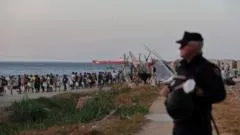
Spain's National Intelligence Service (CNI) sent warnings on 29 July to Moroccan and Ceuta officials about social media messages urging a mass crossing the following day. At least 72,000 people entered the territory on 30 and 31 July, with at least 100 deaths reported by the Ceuta mayor. The documents were declassified after political pressure on Prime Minister Pedro Sánchez.
What information did the CNI share on 29 July?
Declassified documents show the CNI identified WhatsApp and Facebook groups that were encouraging migrants to cross into Ceuta on 30 July. The messages reached an estimated 180,000 people and mentioned Throne Day celebrations as a moment when authorities would be distracted. The intelligence service sent the information by note to Moroccan intelligence and by text message to the central government delegation in Ceuta and the civil guard. One message read: "Whoever wants to cross has the last chance on Throne Day [30 July] at 8 the authorities will be distracted with the celebrations and parades." The note specified attempts both swimming and via the border fence. A government source later stated the published documents showed the information available before the mass crossing did not make it possible to anticipate the scale that the crisis would reach or prepare with enough time the necessary response. Miguel Ángel Pérez Triano, the central government's delegate in Ceuta, said the Whatsapps from 29 July do not constitute an alert or a report but an exchange of information. The tranche includes more than 40 security documents released after mounting pressure on Sánchez and allegations that Morocco facilitated crossings. A leaked police report earlier appeared to implicate Moroccan police, yet Sánchez maintained there is no evidence of complicity.
How many people crossed and what were the immediate consequences?
At least 72,000 migrants crossed from Morocco into Ceuta on 30 and 31 July. Most swam around a border fence and at least 100 people died during the crossing, according to figures from Ceuta's mayor. Although most returned, as many as 5,000 remain in makeshift camps or are sleeping on the city's streets and beaches, leading to unrest in the autonomous Spanish city in North Africa. Locals have expressed safety concerns and some have destroyed shelters and blocked aid being supplied to the migrants. [TO VERIFY: casualty figures sourced only to Ceuta mayor; official confirmation from UN, Red Cross or Spanish government required for death toll]
How has the Spanish government responded to the declassified documents?
Prime Minister Pedro Sánchez has stated that the mass arrival was not expected and that no information conveyed the full magnitude of the events. Foreign Minister José Manuel Albares said he was not aware of any report that foresaw the scale of the crossing. A government source indicated the available information did not allow authorities to anticipate the full extent of the crisis or prepare an adequate response in time. The central government's delegate in Ceuta described the 29 July messages as an exchange of information rather than an alert. Sánchez had previously told parliament that there was "no information that conveyed the magnitude" of the "crisis we were going to suffer" on the last two days of July. Shortly before the documents were released he told Spanish television that "the mass arrival of migrants was not expected". The government has continued to insist that it acted according to the information available at the time.
What do opposition parties claim the documents show?
Opposition figures argue the warnings contradict government statements that the scale of the influx could not be predicted. Ester Muñoz of the People's Party stated that the government had the information and bears direct responsibility for the invasion of Ceuta and for those who died. Jorge Buxadé of Vox said on social media that the documents showed that Sánchez "and his band of criminals should be brought before the Supreme Court for treason and security crimes". The documents were released after a leaked police report appeared to implicate Moroccan police, although Sánchez has maintained there is no evidence of Moroccan complicity. The revelations emerged in documents declassified by the Spanish government amid accusations it failed to give the full story of the migrant influx.
What conditions remain in Ceuta after the crossings?
Thousands of migrants continue to sleep in camps or on public spaces in the autonomous city. Local unrest has included damage to shelters and interference with aid supplies. The Spanish exclave in North Africa has faced ongoing pressure on housing, security and public services since the end of July. At least 72,000 migrants crossed on 30 and 31 July with most returning later but up to 5,000 remaining amid the unrest. The presence of several thousand migrants continues to strain local services while political debate over border security intensifies.
Frequently asked questions
Did Spanish intelligence know about the planned crossing in advance?
Yes. The CNI sent a note and text messages on 29 July warning Moroccan and Ceuta authorities of social media calls for a crossing the next day.
How many people died during the July crossings?
Ceuta's mayor reported at least 100 deaths. [TO VERIFY: casualty figures sourced only to Ceuta mayor; official confirmation from UN, Red Cross or Spanish government required]
Did the Spanish government mislead parliament?
Opposition parties claim the declassified documents contradict earlier statements by Prime Minister Sánchez that no information conveyed the magnitude of the crisis.
Was Morocco involved in organising the crossings?
A leaked police report appeared to implicate Moroccan police, but Prime Minister Sánchez has stated there is no evidence of Moroccan complicity.
How many migrants remain in Ceuta?
Up to 5,000 people are reported to remain in camps or sleeping on streets and beaches.
Key takeaways
- CNI issued warnings on 29 July about social media calls for a mass crossing into Ceuta.
- At least 72,000 people crossed on 30 and 31 July, with most returning later.
- At least 100 deaths were reported by the Ceuta mayor during the crossings.
- Up to 5,000 migrants remain in the territory amid local unrest.
- Opposition parties accuse the government of having had prior information it did not fully disclose.
Outlook for Ceuta and Spanish-Moroccan border management
The declassified documents have intensified political debate over border security and information sharing. Ceuta continues to manage the presence of several thousand migrants while local services remain under strain. Further releases of security documents are expected as parliamentary scrutiny continues.