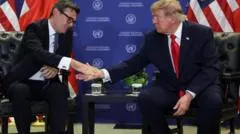
The Burnham and Trump meeting in New York has marked a significant moment in transatlantic relations as the two leaders held their first face-to-face discussions. While Donald Trump expressed a willingness to engage in business-oriented dialogue with the UK Prime Minister, the encounter was marked by sharp criticism regarding specific territorial agreements. This analysis examines the immediate outcomes of their summit and the friction points identified during the press briefing, providing a clear overview of how these two political figures navigated their first formal interaction.
Diplomatic engagement in New York
The first physical encounter between Andy Burnham and Donald Trump took place in New York, serving as a critical litmus test for the current UK-US relationship. During the meeting, both leaders addressed members of the press to outline their initial impressions of the bilateral dynamic. The summit represents a pivotal moment for the UK government as it seeks to navigate a complex relationship with the US administration.
Donald Trump signaled a pragmatic approach to the partnership, suggesting that a functional relationship is possible. He noted that he could conduct business with Prime Minister Burnham, indicating a preference for transactional diplomacy. This stance suggests that while personal or ideological alignment may vary, the potential for economic and political cooperation remains a central theme of their dialogue.
Friction over the Chagos Islands deal
Despite the potential for business cooperation, the meeting was shadowed by significant disagreement regarding the Chagos Islands agreement. Donald Trump used the platform to voice his disapproval of the deal, describing the arrangement as "terrible." This criticism highlights a specific area of geopolitical tension that could complicate future negotiations between the two nations.
The Chagos Islands issue has long been a sensitive point in international diplomacy, involving complex questions of sovereignty and territorial rights. Trump's vocal opposition during this first meeting suggests that the US administration may take a more critical stance on UK foreign policy decisions involving these territories. This friction could serve as a major hurdle for the Burnham administration's diplomatic agenda in Washington.
Economic prospects and political challenges
The possibility of doing business remains a cornerstone of the discussions held between the two leaders. Trump's comments regarding his ability to work with Burnham imply that economic interests might provide a bridge across other diplomatic divides. For the UK, securing favorable trade and business conditions with the US is a high priority, making this transactional openness a vital development.
However, the challenge for the UK Prime Minister lies in balancing these economic opportunities with the management of ideological and territorial disputes. The New York summit has demonstrated that while the door to economic partnership is open, the path is obstructed by significant policy disagreements. Moving forward, the ability of both leaders to navigate these conflicting priorities will define the strength of the UK-US alliance.
Frequently Asked Questions
Where did the meeting between Burnham and Trump take place?
The first face-to-face meeting between UK Prime Minister Andy Burnham and US President Donald Trump was held in New York. This location provided the backdrop for their initial discussions and subsequent address to the press regarding the state of bilateral relations.
What did Donald Trump say about the Chagos Islands?
Donald Trump criticized the Chagos Islands deal during the meeting, labeling the agreement as "terrible." This specific criticism highlights a significant point of contention between the US administration and the UK government regarding territorial and diplomatic arrangements in that region.
Can the two leaders work together economically?
Yes, Donald Trump indicated that he could do business with Andy Burnham. His comments suggest a willingness to engage in transactional and economic diplomacy, even if other areas of political or territorial policy remain subject to intense disagreement between the two leaders.