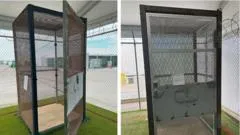
The US Department of Homeland Security Office of the Inspector General documented the use of small outdoor metal cages at the now-closed Alligator Alcatraz detention centre in Florida. Between July 2025 and January 2026, 79 immigrants were placed in enclosures measuring about 18 square feet for periods ranging from minutes to nearly two hours. The facility, opened in the Everglades in 2025, was run by Florida state officials under an executive order from Governor Ron DeSantis, while the federal government covered operational costs. Inspectors identified multiple shortfalls in hygiene, medical care, food service and living space.
What did the OIG inspection reveal about the cages at Alligator Alcatraz?
The Office of the Inspector General conducted an unannounced visit in January 2026. It determined that the outdoor metal enclosures, each roughly 18 square feet, represented an unprecedented practice among US immigration detention facilities. Officials described the cages as "calming areas" intended for de-escalation. Records showed at least one instance of use as a disciplinary measure. The report stated that holding people in such restrictive spaces does not align with standards for humane treatment. Investigators concluded the cages measured about 18 square feet each and were used outdoors. This approach stood out as unprecedented compared with other detention facilities nationwide. The watchdog described the enclosures as highly unconventional and inconsistent with expectations for humane treatment of individuals in custody. Officials at the site referred to the spaces as areas meant to allow people time to calm down and remain alone briefly. Documentation in the report indicated the cages served this stated purpose on multiple occasions during the period reviewed. The Office of the Inspector General conducted an unannounced visit in January 2026 and concluded that these outdoor metal enclosures measuring roughly 18 square feet each represented an unprecedented practice among US immigration detention facilities. The report noted that officials described the cages as calming areas intended for de-escalation, while records showed at least one instance of use as a disciplinary measure. Investigators stated that holding people in such restrictive spaces does not align with standards for humane treatment. The enclosures were used outdoors and stood out as highly unconventional compared with practices at other detention facilities nationwide. Site officials referred to the spaces as areas meant to allow people time to calm down and remain alone briefly, and documentation indicated the cages served this stated purpose on multiple occasions during the period reviewed.
How long were immigrants held in the enclosures and under what conditions?
Detainees spent between several minutes and almost two hours inside the cages. The OIG noted that 79 individuals were placed in these spaces during the period examined. Some detainees had previously reported to the BBC that they were denied medication and regular access to showers. The inspection confirmed that showers were limited to three times per week and were infested with small bugs. Drinking cups could not be cleaned, and clean water was not always available. The report recorded that people remained inside the enclosures for durations that varied from short intervals of only a few minutes up to nearly two full hours. In total, 79 immigrants experienced placement in the metal structures between July 2025 and January 2026. At least one placement occurred explicitly as a disciplinary action rather than solely for calming. Earlier statements collected by the BBC from former detainees described additional problems including lack of needed medication and restricted shower access. The OIG inspection verified that showers occurred only three times each week and that the facilities contained small bugs. Detainees also reported inability to clean the plastic cups provided for drinking and inconsistent availability of clean water. The OIG noted that 79 individuals were placed in these spaces during the period examined, with time inside ranging from several minutes to almost two hours. Some detainees had previously reported to the BBC that they were denied medication and regular access to showers. The inspection confirmed showers limited to three times per week and infested with small bugs. Drinking cups could not be cleaned and clean water was not always available. The report recorded that people remained inside the enclosures for durations that varied from short intervals of only a few minutes up to nearly two full hours, and at least one placement occurred explicitly as a disciplinary action. Earlier statements collected by the BBC from former detainees described additional problems including lack of needed medication and restricted shower access, which the OIG inspection verified along with the three-times-weekly schedule and presence of small bugs.
What other standards were not met at the facility?
Inspectors found insufficient living space, resulting in cramped conditions for people who remained in their housing units for most of the day. The centre did not meet requirements for hygiene, medical care, food provision and overall health and safety. These findings were detailed in the final OIG report released after the facility closed in June 2026. The inspection team identified that housing units offered too little room, leaving detainees in tight quarters during the majority of each day. Broader compliance shortfalls covered multiple areas including hygiene practices, availability of medical services, food service operations and general health and safety measures. All of these deficiencies were documented within the OIG report issued following the June 2026 closure. Inspectors found insufficient living space that resulted in cramped conditions for people who remained in their housing units for most of the day. The centre did not meet requirements for hygiene, medical care, food provision and overall health and safety. These findings were detailed in the final OIG report released after the facility closed in June 2026. The inspection team identified that housing units offered too little room, leaving detainees in tight quarters during the majority of each day, while broader compliance shortfalls covered multiple areas including hygiene practices, availability of medical services, food service operations and general health and safety measures.
Who operated Alligator Alcatraz and who paid for it?
The facility was established by Florida through an executive order signed by Governor Ron DeSantis. Day-to-day operations fell under state authority, according to the Department of Homeland Security response included in the report. The federal government paid operational costs. ICE and Florida officials have been contacted for further comment on the OIG findings. The state of Florida created the site via the executive order from Governor Ron DeSantis. Federal authorities noted in their response to the watchdog that Florida held responsibility for daily management. Operational expenses were covered by the federal government even though state officials directed activities on site. The BBC reached out to Immigration and Customs Enforcement and to the governor’s office seeking additional statements regarding the inspection results. The facility was established by Florida through an executive order signed by Governor Ron DeSantis, with day-to-day operations falling under state authority according to the Department of Homeland Security response included in the report. The federal government paid operational costs. ICE and Florida officials have been contacted for further comment on the OIG findings. The state of Florida created the site via the executive order from Governor Ron DeSantis, and federal authorities noted in their response to the watchdog that Florida held responsibility for daily management while operational expenses were covered by the federal government.
Frequently asked questions
When was Alligator Alcatraz opened and closed?
The centre was constructed in eight days in 2025 inside the Everglades wetland and closed in June 2026 after being described as temporary.
Who conducted the inspection?
The Office of the Inspector General, an independent internal watchdog within the Department of Homeland Security, performed the surprise inspection in January 2026.
Were the cages used for discipline?
The OIG report recorded at least one documented case in which the enclosures were used as a disciplinary measure.
What hygiene issues were identified?
Showers were limited to three times weekly and contained bugs; detainees could not clean their drinking cups and sometimes lacked access to clean water.
Did the facility meet federal detention standards?
No. The OIG concluded that the centre failed to comply with multiple standards covering hygiene, medical care, food and safety.
Key takeaways
- OIG inspectors documented 79 immigrants held in 18 sq ft outdoor cages for up to nearly two hours.
- The facility operated from July 2025 to January 2026 under state authority with federal funding.
- Showers were restricted to three times per week and were infested with bugs.
- Detainees reported and inspectors confirmed problems with clean drinking water and medical access.
- The centre closed in June 2026 after being labelled temporary by Florida officials.
Context and next steps
The OIG report adds to earlier accounts from detainees who spoke to the BBC about medication denial and hygiene restrictions. Florida officials have maintained that the facility was a short-term measure. No further inspections at the closed site have been announced. [TO VERIFY: exact date of final OIG report publication and any subsequent official responses from ICE or Florida state government]